

 RSS
RSS
|
By Matthias Knab In the glittering world of Hollywood, few stars shine as brightly or as resiliently as Sharon Stone. Known for her iconic roles and magnetic screen presence, Stone's life story is one of transformation, resilience, and rediscovery. Taking a hint from her autobiography, The Beauty of Living Twice, published in 2021, I actually believe her journey is marked by four distinct chapters and serves as an inspiration not just for those in the entertainment industry, but for anyone facing life-altering challenges. 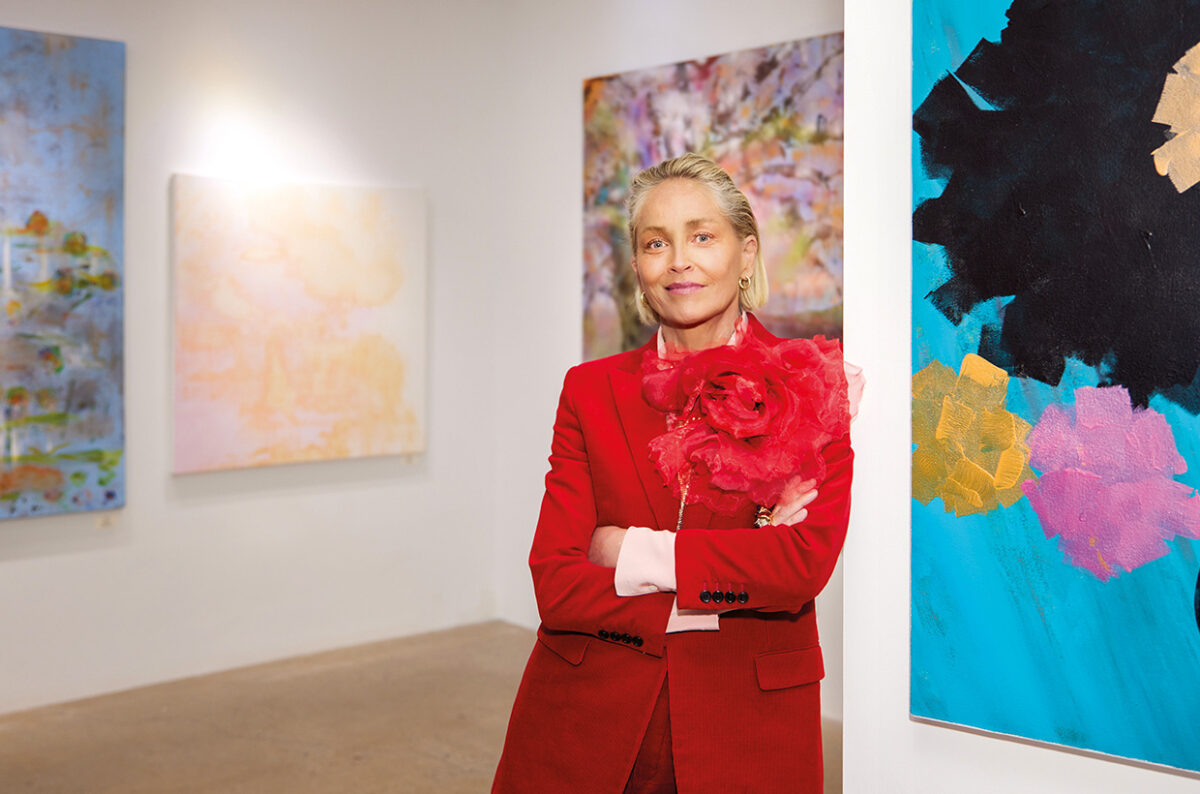 1. Childhood: The Seeds of Stardom Born in Meadville, Pennsylvania, Sharon Stone's early years were far from the glamour of Hollywood. Yet, even as a child, she harbored a prescient belief in her future stardom. "When I was little, growing up in Meadville, Pennsylvania, I had this feeling that I was going to be a movie star," Stone recalls. "This is who I was going to be. I was going to live in a house that had a spiral staircase," - which she ended up having... This conviction was all the more remarkable given Stone's inherent shyness. "I was super shy," she admits. "When I read from the Bible in church, I was so shy my tears would drop on the Bible pages. I was the sort of kid who sat in my closet with a flashlight and read." Despite this shyness, Stone's inner certainty about her future never wavered. This early resilience and self-belief would prove crucial in the challenges that lay ahead. 2. Fame: The Ascent to Stardom Since its release 1992, Basic Instinct has undergone a critical reevaluation. The film has been recognized for its groundbreaking depictions of sexuality in mainstream Hollywood cinema, and was described by one scholar as "a neo-film noir masterpiece that plays with, and transgresses, the narrative rules of film noir." Due to its success and controversy, it inspired many imitators, and has been labelled as "perhaps the quintessential erotic thriller of the 1990s." Verhoeven considered Demi Moore, but ultimately chose Sharon Stone, with whom he had previously worked on Total Recall. Basic Instinct was in fact her 18th movie - her first one was directed by Woody Allen. Before acting, she worked in NYC for Ford Models where she was often called in "for difficult jobs. I guess they too thought I was the smarter, tougher one." Verhoeven had been particularly struck by the way she quickly transitioned from evil to love in a couple of seconds before her character's death in that film. Stone also has a near-photographic memory, certainly helpful for actors. Verhoeven tested with Stone as Douglas first refused to test with her. Verhoeven kept playing her test after testing everyone else, and Douglas later agreed to test with Stone after 12 other actresses turned down the role. Michael Douglas was initially upset that the relatively unknown Stone was cast in the role, determined to have another A-list actress star in the movie with him. Worried about taking the risk on his own, he said, "I need someone to share the risks of this movie. I don't want to be up there all by myself. There's going to be a lot of shit flying around." He later remarked that "we had a fabulous actress in Sharon. She was just perfect for the role". Stone was paid $500,000 for her role, while Douglas received $14 million. Since the release of the film, Stone has alleged multiple times that a scene in which she was intimately exposed as she crossed her legs was filmed without her knowledge. Stone later said she was told that her lack of underwear would only be alluded to and not shown. She had been wearing white underwear until Verhoeven said they reflected light on the camera lens and asked her to remove them, assuring her that only a shadow would be visible. Stone stated that it was not until she saw the film in a screening room with a test audience that she became aware of the visible nudity, leading her to slap Verhoeven in the face and leave the screening. In her 2021 memoir, Stone again stated that she was misled by Verhoeven with regard to the circumstance of the filming of the scene, even though she ultimately did not seek an injunction against it. Verhoeven responded that it was "impossible" and "she knew exactly what we were doing." However, despite having a "radically different" memory about the particular scene, he praised Stone's performance and said they are on good terms. In a 1998 Inside the Actors Studio interview, Stone said that while she was initially angry, she realized the director's decision was the right one, saying, "And I thought about it for a few days and I knew in my heart, he was right. I hated that it existed, I hated it more that he stole it from me instead of allowing me to choose. But he was right." Stone's rise to fame was not an overnight success story, but rather a testament to her persistence and belief in herself. Her breakout role in "Basic Instinct" came after years of hard work and determination. "I wanted to play Catherine Tramell so badly that I had the script on top of my refrigerator for eight months," she reveals. "I just kept thinking, I'm going to manifest this, I'm going to get this part,' as they offered it to everybody else on the planet..." Her persistence paid off, though not without its trials. "I was the 13th choice," Stone admits, showcasing the resilience that would become her hallmark. The fame that followed was overwhelming. "I didn't really get [my fame] for quite a while," Stone reflects. "Because when I did Total Recall, I had fame for like three months. But with Basic Instinct, four months went by, five months, six, and the fame wasn't going away." Indeed, the fame is still there, until today. Everyone I talked to about Sharon Stone except maybe the very young ones knows and admires her. Not only for her looks, but her courage and strong personality. This period of Stone's life was marked by incredible success, but it also set the stage for the challenges that would follow. The intensity of her fame, while exhilarating, also created a pressure cooker environment that would contribute to her later health crisis. Misogyny, #MeToo and Incest "Hollywood is set up to be misogynistic. It's a business run by men. It's a business where men make the money. Where men write, produce and direct the projects. Where men write the parts that are played by women. And those parts are not written about real women. They're written to be the fantasy of how women should be. Then, the male critics tell you if you met the fantasy or not, if you behaved in the right way," she explained to The Hollywood Reporter. The penultimate chapter in her autobiography "The Beauty of Living Twice" is titled "Me too". She writes: "Many people ask me what it was like in my days of being a superstar. It was like this. Play ball or get off the field, girl." "I think that I am not alone in processing some pent-up female rage." She continued: "It took years of therapy and reading, it took the world changing, it took #MeToo, to even begin to imagine that we, that I, could tell our horrible truths." On page 223 she let's out the shocking truth: "... I could not and did not have a place to go to say who I was. An incest survivor... Sexual abuse in families is the nucleus of sexual abuse... This world does not help women. It does not love women. It does not heal women, nor protect us... we must end it [abuse] for everyone. Through governing, not shaming and public opinion." 3. Blows of Fate & Sickness: The Fall and Rise In 2001, at the height of her career, Stone suffered a massive stroke that nearly claimed her life. With only a 1% chance of survival, she faced not only physical challenges but also profound personal and professional setbacks. The stroke left Stone with lasting effects and required 23 platinum coils to be surgically implanted in her brain. In her memoir, Stone vividly describes the experience: "I'd been hemorrhaging into my back, my head, my face, my spine. Every 18 minutes in America, somebody has a subarachnoid hemorrhage. About half of them will die." Stone recalls, "I had a nine-day brain hemorrhage before they found out. I was afraid to surrender myself." This period of her life was marked by intense physical and emotional challenges. "The patient directly across from me died while I was in there," she shares, underscoring the gravity of her condition. After the stroke, Stone had to relearn many basic functions, including how to walk, talk, read, and write. She experienced memory loss, suffered from severe physical pain and numbness, particularly in her leg and face. The stroke also affected her speech and vision. The road to recovery was a long and arduous process, and she has become an advocate for stroke awareness and brain health, using her experience to help others facing similar challenges. During her recovery, Stone faced additional setbacks. She divorced her husband at the time, Phil Bronstein, and lost custody of her son in 2008. The custody loss was particularly devastating, with Stone revealing that the judge asked her son, "Do you know your mother makes sex movies?" This experience left her unable to function, spending days crying. Financial exploitation during her recovery period added another layer of difficulty. "I had 18 million dollars saved because of all my success, but when I got back into my bank account, it was all gone," Stone reveals. "My refrigerator, my phone --- everything was in other people's names. I had zero money." This period marked a two-decade-long hiatus from acting as Stone focused on her recovery. It was a time of profound loss and challenge, but also one that would ultimately lead to a powerful transformation. Stone reflects, "Took me from being a foolish, superficial person to understanding and accepting my humanity." 4. Redefining Yourself: The Phoenix Rises Sharon Stone's journey of recovery and redefinition is perhaps the most inspiring chapter of her life. "I've been canceled left and right," Stone says, "But now I'm back in fashion again." This resurgence wasn't just about reclaiming her place in Hollywood. It was about finding a new purpose and redefining success on her own terms. Stone's involvement with amfAR (American Foundation for AIDS Research) became a cornerstone of her new identity. Stone's work with amfAR began in 1995 when she stepped in for Elizabeth Taylor at a crucial fundraising event. This decision, which she was warned could "ruin her career," instead became a defining aspect of her legacy. For two decades, Stone served as amfAR's celebrity spokesperson, bringing attention and resources to the fight against AIDS. During her recovery and redefinition, Stone returned to a passion she had nurtured since childhood: painting. In her memoir, she reveals that she had been painting since she was a young girl, finding solace and expression in art long before she became a Hollywood star. This artistic pursuit became a crucial part of her healing process and her redefined identity. Stone's paintings, much like her life, are characterized by boldness, vibrancy, and resilience. Her art often features abstract forms and vivid colors, reflecting both the turbulence of her life experiences and the hope and vitality that have driven her recovery. In recent years, Stone has exhibited her artwork, adding "artist" to her already impressive list of accomplishments. This shift towards philanthropy, advocacy, and art represented more than just a change in career focus. It was a fundamental reimagining of her place in the world. "I decided to stay present and let go," Stone says of her recovery period. "I decided not to hang onto being sick or to any bitterness or anger." Stone's resilience in the face of adversity is perhaps best summed up in her own words: "My philosophy is it's not how you fall, it's how you get up and do you have the dignity and the courage and the integrity to get up and keep your moral compass together." The process of writing her memoir was itself a part of Stone's journey of healing and redefinition. In the book, she candidly shares her experiences, from her challenging childhood to her rise in Hollywood, her health crisis, and her eventual rebirth. The title itself speaks to Stone's perspective on her life that she has, in essence, lived twice, with her stroke and recovery marking a profound division in her life story. Stone's advocacy work has expanded beyond AIDS research. She has become a vocal advocate for brain-aging diseases and stroke awareness. In 2023, she was honored with the Courage Award by the Women's Brain Health Initiative for her efforts in raising awareness about women's brain health and research. Today, Sharon Stone continues to inspire both through her acting, her advocacy work, and her art. Her journey from a shy girl in Pennsylvania to a Hollywood icon, and then to a survivor, advocate, and artist, embodies the power of resilience and the importance of finding one's purpose. As Stone herself puts it, "Everything got richer for me through this experience. Everything got better for me through this experience. It was like starting over. I am now using more of my brain than before. I have learned how to access more of my own mind." Her story serves as a powerful reminder that it's possible to not only survive life's greatest challenges but to use them as a springboard for personal growth and a renewed sense of purpose. Expanding Philanthropic Horizons While Stone's work with amfAR has been a cornerstone of her philanthropic efforts, her charitable work extends far beyond AIDS research. She has been a tireless advocate for numerous causes, leveraging her celebrity status to bring attention and resources to a wide range of issues. In 2013, Stone received the Peace Summit Award from the Nobel Peace Laureates for her work with HIV/ AIDS patients. She has also been a strong supporter of Planet Hope, a non-profit organization founded by her sister Kelly Stone, which provides services to homeless and abused children and their families. Stone's philanthropic efforts also include support for the Elton John AIDS Foundation and the Elizabeth Glaser Pediatric AIDS Foundation. In the realm of environmental causes, she has been involved with Global Green USA, advocating for solutions to climate change. Her commitment to children's welfare is evident in her support for Lupus LA's Moms For Moms campaign and her role as campaign chair for the Foundation for AIDS Research. In recent years, Stone has become increasingly vocal about women's rights and empowerment. She has supported the Women's Cancer Research Fund and has been outspoken about gender inequality in Hollywood and beyond. Her advocacy work also extends to LGBTQ+ rights, disaster relief efforts, and animal welfare causes. Stone's approach to philanthropy mirrors her approach to life and art bold, passionate, and deeply personal. Whether she's speaking at fundraising galas, participating in charity auctions, or using her social media platforms to raise awareness, Stone brings the same intensity and commitment to her charitable work that she brought to her acting career. Her philanthropic efforts are not just about donating money or lending her name to causes; they're about actively engaging, educating, and inspiring others to make a difference. This expansive philanthropic work has become an integral part of Stone's redefined identity. It reflects her belief in using her platform and resources to create positive change in the world, further illustrating how she has transformed personal adversity into a force for good. As she once said, "I think you have to choose to be happy, and then you have to practice it. And you have to practice it every day." For Stone, that happiness seems intrinsically linked to helping others and contributing to causes greater than herself. The Lessons of Resilience Sharon Stone's journey offers valuable lessons for anyone facing adversity:
A New Chapter Today, Sharon Stone continues to inspire both through her acting and her advocacy work. Her journey from a shy girl in Pennsylvania to a Hollywood icon, and then to a survivor and advocate, embodies the power of resilience and the importance of finding one's purpose. As Stone herself puts it, "Everything got richer for me through this experience. Everything got better for me through this experience. It was like starting over." In a world where setbacks can often feel insurmountable, Sharon Stone's story serves as a powerful reminder that it's not the challenges we face, but how we respond to them, that defines us. Her four lives from aspiring star to Hollywood icon, from stroke survivor to influential advocate offer a blueprint for resilience, reinvention, and the enduring power of purpose. For organizations and individuals navigating their own challenges, Stone's journey underscores the importance of adaptability, the value of giving back, and the transformative power of finding purpose in the face of adversity. It's a testament to the fact that our greatest setbacks can often lead to our most profound transformations. | ||||


|
Horizons: Family Office & Investor Magazine
Finding Your Purpose: The Four Lives Of Sharon Stone |
|