|

Lisa Audet Matthias Knab, Opalesque for New Managers: From molecules to electrons: Why the energy transition just got more investable
When Opalesque last spoke with Lisa Audet, Founder and CIO of Greenwich, CT-based Tall Trees Capital Management, the conversation was about navigating dislocations in clean energy. A year on, she argues the energy transition is being reordered around energy security, affordability and geopolitical resilience. Tall Trees runs a global equity long/short strategy invested exclusively in the energy transition; it launched in April 2022 with a strategic investment from Tiger Management.
Matthias Knab: Is the energy transition slowing down or speeding up? What do you see?
Lisa Audet: The genesis of the energy transition really came out of a desire for decarbonization. It was policy-driven. What we have seen is that it has become increasingly pragmatic. In an environment of deglobalization, countries and consumers need access to reliable, affordable and more diverse energy resources. So the shift is much more about energy security, and about countries figuring out how to meet growing energy demand. A lot of the demand is AI data center driven, but it is also very much about reshoring and the electrification of the broader economy. We are clearly in a power super cycle.
And so, the energy transition isn't slowing down. It's becoming more pragmatic. And with that, the transition is more bankable, more bipartisan, and frankly more investable than the one we had.
Matthias Knab: What is driving that power super cycle you're describing?
Lisa Audet: We are in a world that is deglobalizing, and that has an impact on trade, on the dollar, on interest rates, on real assets and commodities. It used to be that you could rely on imported fuel to meet growing demand. With the conflict in the Middle East we saw the vulnerability of that reliance, particularly for countries like Japan, South Korea and India.
So we are seeing a shift from molecules to electrons. Oil powered the industrial economy; electrons will power the digital economy. Energy security today is no longer equated with owning oil and gas resources or securing imports. It means access to local electrification and domestic energy infrastructure. That is forcing countries globally to build it out. After nearly two decades of flat demand, U.S. electricity consumption is entering a structural growth phase, and the existing grid was not built for it. Over the next decade, electricity availability could become the strategic constraint that oil was in the last century.
Matthias Knab: The common assumption is the opposite: when conflict rises, countries fall back on oil and gas and the transition slows.
Lisa Audet: These geopolitical developments, whether it is Russia and Ukraine or Iran, actually accelerate the energy transition. They don't delay it. What a Hormuz-style shock really does is expose the liability of import dependence, and the lesson isn't "secure more molecules," it's "stop being hostage to a chokepoint I don't control."
The systems that held up are the ones built on domestic electrons. Parts of Europe have absorbed the shock through greater electrification and renewable generation, while battery-electric vehicles accounted for more than 20% of new EU car registrations in the first half of 2026. A grid you generate at home doesn't care whether a tanker clears the Gulf. And this isn't the 1970s: back then there was no substitute to scale into, and today there is. The 1970s taught us that oil could be weaponized; 2026 is demonstrating that domestically generated electricity can significantly reduce exposure to imported fuels and maritime chokepoints.
The winners are not the historic oil and gas producers, but the economies pursuing an all-of-the-above approach. China, and increasingly India, are pursuing an all-of-the-above strategy encompassing wind, solar, nuclear, coal and natural gas. To an extent it is happening in the U.S. too, despite the rhetoric. Texas recently surpassed California with annual solar installations, with a focus on utility-scale projects.
Matthias Knab: How does that translate into positions?
Lisa Audet: The first thing we want to own is the scarcity in the power system: companies that produce gas turbines, transformers, switchgear and critical grid infrastructure. The market for large, advanced heavy-duty gas turbines is concentrated among three leading suppliers.
We have seen a pullback in those names, and it has been conflated with deeper questions around the financing of AI infrastructure: what are the returns, are balance sheets getting stretched, is there circular financing. Those are fair questions, but you can build fewer data centers, and it still doesn't change the fact that we are in an electricity demand super cycle. We don't need every AI data center forecast to be right for the power thesis to work. The market is beginning to distinguish between demand for AI infrastructure and the economics of financing it, and that is healthy for fundamental stock selection.
One of the most difficult gas-turbine bottlenecks lies upstream in blades and vanes, precision-engineered components requiring specialized metallurgy and manufacturing, making the supply constraint slower to resolve than simply adding assembly capacity.
Matthias Knab: And the inputs the system can't do without?
Lisa Audet: Exactly, copper and rare earths. Copper is the substrate underneath virtually every major electrification theme, and supply can't respond quickly. Copper ore grades have declined materially in major producing regions; for example, the IEA estimates that average grades in Chile fell approximately 30% over 15 years, major copper discoveries can take well over a decade to progress and major copper discoveries have fallen sharply from the pace recorded during the 1990s and early 2000s, despite continued exploration spending. The IEA is warning of a 25% supply shortfall by 2035. This is a decade-long imbalance the market keeps pricing like a twelve-month one. Section 232 tariffs on semi-finished copper and copper-intensive products encourage domestic sourcing and processing, potentially improving the strategic value of U.S. producers while future measures covering refined copper could strengthen that benefit.
On critical minerals, the U.S.-China detente remains fragile. While China has agreed to ease restrictions and facilitate exports of rare earths and other critical minerals, this agreement is set to expire in November 2026. The U.S. is vastly undersupplied and is aggressively building a mine-to-magnet domestic supply chain backed by significant Government support. We like U.S. rare earth companies helping to address this key bottleneck. As this process is in the very early stages, it is a durable theme for a very long time.
Matthias Knab: Where does baseload fit in?
Lisa Audet: Interestingly, the more renewables you put on the grid, the greater the need for firm capacity and system flexibility to serve as a backstop. Natural gas provides firm, dispatchable generation that can operate across baseload, intermediate and peaking applications. We like producers that also own the midstream infrastructure to deliver gas to where it is needed, and LNG players. We are watching European gas storage closely ahead of the winter.
We also believe we are in the middle of a nuclear renaissance. With approximately 37 reactors under construction and dozens more planned, China could commission 40-50 or more reactors over the next decade. We like companies that straddle both the upside in the uranium price and the ability to service a growing pool of reactors.
Matthias Knab: We have talked before about energy efficiency. Is that still a theme?
Lisa Audet: More than ever, because of the bottlenecks. Here's the irony: the more infrastructure we build out, the more we run into bottlenecks. Some of it is permitting. Some of it is communities pushing back against data center expansion. And a lot of it is simply that energy resources don't get hooked up to the grid as quickly as they could be.
So as the gap between energy demand and supply widens towards the end of the decade, I think we see an increasing focus on energy efficiency. The most valuable megawatt is the one you don't have to produce - the one you save.
We are becoming more excited about companies that make high-performance insulation and building-envelope systems that reduce heat loss and energy consumption. Buildings and construction account for roughly 37% of global energy and process-related CO2 emissions, making insulation and building efficiency an important source of emissions reduction. The same applies to advanced cooling technologies for data centers.
Matthias Knab: What are investors telling you?
Lisa Audet: There is a growing appreciation for the durability of the energy transition opportunity, and for the investment required as countries increasingly seek to build secure, domestic energy systems.
At the same time, some investors have told us they are taking profits in AI-linked technology investments and looking to diversify. While some disillusionment with the AI theme has emerged and concerns about circular financing are likely to persist, there is a broader recognition that, regardless of which technologies ultimately prevail, the world will need substantially more power.
Investors also recognize that markets are likely to remain volatile. In that environment, a long/short strategy that can distinguish winners from losers, look through short-term noise and remain committed to multi-year and multi-decade opportunities offers a compelling way to participate in this structural investment cycle.
Hundreds of millions of people still lack electricity, and billions lack access to reliable, affordable and clean modern energy. Tall Trees exists to invest in companies, technologies and resources helping to close that gap - and to identify the businesses at risk of being left behind as the world reorganizes around a new energy reality.
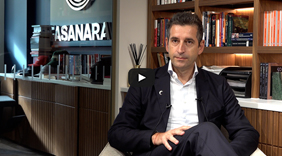
Watch the Opalesque.TV interview with Lisa Audet
In this exclusive Opalesque.TV interview, veteran energy investor Lisa Audet shares how four investment themes are reshaping the energy landscape: electrification, nuclear, copper and data center infrastructure. Drawing on a 15+ year track record in energy investing and her experience building businesses in emerging markets, Lisa explains:
- Why common approaches to energy transition investing may be missing the biggest opportunities
- How her team at Tall Trees Capital identifies "non-obvious opportunities" in this $25 trillion market
- Why certain popular clean energy sectors might actually present better short opportunities
- Strategic insights on portfolio construction and risk management
Having generated over $500 million in P&L managing $1.2 billion in energy investments at Discovery Capital, Lisa brings deep expertise to this conversation. She was honored on the Forbes 50 Over 50 List for 2023.
Watch the full interview here: https://brightminds.tv/lisa-audet-tall-trees-capital/
|





 RSS
RSS