|

William Thomson By Opalesque Geneva: Investing in commodities is risky due to volatile and unpredictable supply and demand cycles. But commodities are also, besides being a significant aspect of our daily lives, a good way to diversify a portfolio beyond traditional securities. So how to better invest in commodities?
William Thomson, founder and managing partner of Massif Capital, has been using a successful commodity-investing approach for the past seven years. And that is, investing in liquid real assets.
He invests in liquid real assets in a global universe - excluding China, Russia and India - of about 3,100 companies with market caps greater than $200m operating in energy, materials, select industrials, and infrastructure. As a group, they have a total market cap of roughly $20tln. By comparison, the universe of healthcare, technology and finance includes about 4,200 companies, he says in a recent Opalesque video presentation.
Liquid real assets are not just commodity assets. They include "businesses and people and assets that make the entire physical world we live in operate." Such as nuclear power plants and copper mines.
Not old economy
Thomson mentions the Escondida copper mine in the Atacama Desert in northern Chile, which produces 5% of the word's copper, operates the world's largest desalination plant, and the world's largest system of pumps for liquids. Furthermore, it is on its way to being fully powered by renewables and uses robotic trucks. Copper mining companies nowadays employ PhDs in geology, mineralogy, hydrology and mining engineers. "These are giant science projects that are as technologically complicated and as difficult to operate as anything out of Silicon Valley," he adds. Apple employs as many PhDs as ExxonMobil and they often produce the same number of patents a year.
"These businesses are not old economy," he says. "They just happen to do something we've been doing since the beginning of time. Which is pull resources out of the ground. They include everything from everyday energy like oil and natural gas to offshore wind turbines. An oil rig can displace 75,000 tons and float on water that is 10,000 feet deep. The wind turbines off the coast of Scotland are each taller than the Empire State Building. So, when we talk about liquid real assets, we are talking about businesses that bridge raw commodities and modern civilisation. They don't just produce raw commodities; they bridge the gap and turn those materials into usable assets."
It is the builders of the world around us
An oil refining company, for example, can produce 6,000 different products from gasoline, diesel, jet fuel, petrol chemicals, plastics, fertilisers, pharmaceuticals, etc. It enables global trade, feeds billions and manufactures everything from the plastic for medical devices to the plastics in our smartphone.
Whereas the outcome of investing in artificial intelligence is impossible to predict, failure to invest in real assets has a predictable outcome. It would impact our daily lives noticeably. The mines and geological deposits are not the only thing in which to invest; it is also the quality of the infrastructures and the expertise of the engineers who can turn raw materials into usable ones. "These are the unheralded heroes of modern life. That is what liquid real assets are. That's what we invest in."
Highly diversified returns
Thomson invests in those businesses not for commodity price exposure but because they are of interest. Such investments "can produce highly diversified returns to which people don't have exposure."
According to documents seen by Opalesque, at the end of Q3-2025, the Massif Capital Real Assets Strategy had returned 41% net of fees YTD. The strategy, which has been running since January 1st, 2019, had annualised net-of-fees returns to 14% since inception, beating the MSCI All Cap World Index. It is managed in a commingled fund and via SMAs and invests in liquid real assets through a global long/short equity strategy.
The firm is proud of the quality of its returns, he says, if quality is seen in terms of generating alpha. The strategy has generated about 8.4% annualised alpha against the MSCI All Cap World Index (which covers about 85% of global equity opportunities) since inception.
"Put another way, our alpha suggests that at any given time, we are delivering skilful security selection, decent timing and unique positioning within energy, resources and industries," he says.
Another important point, he adds, is the low beta, which "tells you that our returns do not move closely with broad market moves, with commodity price action or with even natural resources equities at large. This minimises the volatility tied to ownership of a position in our fund."
The macro is secondary to the micro
As for optimal entry points, now is as good as time as any, he notes. While most people want to enter commodity sectors before a commodity super cycle, Massif does not take this approach. The macro factors are secondary to the micro factors and to the operations. "The macro is not necessarily what is moving these stocks."
But with regards to the macro environment, Thomson sees several macro trends that are converging to create an environment that is different from the commodity super cycle of the 90s and the 2000s. This was when there was a demand-pull situation, with the likes of China absorbing commodities and industrialising their country. Now the demand is growing at modest rates while supply is not. This is a supply-driven situation, with "rolling crack ups of various different commodities as we reach the maximum potential of existing assets to produce." We are running up against a decade of under-investment. On top of these trends, government debt and different industrial policies may mean redundancy and cost increases throughout the supply chain.
The liquid real asset universe should be attractive in this context. "What you see is that while there was a bit of a shift in 2020, we've mostly just traded down," he explains. "And so, they are relatively cheap. In addition to being relatively cheap compared to all other equities, they have stronger fundamentals."
Massif Capital is a specialist investment firm based in Charlotte, North Carolina, focused on basic materials, energy, and industrial businesses.
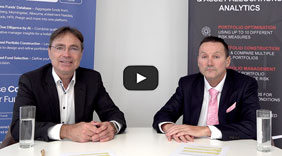
You can watch the entire video, Uncommon Ideas For Commoditized Markets: Alpha from Builders, not Prices here.
Don't miss our next video:
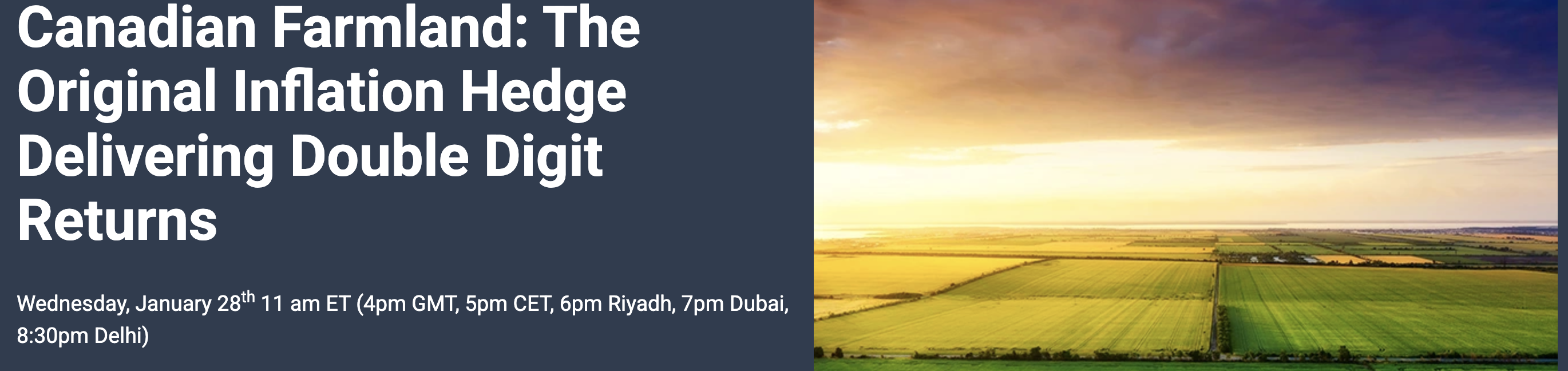
Free registration here:
https://www.opalesque.com/webinar/index.php?id=88#pw88
|





 RSS
RSS