|

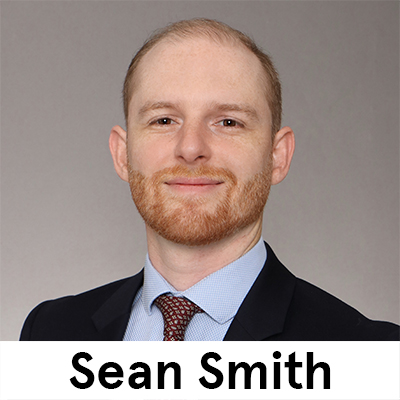
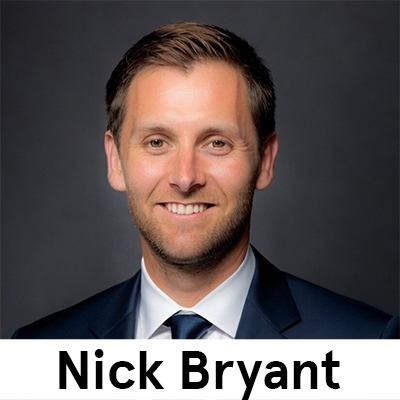
B. G., Opalesque Geneva for New Managers: Chicago-based Search Fund Ventures (SFV), co-founded by Sean Smith and Nick Bryant, has recently announced the successful initial close of SFV Fund I, which will be deploying capital over the next three years. The firm plans to go to market for a second close of the fund in early October 2024.
According to Stanford, a search fund is an entrepreneurial path undertaken by one or two individuals (the searchers) who form an investment vehicle with a small group of aligned investors, some of whom become mentors, to search for, acquire, and lead a privately held company for the medium to long term, typically six to ten years. The business school's 2024 study, which reports on the outcomes of 681 search funds formed in the U.S. and Canada since 1984, found that their IRR was 35% and ROI was 4.5x as of December 31, 2023. The term "search fund" originated at Harvard Business School in 1984.
We spoke to co-founder Sean Smith to find out more about search funds in general and the SFV Fund I in particular.
Opalesque: A search fund involves one or one team of entrepreneurs. But your fund invests in several entrepreneurs. Is that right?
Sean Smith: That's squarely correct. We are not a Search Fund, but rather an investor into searchers.
The traditional search fund model is typically where an individual or a partnership raises capital from investors, friends, family, etc. to fund the process of searching for a business to buy. They'll then raise additional capital from that same group and potentially from outside investors to actually acquire the business they find.
The self-funded model is when an individual or a partnership does not raise money to fund their search process; rather they pay for it themselves.
Opalesque: Why do you prefer self-funded searchers?
Sean Smith: The reason we typically invest in self-funded searchers is largely because we want to avoid risks related to a failed search. So if we invest in a traditional search fund, and the person does not find a business, that capital goes away. In the U.S. alone, roughly 33% of searches have failed, based on the last Stanford study.
Secondly, we avoid the risk of broken deal fees. In many cases, a traditional searcher will begin negotiating a transaction with a prospective seller, and ultimately the deal will fall through, but they're still out 50, 75, even $100,000 for diligence and legal fees. And that's often paid for by the traditional search investors. So we remove those two risks.
We are not a search fund. We invest in other people that are running the search process. That's what differentiates us. There's a handful of groups that do this, but it's still very early and very much on the pioneering edge.
Opalesque: Are you a kind of fund of funds?
Sean Smith: You can think of it that way. The reason we don't call it a fund of funds is, technically we are investing into almost like an SPV (special purpose vehicle) in each deal. Each self-funded searcher will set up an acquisition company, a vehicle to acquire the business and we will invest in that acquisition vehicle.
These searchers in most cases only buy one business. So "fund of funds" is a little misleading because it's not like we're investing into a private equity fund that's a blind pool of capital acquiring several companies. We're investing in live deals alongside entrepreneurs.
Opalesque: Are your funder investors from all over the world?
Sean Smith: We're only raising money from North American, particularly U.S. investors. We will invest in Canada and the U.S. That may change. We may raise capital from a broader audience worldwide, but not now or in the near future.
Opalesque: In which industries and sectors do you have a preference?
Sean Smith: It's more about where we will not invest rather than where we are excited about investing.
We take a fundamental approach to industry analysis, concepts from classic theorists like Michael Porter, Bruce Greenwald, and all those great folks. And what we really focus on are two areas.
We focus on industries that do not possess characteristics, such as high dependency on consumer discretionary spending and we avoid products and services that are highly sensitive to cyclicality. So that could be either recessionary cyclicality or it could be input price such as the price of oil and gas, that impact margin profiles. It could be the customers that have high cyclical sensitivity. If we're looking at an HVAC company, for example, that isn't typically a cyclical business model, but all their customers are restaurants, then they effectively inherit some of that discretionary nature.
And then we aim to limit volatility during recessionary periods, that is, business models that are necessities that don't swing up and down heavily during recessionary periods.
So to summarize it, generally that means we avoid hotels, hospitality, retail, gyms, oil and gas, metals and mining, and any businesses that service those industries or are heavily reliant on those types of industries or the products they sell.
Opalesque: Can you give me some examples of businesses into which your entrepreneurs are looking?
Sean Smith: We love business services. The various trade contracting verticals are always a popular space for the search funds in general and for the areas of focus we like. That could be HVAC (heating, ventilation, and air conditioning) contractors, electrical contractors, plumbers, and roofing.
We like some more niche manufacturing businesses that are necessary for their customers to sell the products that they sell, especially when those customers are in non-cyclical and non-recessionary industries. Great examples would be specialty chemicals that are required for maintenance or components that are required for manufacturing certain necessary goods. It gets very niche. I could go on and on.
Opalesque: Between the first close and the second close is the search period, but in your case, the search has been done. So what happens between now and October?
Sean Smith: We've put out a handful of soft commitments already into some exciting companies, one in the HVAC sector in Canada and another in the specialty chemicals sector in the U.S. And we're going to continue deploying this initial capital commitment that we received while going back to the market to raise and increase the assets we have under management.
Opalesque: How much are you planning to raise in total?
Sean Smith: In total, we aim for $5 million to $10 million. We want to keep our inaugural fund focused so we can execute flawlessly.
Opalesque: When did you launch Search Ventures?
Sean Smith: We technically publicly announced the initial close this month, but we have been putting out soft commitments and evaluating investment opportunities for the past four or five months.
Opalesque: What market conditions are important for this kind of investing?
Sean Smith: The kind of market conditions that are important for this space are threefold:
1. Deal flow supply and demand imbalance
2. Availability of funding
3. Market inefficiencies
Having an entrepreneurial culture is a fourth key factor.
In any region where there's activity, there needs to be excitement about this entrepreneurship, and there needs to be availability of capital. There needs to be supportive investors for entrepreneurship and specifically for this unique blend of entrepreneurship, which is almost a hybrid between the leveraged buyout world and the venture entrepreneurship world.
Furthermore, there needs to be a supply and demand imbalance to some degree in the deep lower market.
Opalesque: What causes supply and demand imbalance?
Sean Smith: In the U.S., that's caused largely by three factors.
One, there's a large generational transfer of wealth, there's $ 7.4 trillion locked up in small business ownership, and that ownership is held by the baby boomer generation. That creates material supply in the market.
Secondly, that supply is not met with demand because private equity firms have not yet penetrated the deep lower market. They're still focused on platforms that are generally above $3 to $5 million in EBITDA. In this search world, we're looking at companies that are between $500K to potentially up to $5 million, but the sweet spot is usually $1 to $2 million in EBITDA.
Lastly, there's much less of a services infrastructure on behalf of the supply, which leads to market inefficiency. Investment banks are not pushing these companies as aggressively. Same for brokers who work in the space. The market inefficiency is what allows searchers to create value, purchase deals at low multiples, and grow them to a point where they can either sell them to private equity or hold them at an attractive price.
However, the presence of the SBA 7(a) loan program has unlocked demand from buyers, especially self-funded searchers, since the availability of this funding source has enabled many acquirers who otherwise would not be able to finance their acquisitions.
* The 7(a) loan program is the U.S. Small Business Administration (SBA)'s primary business loan program for providing financial assistance to small businesses.
Past Big Picture articles:
|





 RSS
RSS