|
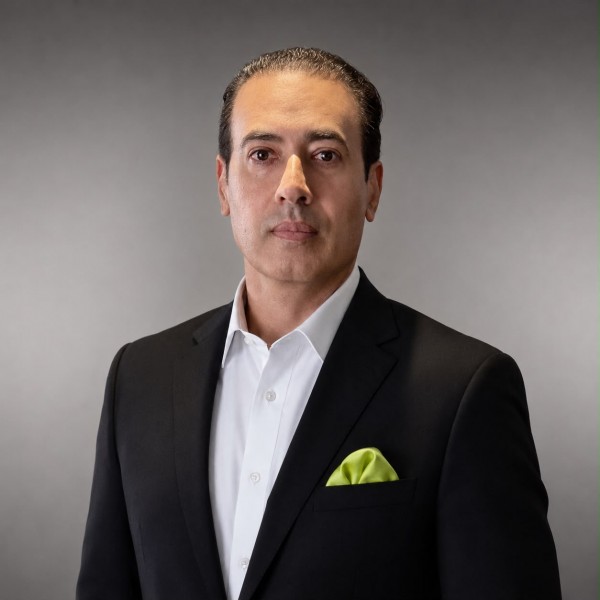
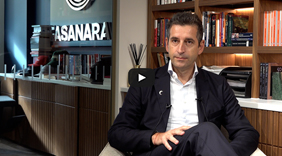
Suhail Ahmad Matthias Knab, Opalesque for New Managers: Many investors believe artificial intelligence is the defining investment theme of the decade, yet a large number of them are still watching from the sidelines. The reason is volatility: in the AI sector, daily moves of 5% to 10% in individual stocks have become routine.
Suhail Ahmad thinks that does not have to be the case. A former pensions and investment banking professional who has spent 15 years developing quantitative strategies, he is now building an asset management firm and preparing a USD200 million ethical AI fund designed to capture the long-term upside of the AI buildout while suppressing the swings that unsettle investors. Matthias Knab spoke with him ahead of the planned launch.
Matthias Knab: Where are you in the process right now?
Suhail Ahmad: We are at the startup stage. My partners and I are former analysts and quant people, and we see a clear gap in the market for responsible, sustainable infrastructure and technology investments. With AI and AI infrastructure, we believe this is a generational opportunity for investors. But most of them are still sitting on the sidelines because the volatility is brutal.
That doesn't mean the opportunity isn't there. So, we set out to create a strategy and a structure that reduces the volatility while still giving investors significant upside potential over the long term.
Matthias Knab: How does the strategy work?
Suhail Ahmad: It is a macro-driven view. We invest in companies that will benefit from the AI Supercycle, and we use quantitative methods and hedging to suppress volatility and avoid significant drawdowns in the fund, while continuing to participate on the upside.
I believe we are only two or three years into a 10- to 15-year cycle, so there is still significant value creation ahead. But it doesn't need to be a roller coaster for investors. Our job is to manage that ride.
Matthias Knab: Your materials talk about acquiring ownership in data centers. How does that fit into a fund structure?
Suhail Ahmad: The data center exposure comes through publicly listed companies. We have been tracking dozens of companies with data centers that are either operating or under construction, and we get our ownership and participation through their listed equities. There are also a few pre-IPO companies, or companies in the process of listing, that we are in conversations with. But it is all liquid strategies.
Matthias Knab: Tell us about your background.
Suhail Ahmad: I come from pensions and advisory. I completed the Canadian Securities Course in 1998, joined an RBC Financial company in 1999 and later moved into merchant banking and investment banking. I earned my Chartered Investment Manager designation in 2007. My passion has always been asset management, but after the credit crisis asset managers weren't the most popular people.
Around that time, I discovered quantitative finance and behavioral finance. I moved from Canada to Scotland in 2009 to do a full-time MBA, and from 2010 I started doing a lot of research and testing. Our conviction was that there had to be a better way of investing, and that it should be accessible to individual investors.
Matthias Knab: Your deck shows a track record from the first quarter of 2010 to the fourth quarter of 2014. What was that, and why does it stop there?
Suhail Ahmad: That was a proprietary trading strategy we ran with real money for five years. It was not a backtest. Running something on paper is one thing; doing it in real time is completely different, and we wanted to test it properly. We published it publicly on SiAlpha.com and called it "sustainable intelligent alpha," because the question was how to sustain alpha under all market conditions. We were already thinking about intelligence back then.
The strategy combined value and momentum. We looked for catalysts that would drive short-term price gains. We did quite well, with only one negative year, at minus 1%. It was volatile, though, because we focused on small caps and micro caps, companies from about USD50 million up to USD1 billion in market cap. In that segment it is easier to find an edge because there are fewer players.
Matthias Knab: So why didn't you launch a fund in 2015?
Suhail Ahmad: We considered putting a hedge fund together after those five years. But when we spoke with investors and allocators, they told us the strategy would be difficult to scale, and we agreed. Deploying five or six figures in those names is fine. With seven or eight figures, you start moving the price. We would never have been able to manage a billion dollars plus.
So, we went back to the drawing board. In the meantime, I got busy with consulting and corporate finance work.
Matthias Knab: What brought you back?
Suhail Ahmad: AI. When ChatGPT arrived in 2022, we realized we had access to tools that we could not get in 2015, or not without paying an arm and a leg. The compute power and systems we now use to test and run strategies were available only to institutions ten years ago.
That allowed us to build on what we did between 2010 and 2015 and ask how to scale it: how to extend the universe from small and mid-caps all the way up to mega caps, and create a product with no capacity constraints, even if it had to manage USD20 billion.
Matthias Knab: What is the timeline for the launch?
Suhail Ahmad: By the end of the year, our goal is to have commitments from seed investors and from investors participating in the common equity of the management company, Hikmah Capital, and to start receiving expressions of interest and non-binding term sheets for the fund.
For the management company, we are raising up to USD5 million in common equity, and our plan is to create a publicly listed investment issuer, which is why we will produce audited financials after December 31. By February or March, we aim to have the initial seed capital of USD5 million to USD20 million in place, structured as preferred equity, and then raise the full USD200 million fund, which we are positioning as an ethical AI fund. That will be a proper hedge fund structure, domiciled in the BVI or Cayman depending on the anchor investors.
Matthias Knab: Who is involved in the day-to-day work?
Suhail Ahmad: Since we don't have a fund yet, the daily work is mainly research and analytics, and I take care of that. We have built agentic AI around the process that acts as my analyst team, and we work with specialists on a contract basis.
Charlie Robson leads business development from Abu Dhabi, and Aisha Elahi handles marketing and investor relations. Our chairman is Dr. Hatim Zaghloul, a distinguished Canadian entrepreneur and physicist, semi-retired and based in Cairo. Stuart Jamieson, our software architect and a globetrotter from Scotland who now splits his time between Singapore and Taiwan, sits on the board and leads our IT strategy. Dr. Hussein Amery leads our corporate development as chair of our advisory board, based in Calgary, Canada, our hometown. I am based just outside of London and travel frequently.
Matthias Knab: That is a very distributed setup.
Suhail Ahmad: Deliberately so. We are using what you could call the Accenture model: a more decentralized, global entity. As an asset manager, we want Hikmah Capital to be very lean and capital light, and to be able to access the global markets and the global investment community. With this approach we can build unique local access and insights into regional AI opportunities. We are also expanding the board and building an advisory board of people who share our vision for creating a more responsible and less volatile AI investment fund.
|


 RSS