|
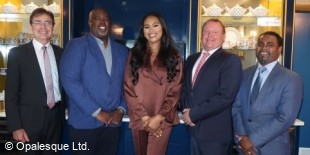
Matthias Knab, Opalesque for New Managers: A recent family office conference in Germany brought together principals, next-generation heirs, family office executives, academics and advisers for two days of unusually candid discussion. Some panels were in English, most in German, and the debates ranged from the very technical to the deeply personal. Here are ten questions that kept coming back.
1. How much money do you actually need for a single family office?
The perennial question - is it EUR 30 million, or 150 million? - got no single number, and that was the point. The CEO of a recently established single family office said setting it up cost about a million dollars, but only because of aggressive tax planning and the complexity of the assets involved. "If I deduct all of that, my costs would have been a hundred thousand."
An academic who also sits on the board of a single family office said the question is ill-defined because "nobody ever defines what a family office is." If all you hold is a brokerage account with a few ETFs, you do not need 150 million. If you want to do serious private markets due diligence, there are big fixed costs. The math is unforgiving: "Once you have three or five employees and a cost of two million a year, that is 2% if you have a hundred million under management, and 2% per year eats half of your wealth over a generation."
As one panelist put it: "If you have seen one family office, you have seen one family office."
2. Goals first, asset allocation second - and why so few do it
Almost every panel landed on the same diagnosis. The correct order, said a panelist with a long career in private markets who has built a single family office from scratch, is purpose and targets first, then asset allocation, which in turn defines the setup, the people and the cost. Most people instead "start with an asset allocation from the textbook, and then start investing way too fast."
One moderator admitted that even his own organisation "overlooked the most important topic for ten years": what wealth owners actually want to achieve. "We spend 99% of the time talking about technical issues - strategic asset allocation, risk and return, which advisers."
The cost of skipping this step has a name in Frankfurt's private wealth circles: the "product of the week". If owners do not define what their money should do, said a family office executive, "then the adviser comes and does what he is incentivised to do." A private wealth veteran in the room put it more bluntly: banks steer centrally what gets sold, "and you should not expect to get a terribly individual wealth management."
3. The biggest risks are the ones you don't see
The academic identified the error that "causes the ruin of lots of fortunes": founders continue with the investment strategy that made them rich. "The strategies that maximise the likelihood of creating a lot of wealth are not the same strategies that preserve wealth over a generation." Entrepreneurs who succeeded by concentrating everything in one bet tend to underestimate risk - and learning humility "usually comes with experience, and the experience is losing half the wealth."
He was equally direct about fraud: "Family offices are the prime target of fraudsters." Families who think "we have fifty million, we are now in the privileged club of sophisticated investors" and pile into private markets without proper diligence become targets. What is hard to find, he said, is the combination of competence and independence, "and then individualisation on top."
Private markets deserve special caution, warned the private markets veteran: "Once you have committed, you are pregnant - and partnering for ten, 12, 13, 14 years until a fund is wound up."
Another panelist proposed defining a family office as "a family risk manager" covering three interrelated domains: financial (an asset-liability problem), operational, and behavioural risk from dysfunctional family dynamics. Not everyone accepted the gloomy framing. A long-serving family office CEO objected from the floor that risk management is the core of the job and is rarely underestimated: "My experience has been that you are there to manage, find the solutions and move forward."
The conference also tackled a risk that is rarely discussed openly: addiction. Wealth can facilitate, intensify, and accelerate the path to complete addiction. An addiction specialist offered a simple test: "Is the use continuing despite increasing negative consequences? If that is the case and you can't stop, you need help."
4. Trusts and foundations: protection or straitjacket?
No topic split the room more clearly. The family office CEO quoted above chose a trust for his principal because "a trust doesn't get into trouble" - it protects against creditors, the wider family and inheritance blunders. But a trust specialist on the same panel cautioned that a 700-year-old asset protection tool is now being "abused for planning ahead over centuries when you are long dead." His test: "Can you live with the plan?" A perpetual trust set up in 1950 may "strangle" beneficiaries in 2026.
A principal from a long-established business family was categorical: "I am absolutely against trusts and foundations." When children finally inherit at 30, 40 or 50, "they run into a wall" of administrators and rules. "It actually means that the parents did not trust their own children with the money." A family office executive agreed, citing the litigation around Michael Jackson's estate as an example of how administrators can end up as the main beneficiaries.
Another principal took the opposite view and is setting up a German Familienstiftung (family foundation) himself. It gives family wealth "guardrails" while leaving each generation enough flexibility, and also provides for his spouse. But he cautioned against seeing it as a cure-all: "A foundation per se is no asset protection at all. You can make stupid decisions either way," and the roughly 70% probability that a generation squanders the fortune "is equally high in both constellations." His children did not accept the plan immediately; the discussions were heated, and for a while some family members were no longer on speaking terms. "You have to go through that process."
5. Succession: letting go without ruling from the grave
Two contrasting stories framed the succession debate. A third-generation successor described a father who had suffered under a domineering founder and decided to do it differently: handing over responsibility, extending trust, and accepting changes he disagreed with. Her advice to future handovers: "Allow mistakes. Without mistakes you don't learn - and best from your own."
The foundation advocate's path was the reverse. Expected to take over the family firm, he refused to "go to war" with his father, built his own career elsewhere instead, and eventually far outgrew the family business. "From then on there was peace." He blames a medieval guild mentality still lodged in German thinking - "if the father was a goldsmith, the son must be a goldsmith" - and lets his own children choose between three roles: manager, supervisory board member, or simply shareholder. A child who wants to join must first prove themselves elsewhere for about ten years, "where he is not the son of anyone."
Why do patriarchs still try to govern from the grave? His one-word answer: "Ego."
6. Raising the next generation
The trust sceptic from the long-established business family said his family "breeds entrepreneurs". His method starts at the dinner table: talk about what the parents do and show that it can be fun. He took his children along to business meetings from a young age and always asked for their opinion. When one later wanted to start a small venture, the funding came in the form of an "investor loan" - but only after presenting a business case. Equally central is humility - "I deliberately use the word humility, not modesty" - and discretion, both for security reasons and to teach children "a bullshit radar". He has made a point of keeping his family out of the public eye.
A family office executive described wealth as "a magnifying glass that brings out the best and the worst in a person, and in the people around them." Next-gens must be equipped to spot people who approach them for the wrong reasons, and freed from the guilt of being born wealthy. A third panelist spoke about the particular challenge for children whose parent's achievements can never be matched, and why they must find their own path early.
The same principal closed with a point he plans to pursue: "Wealthy women are underexperienced." Women live longer and inherit, yet too often hand finance to husbands, brothers or sons. "When other people manage the money, it usually ends up in other people's pockets."
7. Plan B: jurisdictions, passports and correlations
Asked how to protect wealth against political upheaval and war, the same family office CEO offered three rules. First, do not hold too much real estate and too many factories in one country - keep liquid assets. Second, hold assets offshore, following a British model with the team onshore. Third, have a second passport. "If you need to leave, you need a plan B."
A Swiss private banker argued that Switzerland has strengthened its position as the safest jurisdiction with the most stable rule of law, as London lost appeal over the non-dom changes and Dubai was hit by war. His institution has seen sizeable inflows from London and, in recent months, from Dubai. A participant from Asia promptly added Singapore to the list.
The private markets veteran went further: very large families keep a fully executed plan B "on the shelf", with funded accounts in several currencies on several continents and real estate available. He also warned about cross-correlations: "You think you are diversified across multiple asset classes, but correlations change. They are not static."
8. Real estate stuck, private equity evolving, venture underdeveloped
A real estate specialist with family office experience described a familiar Mittelstand reflex: principals want only direct real estate "because they can touch it and knock on it." She had convinced her principal to add indirect investments with local experts abroad. On Germany, she was sober: valuations have not been marked down, "everybody is pretending that everything is fine," and she expects another two to three years in which little happens. Many families she speaks to want to go abroad.
In private equity, a specialist noted that exits have been difficult but should improve, and that semi-liquid evergreen structures are becoming increasingly important.
On venture, an experienced international seed investor said Germany has world-class engineering talent and a strong position in physical AI, but its investor base remains risk-averse. His most practical advice for family offices writing angel cheques: do not take more than about 20% at seed. He has watched angel investors in several markets take 40-50% and kill founder incentives by Series B. "The math cuts across cultures." Because he estimates that around 40% of start-up failures stem from a breakdown of trust between founders, his firm is developing its own way of assessing team trust. His view on co-founder equity: "Just make it equal."
9. AI: infrastructure or applications - and do the machines know you exist?
AI ran through the entire programme. A digital infrastructure investor argued that AI "bubbles" but is not a bubble - "today we have three billion users, in 2002 we had two billion business ideas" - and that Germany's opportunity lies in regional edge data centers and robotics rather than hyperscalers. A show of hands found the room evenly split between AI application and infrastructure investors, a mix he considers right for family offices.
A communications specialist turned the lens around: investors, journalists and talent now ask AI first, and "if you are not part of the answer, you are not in the deal." Germany, he said, needs "visible champions" instead of hidden champions. The same session produced a sharp reminder for due diligence teams: AI can be manipulated to confirm fake identities, so ask the model what it read, then verify the sources yourself.
10. Impact, philanthropy and "Haltung"
The German word Haltung - roughly, stance or conviction - gave one panel its title. Its moderator framed the challenge: the funding gap for the UN Sustainable Development Goals is estimated at $4.5 trillion a year, which only capital markets can close. Impact investing should deliver market-rate returns to go mainstream; philanthropy, by contrast, "has a financial return of minus 100%," which is exactly why it must be deployed strategically. "There is no excuse not to have Haltung."
One panelist described a new pooled donation fund for vetted organisations working against disinformation and polarisation. A next-generation panelist reported that at a recent dinner for next-gens on democracy the message was almost unanimous: "We want to do something, we have to do something. But what?"
Practitioners showed what that looks like in practice. One family translates its corporate values into impact themes and works through them one at a time, screening the market globally for funds and start-ups in each area, including emissions-heavy materials linked to its own industry. A first-generation principal described himself as "probably a very boring investor": his core wealth sits in ETFs, while he lends to profitable social enterprises in developing countries - such as a trading company training smallholder farmers. "In the end, everybody has more money," he said, "but I sit there and assess it financially and make a return."
The session closed with a question for every family in the room: when your children ask in 20 years what you did when all the data on climate and democracy was clear, what will you answer?
|




 RSS
RSS