|
Matthias Knab, Opalesque for New Managers: When a manager is down on the year, the usual move is to go quiet until the number improves. Tabor Asset Management is doing the opposite. The New York consumer and TMT long/short firm is roughly 8.8% down through September, and it has gone to its existing investors with an offer: put in new capital before end of year, and we will carry your applicable existing high-water mark across to it, so the recovery back to that high-water mark costs you no performance fee.
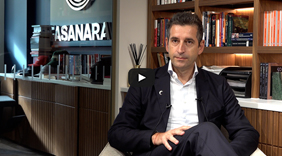
"We're doing that with our existing investors, because we're that confident in our portfolio," says Ankur Jain of Tabor.
We profiled Tabor in February, when the fund had compounded 87% net since its February 2019 launch, with a 1.1 Sharpe ratio, 0.3 correlation to the S&P 500 and, most unusually, the majority of its inception-to-date alpha generated on the short side. Seven months on, the strategy is having its hardest year, and Jain's account of why is worth hearing in full, because it is not the usual list of excuses.
Beats that did not get paid for
"This year has been quite challenging for most consumer stocks," Jain says. "What we have found in our portfolio is that a lot of our companies have beaten on earnings and even on top line, but multiples have compressed. That's been quite frustrating. But we understand, there is significant fear with oil and rates reaching new highs that something has to break within the consumer market."
The frustration is not Tabor's alone. Jain has been comparing notes across the peer group, and the peer group is small.
"As we've talked to other consumer-focused funds, not the tech funds that do a little bit of consumer but the purely consumer-focused funds, I don't know a single one that is up this year. I've heard all low net consumer funds, and it's not a big universe, are down."
That is a useful data point for allocators, and it reframes the drawdown. A specialist fund that is down while every identifiable specialist peer is also down is having a sector problem, not a process problem. Whether an allocator finds that reassuring depends entirely on what they thought they were buying.
Two reasons the multiple went away
Jain attributes the compression to two forces, neither of them about company fundamentals.
The first is oil and the war. "Every time oil goes up there is uncertainty about the consumer. But the companies are telling us that the consumer is doing well, that their spending patterns are good. We continue to say what we said last year: the consumer is discerning about where they spend their money, but they're spending money. If they see value, they are spending money."
Tabor has a stated threshold. "If oil goes to 120 or above and stays there for a while, then the consumer might be in a little bit of trouble, and we would change our book. But today, as it stands, we feel pretty confident that short-term oil shocks will not have a big impact on the consumer."
The precedent Jain points to is the 2025 tariff scare. "When tariffs were announced, as we looked through the numbers, we were quite confident that the tariffs wouldn't have as much of an impact on inflation as everybody was fearing. In reality it turned out to be about a quarter of a point impact on inflation, much less than most people thought."
The second reason is capital allocation across the market rather than within it. "All the excess capital is going into AI and these IPOs that are coming out, and so that is also one of the reasons consumer stocks haven't caught a bid."
This is the harder problem. A sector can be right on fundamentals and still de-rate for as long as the marginal dollar has somewhere more exciting to go. Jain's response is that the setup has improved rather than deteriorated: "Our top ten longs have much better upside-downside risk-reward than they did before the war started. We are very excited about our book, as many consumer stocks are now back to multiples not seen since the heart of the pandemic." The short book worked, but it was not enough.
Tabor's distinguishing feature is a short book that is over 90% single names rather than indices or ETFs, and which has historically produced most of the firm's alpha. This year it did its job without entirely rescuing the result.
"The short book has been positive, it's done well, but unfortunately not as well as the long book has been down," Jain says.
The single-name discipline is intact. "We do have one basket. It is less than 10% of the short book. Ninety percent plus of the short book is single names. That basket is designed by our risk provider, Omega Point, to offset some of the factor leans that we have in the long book."
Risk management is unchanged from the framework described in February. "Risk management is core to our process, that's always been there. We have risk management at the position level, at the sub-sector level, and then at the portfolio level. That hasn't changed."
Where AI actually shows up in a consumer book
Investors have been asking Tabor why it does not own more of the trade that is compressing its multiples. The answer is discipline and a different way of expressing the theme.
"We've been asked by our investors why we're not doing more in AI or semis. Semis are just not part of our wheelhouse, it's not something we've ever done. In AI, we are finding the application layer quite interesting."
The example Jain gives is Sysco, the food distributor. "Not the one in California that makes routers. It's the company that delivers food to restaurants. They have about 300 plus distribution centers, thousands and thousands of trucks delivering food to restaurants and hotels. They expect AI and technology initiatives to deliver approximately $100 million of cost savings in fiscal 2027, through more efficient truck routing and warehouse operations."
"So a company that is not a technology company, not an AI company, but is using this AI application layer, expects approximately $100 million of savings in fiscal 2027, and they're continuing to save more. That's a really interesting name in a very boring segment. And this company thinks they can save, if I remember correctly, at least $500 million in total by fiscal 2029. That's low-hanging fruit from applying AI. We're looking at more and more of those kinds of names."
It is a neat solution to the specialist's dilemma. Rather than leave the sector to buy the theme, Tabor is buying the theme inside the sector, in businesses where the market is not paying an AI multiple for an AI-sized earnings benefit.
The portfolio remains built around scale advantage in the middle of the market. Nine of the top ten names are mid-caps, one is large-cap. The logic mirrors what Tabor observed during the tariff episode: "The larger players can move their supply chain around, but the small cap players cannot. If a small player has 10,000 units of capacity from a factory in China and they want to move to Vietnam, it's very hard for them. For a larger player who has much more scale, they can move. This year is similar in that the larger players will be able to navigate around all the volatility better. And we've seen that."
On sector definitions, Jain draws a line most managers do not. "Internet for us is really mostly consumer names, whether it's Wayfair or Chewy. Those are still consumer names, they're just transacted more through the web. Media does have a different dynamic. We are bullish on companies where there's live entertainment, things like MSG and Formula One racing that offer live events. So we are long some of those companies and short some others within the media space."
The offer, and what it actually means
Which brings us back to the high-water mark. The mechanics matter, so here they are precisely.
An investor who came in at 100 and is now at 94 has a high-water mark of 100. Under Tabor's offer, new capital added before year-end enters at the current 94 but carries that existing 100 mark rather than resetting to the subscription level. The first six points of recovery on the incremental money therefore accrue without a performance fee.
"If they want to add some capital, that new capital we will take in at the lower level, not at the standard high-water mark. That gives them free upside on that incremental capital."
Jain frames it as a rebalancing argument rather than a discount. "Institutional investors always want to rebalance. If you do really, really well compared to the rest of the names in their portfolio, they might trim. If you're underperforming compared to the other sectors, and they believe in the story, they should be adding."
He is right about the theory, and the theory is famously ignored in practice. Allocators rebalance into underperforming asset classes and rarely into underperforming managers, because the career risk runs the wrong way. What Tabor is doing is putting its own economics behind the argument, which is a more credible signal than a letter explaining that the process is sound.
The test, of course, arrives in the coming months. Tabor's case is that the fundamentals were never the problem and the multiples will come back. If oil stays below $120 per barrel and the AI bid broadens, that is a reasonable bet on a book of mid-cap share gainers trading at compressed multiples.
Tabor's founder and CIO Jonathan Jacoby presented the firm's strategy, including its single-name short approach, at the Opalesque Small Managers - BIG ALPHA investor workshop earlier this year. Eligible investors can watch the replay here.
DISCLAIMER: This article is for informational purposes only and does not constitute investment advice or an offer or solicitation to buy or sell any securities or fund interests. Any reference to fund terms describes an arrangement offered by the manager to its existing investors, and is not an offer by Opalesque. Past performance is not indicative of future results. Hedge fund investments involve significant risk, including the loss of capital, and are suitable only for qualified investors. Investors should conduct their own due diligence and consult their advisers before making any investment decision.
|





 RSS
RSS