|
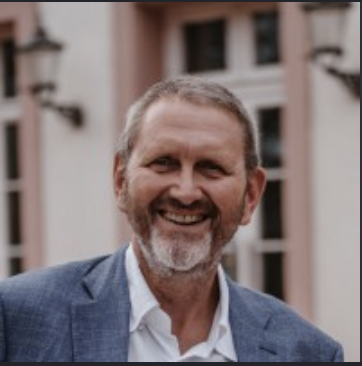
Helmut Kohl Matthias Knab, Opalesque: Helmut Kohl has lived through a few technology cycles. After more than 30 years in management positions at telecommunications companies, he now runs Helmut Kohl Management, a family office that invests in digital infrastructure, and sits on advisory and supervisory boards in the sector. Speaking at a recent family office conference in Germany, he made clear that he considers artificial intelligence different in kind from anything he has seen before.
"I only know two movements of similar magnitude," Kohl said. "One was the atomic bomb, which within two years threw out every security model we had and gave birth to deterrence. The other was the moon landing, which introduced technologies we have used for decades. AI is the fastest-growing change I have ever experienced."
And while he cautioned that figures vary from provider to provider, he estimated that AI models now have around three billion active users. "That is roughly a third of the world's population, within three years. Many others cannot use it because they are too old, too young or too far away from any infrastructure. Three billion is an absurdly high number."
Regulators cannot keep up
Unlike the bomb and the moon programme, Kohl stressed, AI is not a state project. "AI has nothing to do with the state. Purely private companies are driving it." Governments and authorities are trying to keep pace, but "are in no way able to write laws or regulations in the time needed." In Germany, a bill might spend a year in committees and another year passing through the Bundestag and Bundesrat. "In a year, the AI we are talking about today will no longer exist."
Training versus inference
For investors, Kohl drew a sharp line between two infrastructure models. Training new models - he estimated around 25 new models a year - requires enormous data center capacity in the multi-megawatt range, with server cards that are obsolete after about 18 months. The second model, inference, is where AI is actually applied, and it is the one that will affect most businesses. Kohl includes in this category the training of a company's own in-house AI on proprietary data: "We have to protect our company data and personal data. I cannot put them into the public models. I have to train my own."
He was blunt about how shallow corporate adoption still is. Surveys show 60-70% of companies say they use AI, "but if you ask what for, in the vast majority of cases it is simplification: email optimisation, call center optimisation, administration." His warning: "Companies that do not introduce AI into their core processes today will be out of service in 24 months."
Contrary to the moderator's assumption, he sees Germany's Mittelstand as further ahead than large corporates, which first want policies and processes and then argue over who is responsible. "If the head of IT is responsible for AI, that is the birth defect par excellence. AI is a core business process. It needs a dedicated board member."
Germany cannot do hyperscalers - and does not need to
On where Germany fits, Kohl was unsentimental. "We do not have the energy, neither available nor affordable, for a hyperscaler. Training models happens where there are nuclear power plants." Even planning a nuclear plant in Germany "would probably take 25 years," he quipped. The only route is European: draw on French or other neighbouring nuclear power for training, and focus at home on inference.
That plays to Germany's decentralised economic geography. Instead of one industrial hub, the country has many regional centers, which suits edge data centers: small regional facilities of three to five, perhaps eight megawatts, where power, locations and local users are available. Companies also prefer to keep data close and controllable. And the war in Ukraine has added a security dimension. "Five data centers can be taken out with five missiles. A hundred edge data centers is harder - not impossible, unfortunately, but harder. We have to think about critical infrastructure again. Five years ago, none of us were dealing with this."
"It bubbles"
Asked whether AI is a giant bubble, Kohl offered a distinction: "I do not believe in the big bubble. I believe it bubbles." There will be failures and misallocated capital, as with any major new business model. But he lived through the dotcom crash of 2002-2003 and sees a fundamental difference: "Back then we had two billion business ideas. Today we have three billion users. And all of us already use it. Do you want to do without it? I don't."
An audience member pushed back, arguing that AI mania is crowding out capital from other technologies such as medtech and tokenisation, and asked what happens to innovation if it does burst. Kohl's answer was personal. Would he invest in the model developers themselves? "No. Clearly not - but that is my conservative nature. I invest in infrastructure: data centers, fibre networks, things I depreciate over 20, 25, 30 years."
He sees a specific risk for model providers in legal liability, citing a remark he attributed to OpenAI's chief executive, to the effect that eventually all of his customers will sue him. Kohl's speculative forecast: some providers may end up partly nationalised as the only way to contain liability risks, as he believes China is already doing. A participant countered that states have long capped operator liability without taking ownership, from nuclear power to aviation. Kohl agreed in principle, but noted that in those industries the state often already held a stake. "The state will not do it without something in return."
China leads, America lacks energy, Europe must act together
On the geopolitical race, Kohl was unequivocal. "Clearly China is ahead. The Americans are visibly leading at the moment, but they will not be able to sustain it long term, because they also lack energy." He recounted a panelist in Washington lamenting that permitting and building a new nuclear plant in the US takes four years. "As a European, I kept very quiet." China, by his account, builds several new plants every couple of years for AI alone. There will still be one or two leading American models, he expects, but not ten or twenty.
For Europe, the path is independence through EU-wide coordination: its own critical infrastructure and its own applications. "Today it is a Trump, tomorrow some ruler in China or elsewhere. At the moment we are only a plaything. We have to get back into an active role."
Responding to a question on whether more efficient architectures - from fuel cell-powered data centers to DeepSeek-style request routing - could let Europe compete on cost per million tokens, Kohl drew on the history of the PC: optimisation never replaced faster hardware, it made the new hardware more competitive. "It is not either-or. We will need both," not least for sustainability reasons.
Robotics: Germany's real AI play
Where Kohl sees genuine German upside is robotics. He recalled a conversation eight years ago with a friend who was a robotics dean at Stanford, who predicted Germans would be AI winners because "all those small robots need thousands of small actuators, pumps and pressure components - everything our mechanical engineering does well." Germany has always been weak in software, he admitted, "the only world market leader is SAP", so the country should focus on its engineering, mechanical and electrical strengths.
The next bottleneck, he warned, is skilled labour, especially electricians. He described a large US data center operator he met in Washington that, facing local opposition, now goes into ageing rural regions, builds a college and new water supply, and starts training the electricians it will need five or six years from now. "That long view is what infrastructure investors need. We are not talking about an investment horizon of three, four or five years. We are talking about 20 to 30 years or longer."
How family offices can slice the opportunity
A quick show of hands found the room roughly evenly split between investors in AI applications and in AI infrastructure. That did not surprise Kohl: "Applications are high returns with high risk. Infrastructure is lower returns with long-term low risk. A certain mix is entirely right for a family office."
Asked what family offices should focus on over the next five years, he returned to digital infrastructure and laid out how he breaks a data center into three distinct investment layers:
AssetCo: owns the building, cooling, power supply and redundant power. With maintenance, the asset stands for 20 to 30 years without major follow-on investment - but it needs a tenant strong enough to pay rent for 30 years.
OpCo: installs and runs the servers and hardware, with an investment horizon of five to seven years for inference (not training).
ServCo: the AI model operators who rent capacity on those servers.
For long-term family capital, Kohl's message was clear: the picks and shovels of the AI era may not be the most glamorous part of the story, but they are the part that will still be standing in 30 years.
|





 RSS
RSS