|
Matthias Knab, Opalesque for New Managers: Twenty-eight years ago, while much of the investment industry was focused on forecasting recessions, interest rates, market crashes and the next great investment theme, a small asset manager in San Francisco took a different approach.
Coburn Barrett's Global Leveraged Indexing strategy made a deliberately simple proposition: the global economy is likely to grow over the long term. Rather than attempting to predict every turn in financial markets, the strategy sought to build a highly diversified portfolio capable of participating in that growth while controlling risk.
The milestone the firm is now marking can be dated precisely. The GLI Fund's August 2026 performance summary puts NAV per share at USD 29,750.94 at 31 August 2026, with cumulative net gains since inception of 2,890.04%. Against an inception value of approximately $995 in January 1998, that is 29.9 times capital, and it is the highest the fund has ever been.
According to figures supplied by Coburn Barrett, the fund remains above 99% of the funds tracked by Bloomberg, a universe comprising roughly 170,000 funds.
Coburn Barrett's central proposition is unusually blunt: "The investment industry is built around a fundamental assumption that the right hedge fund manager will be able to predict and time market movements. For almost thirty years Coburn Barrett's GLI fund has rejected that assumption and bet only on long-term global economic growth."
It is a deceptively simple idea. The achievement lies in implementing it consistently. It is also, as the firm itself now acknowledges, an idea that has been tested harder in the last five years than in the twenty before them.
Thirty times is a number worth examining
Thirty times capital over twenty-eight years equates to a compound annual return of approximately 12.9%, and the fund's own published figure for annualized net return since inception is 12.59%. That is a substantial long-term return.
Coburn Barrett's comparative figures put the S&P 500 at approximately 10 times over the same period, the MSCI World at around 7 times and Berkshire Hathaway at approximately 20 times. The precise benchmark numbers should be treated as approximate, particularly over such a long period, and the Berkshire figure sits at the generous end of what the shares actually did from January 1998. But the broad conclusion is difficult to ignore: the strategy has generated an equity-like return over nearly three decades while pursuing a fundamentally different route to achieving it.
The route matters, because the fund's own monthly summaries show it has not been a smooth one.
Where the record was earned
The August 2026 factsheet publishes three annualized net return figures side by side, and they are the most revealing numbers Coburn Barrett discloses.
Since inception on 1 January 1998, the fund has compounded at 12.59% a year. Over twenty years, from 31 August 2006, at 12.57%. Over ten years, from 31 August 2016, at 9.93%.
The most recent decade is therefore running roughly two and a half percentage points a year behind the twenty-year figure, and it is the only one of the three below 10%. It has also been a decade in which US equities did exceptionally well. The gap between GLI's ten-year number and the S&P 500's over the same period runs to several points a year.
That pattern is not a contradiction of the strategy. It is close to what the design predicts. GLI made its name in the years when equity investors went nowhere, which is precisely what a genuinely diversified, risk-targeted portfolio is built to do and what almost nothing else delivered. The past ten years have been a leveraged-long-equity regime, the environment least suited to the approach.
For allocators, that is the more useful way to read the record than the headline multiple, because it says when to own this strategy and why. It also sets a clear expectation: an investor buying GLI today is buying a portfolio designed to earn its keep in the decade that has not yet arrived, not the one just ended.
It is worth noting how quickly these windows move. In the September 2025 factsheet the twenty-year figure was 11.49% and the ten-year 10.16%. Eleven months later they read 12.57% and 9.93%. Rolling the start dates forward by less than a year moved the twenty-year number up by more than a point and the ten-year number below 10%. Long-horizon annualized returns are sensitive to their endpoints, and that cuts both ways.
The milestone year
The year in which the fund reached 30 times capital has itself been a modest one by its own recent standards.
GLI returned 5.93% in August 2026 and is up 10.03% for the year to 31 August. Over the same eight months the S&P 500 total return index gained 13.12% and the MSCI World 14.62%. The Nikkei 225 returned 32.93%.
The attribution explains why, and it is a useful illustration of how the strategy behaves. Equities contributed 16.03 percentage points. Commodities added 5.30 and interest 0.82. Against that, bonds subtracted 4.58, the money market line subtracted 5.80, currencies 0.26 and fees 1.49, for a net 10.03%.
In other words, in 2026 the diversification has cost money and the equity book has paid for everything. That is the mirror image of 2025, when a falling dollar contributed 6.56 points and commodities 7.65 on top of a 27.08-point equity contribution, in a year the fund's own figures imply returned approximately 46%.
Neither year is a criticism. A portfolio built to hold everything all the time will, by construction, have years when most of what it holds detracts. But an allocator should understand that the 30-times milestone was reached in a year of lagging equity markets, not leading them.
What happened in 2022
The larger question any twenty-eight-year record invites is what the worst period looked like. Here Coburn Barrett is direct:
"Over the past decade, we've navigated a global pandemic, the ensuing inflation, two wars, energy shocks and tariff hikes and the fund still came out ahead. That experience reinforces a simple lesson: true resilience doesn't come from market timing or constantly switching assets. It comes from broad diversification and disciplined asset allocation.
"2022 was, by far, the worst calendar year in our 30-year history and the recovery was slower than we would have liked. The reality is that periods of severe market stress cannot be avoided entirely. What we can do, though, is to ensure we are better prepared for when they arrive again.
"Even Berkshire Hathaway, widely regarded as one of the most successful long-term investment companies in modern financial history, has experienced two drawdowns of around 50%, one ending in 2000 and another in 2009. Even exceptional businesses with exceptional assets cannot eliminate market risk.
"The key takeaway is straightforward: at certain points in the cycle, substantial drawdowns are inevitable. The objective is not to avoid every downturn, but to build a portfolio resilient enough to withstand them and participate in the recovery."
That is a considerably more candid account than most managers offer, and it deserves to be read as such. The fund dates from January 1998, so the "30-year history" refers to the firm and its strategy development rather than the fund's live record.
Three things follow from the passage. The first is that the argument is sound. A strategy that targets equity-like risk will, at some point, deliver an equity-like drawdown. Coburn Barrett has never claimed otherwise, and its long-standing description of its risk target as broadly equivalent to the S&P 500 says as much. The August 2026 factsheet puts annualized downside volatility since inception at 18.55%, which is not the profile of a capital preservation vehicle and was never presented as one.
The second is that the firm has reached for a specific comparison. Berkshire's two drawdowns of around 50% are the reference class it has chosen. A manager does not volunteer that comparison unless the number being contextualised is in the same territory.
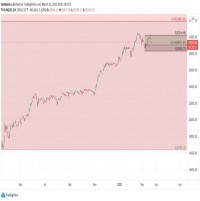
The third is the length of the round trip. The fund's share price chart shows a peak in 2021 close to where the NAV stands today. At 30 September 2025 NAV was $25,535.21, well below that peak. It has taken the roughly 46% gain implied for calendar 2025 and a further 10.03% in 2026 to restore the high. Reaching 30 times capital is a genuine milestone, but it is also a level the fund first approached about five years ago.
A different way of thinking about diversification
At the heart of the GLI philosophy is a straightforward observation: forecasting markets is exceptionally difficult. Instead of attempting to identify which asset class, country, currency or market will perform best, Coburn Barrett spreads risk across a broad global opportunity set.
The August 2026 factsheet sets out the fund's market exposure, which it defines as each asset's contribution to total portfolio risk rather than the share of capital invested. On that basis equities account for 46%, government bonds 22%, commodities 18% and money markets 14%. The equity exposure is 46% North America, 17% Europe ex UK, 15% emerging markets, 7% China and Hong Kong, 6% Japan, 5% UK and 4% Australia. Fixed income sits 44% in the euro area, 43% North America and 13% UK. The commodity book is 42% precious metals, 24% energy, 23% emissions and 11% agriculture.
Two shifts since September 2025 are worth noting. Emerging markets have risen from 10% to 15% of the equity exposure while China and Hong Kong have fallen from 9% to 7%, and commodities have grown from roughly a fifth to 18% of risk with precious metals still the largest single component.
The weights are not driven by forecasts about whether equities will rise or whether interest rates will fall. The process focuses on diversification, correlations, volatility and risk control.
The strategy does not attempt to eliminate risk. It attempts to ensure that the risk being taken is appropriately diversified.
Coburn Barrett then uses leverage to bring the overall risk of that diversified portfolio towards a level broadly comparable with a major equity index. Leverage here is not a directional market bet. It is the mechanism that allows a diversified, lower-volatility portfolio to target an equity-like level of risk. That is a very different proposition from simply taking more equity exposure, and it is also why the 2022 drawdown was as deep as it was: in a year when equities, bonds and the diversification between them all failed at once, leverage works in reverse.
The interesting number: correlation
One of the most revealing statistics in the Coburn Barrett story is not the 30-times multiple. It is the relationship between GLI and equities. Thomas Wehlen has previously indicated a correlation with the S&P 500 of approximately 0.55.
If a portfolio can generate long-term returns comparable with, or better than, traditional equity markets while maintaining substantially less than a one-for-one relationship with equities, it has obvious potential value as a portfolio diversifier.
For institutional investors and family offices, that distinction matters. The question is not simply "Can this fund make money?" It is: "Can this fund make money in a way that adds something different to the rest of the portfolio?"
The case for longevity
Performance statistics attract attention. Longevity is less celebrated but arguably more revealing. Very few hedge funds remain in existence for more than twenty-five years.
Coburn Barrett has maintained its core philosophy through an extraordinary sequence of market environments: the Asian crisis, the LTCM episode, the technology bubble, September 11, the global financial crisis, the eurozone debt crisis, Covid, the inflation shock of 2022 and the subsequent tightening cycle. The strategy has not merely survived a back-test. It has survived live markets, live liquidity conditions and live investor behavior for almost three decades. A model can be optimized retrospectively. A twenty-eight-year live track record cannot.
There is also an important nuance to the Bloomberg ranking. A database containing approximately 170,000 funds inevitably includes many strategies that did not survive long enough to establish comparable long-term records. The GLI Fund's position above 99% of that universe reflects both performance and longevity.
Evolution, not rigidity
Perhaps one of the most attractive aspects of the Coburn Barrett approach is that its underlying philosophy has remained consistent while the implementation has continued to evolve.
The principle is permanent: global economic growth is likely to continue. The methods used to participate in it do not have to be. As new markets become sufficiently liquid and accessible, they can be incorporated into the opportunity set. The firm has expanded its universe over time, including areas such as carbon credits, which now account for 23% of the commodity book under the emissions heading, while continuing to focus on liquidity and diversification.
That distinction, between maintaining conviction in a principle and remaining flexible about implementation, is central to the strategy. It is also one reason a philosophy developed in the late 1990s can remain relevant in today's very different investment landscape.
No performance fee
There is another feature of Coburn Barrett that stands out in an industry where fee structures have become increasingly complex. The GLI Fund charges a 2% management fee and no performance fee. That is unusual for a hedge fund.
The rationale is equally unusual. Wehlen has argued that performance fees effectively give the manager an option whose value can be influenced by the volatility of the strategy. Coburn Barrett instead chose a simple model: a fixed management fee, with the manager's economics not increasing simply because volatility or performance happens to be higher in a particular period.
For investors, that creates a notably straightforward alignment. The manager is paid to run the strategy rather than being incentivized to maximize the value of a performance-fee option. It may also help explain why Coburn Barrett has remained relatively small. The firm does not appear to have built its business around gathering assets at all costs.
Its own description of GLI as "the best fund you have never heard of" has an element of self-deprecating humor, but there is a serious point underneath it. A strategy can have an exceptional track record without becoming a household name.
Institutional characteristics beneath an unconventional story
For all the originality of the investment philosophy, the underlying fund structure is conventional in the ways that matter to institutional investors.
The GLI Fund launched in January 1998 and is domiciled in the Cayman Islands. Coburn Barrett is registered with the SEC and CFTC. Legal counsel is Walkers in Cayman, KPMG serves as auditor and administration is provided by Bolder in the Netherlands. The fund offers monthly liquidity and has no lock-up.
Coburn Barrett's website reports approximately $127 million of GLI Fund assets within total firm assets of approximately $221 million. For a strategy with a nearly three-decade record, the relatively modest asset base is striking. Whether that is an opportunity or a question is for allocators to decide, but it is not the profile of a firm that has prioritized asset gathering.
To forecast, or not to forecast
The investment industry has traditionally rewarded those who appear able to forecast the future. Which economy will grow fastest? Which central bank will cut rates? Which currency will rise? Which commodity will surge?
Coburn Barrett's answer is to ask a different question. What if you don't need to know? What if the more reliable forecast is simply that global economic activity, productivity and human enterprise will continue to expand over time? And what if a portfolio can be constructed to participate in that growth across equities, bonds, commodities and currencies, while using diversification, dynamic risk management and leverage to maintain a controlled level of overall risk?
As the firm puts it: "Shocks will continue but so will innovation and improved productivity. Our strategy of diversification and liquidity positions us best to benefit from an inevitably volatile world."
That proposition is neither fashionable nor complicated. Its difficulty lies in doing it consistently, and in surviving the years when the diversification stops working all at once.
For allocators, the most interesting question may therefore not be whether Thomas Wehlen can predict what happens next. It may be whether, after almost three decades and one very bad year, he has built a portfolio that does not need to.
|





 RSS
RSS