|
Matthias Knab, Opalesque for New Managers: Over 2025 and 2026, foreign investors pulled more than $40 billion out of Indian equities, and India trailed the broader emerging markets by one of the widest margins in its recorded history. Over the same period the economy kept growing above 7%, investment climbed to a record share of GDP, and Indian households put more money into stocks than foreigners took out.
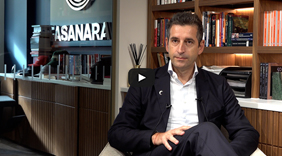
In an Opalesque Investor Workshop attended by more than 160 investors from 23 countries, Nishchay Goel, Parikshit Shah and Matthew Irwin of Duro Capital explained how to read that disconnect, what could go wrong, and how a concentrated, framework-driven investor is acting on it.
Every few years India goes through a phase where the economy and the stock market seem to be describing two different countries. The phase that began in January 2025 is the most extreme on record. For investors who want to understand India as an allocation rather than a headline, working out why that happens and what usually follows is the useful exercise.
Matthew Irwin, Chief Operating Officer of Duro Capital, addressed the "Why India? Why now?" question with: "We have a structural growth market that's entering a cyclical upswing following a meaningful reset. This is a setup that active managers live for, and the most attractive that we've seen in the last five years."
Duro Capital is an India specialist with offices in India and Singapore. It has managed institutional capital in Indian equities for more than 15 years through a concentrated long-only portfolio. Founder and CIO Nishchay Goel previously ran the India investment platform at Mousse Partners, a large New York single family office, from 2009 to 2018. Before that he was a Managing Director at the equity long/short hedge fund North Sound Capital. Managing Director Parikshit Shah, a CFA charterholder, previously covered Indian and ASEAN equities at Makrana Advisors and worked at ENAM Securities.
The anatomy of an exodus: flows, not fundamentals
Goel explained that since January 1st, 2025, India has been one of the weakest equity markets in the world, and its underperformance against the broader emerging markets index, more than 70% on Duro's numbers, is among the worst relative stretches in the country's recorded history.
Most of the gap comes from flows. 2025 and 2026 were the first back-to-back years of net foreign selling this century, and 2026 set a new record. Between January 2025 and August 31st, 2026, about $42 billion of foreign portfolio capital left Indian equities. "If you think about it, foreigners have net sold India all the way from 2018 now," Goel noted. Foreign ownership of Indian stocks has dropped to about 15%, the lowest level in well over a decade.
There are early signs that the selling may be running out of steam. "Interestingly, July and August were positive months for foreign inflows into India," Goel said. August brought about $3 billion of foreign institutional inflows, the largest monthly inflow in nearly two years, according to ShareCafe. JPMorgan's head of Asia and global emerging markets, Rajiv Batra, argues that "India emerges as a significant hedge when global markets are trimming or diversifying out of the AI story." Goel is careful not to read too much into two months, though: "Is the tide turning? Again, too short a time period. We will find out in the near future."
The second driver was AI. Korea and Taiwan surged as direct beneficiaries of the AI buildout, and India's weight in the MSCI emerging markets index fell from around 20% to about 11% in just two years. Every portfolio benchmarked to that index had to sell India mechanically. "We feel that the impact has been more on flows than on fundamentals," Goel said. "And this has all happened despite earnings being okay. Over the next fiscal year, earnings for the broader market in India are expected to grow at 17%."
Goel also rejected the idea that India is structurally an AI loser. "India has never been known as an inventor of new technologies. That being said, for every new technology, whether it be Y2K, the mobile internet, or mobile payments, India has always deployed at scale." Mobile payments are his example: India arrived late, and its UPI system now runs at a scale that dwarfs most of the world. IT services, the sector most exposed to AI disruption, accounts for about 7% of GDP. "Ninety-three percent of the economy is sectors that can actually benefit from the deployment of AI."
The upshot of two years of selling is that India is, in Goel's words, "probably the only major market that is trading at a slight discount to its average ten-year PE."
Growth that is built, not borrowed
Parikshit Shah turned to the economy, noting that "while you've seen all this money leave, fundamentals have actually remained quite strong."
The broad picture: India is a $4 trillion economy, one of the five largest in the world, and has grown upwards of 7% for most of the last three years. The June 2026 quarter came in at 7.8% even though the Middle East conflict was driving oil sharply higher at the time. Foreign exchange reserves are at a record. And the composition of growth matters as much as its pace. "The 34% is the investment share of GDP, and it's at an all-time high," Shah said. "The growth is being built. It's not being borrowed, fueled by debt and consumption. These are real hard assets being created - not a consumption boom on credit cards, which is what's happening in a lot of other parts of the world."
The factory nobody noticed
Shah said his next slide "surprises a lot of people." The standard view of India is a services economy and back office to the world that manufactures little. On Duro's data, India is already the world's second-largest producer of steel, cement, aluminum and ammonia, and more recently of mobile phones, solar modules and solar cells.
Smartphones show how quickly this has moved. In 2019, India assembled less than 1% of the world's iPhones. Today the figure is about 25%, and it is expected to reach 35% by 2030. Smartphones are now India's largest single export product. The catalyst was the government's Production Linked Incentive scheme, which is being extended to semiconductors, solar and aerospace. "The magnitude of investments we are seeing from both local as well as foreign firms is multiples of what has taken place in the last 50 years put together," Shah said.
He also addressed the obvious objection that this is all subsidy. India's incentive schemes pay out only on actual production, not on reported profits, and in Shah's view that is a big reason why they have worked where earlier programs failed. Electronics production has doubled in five years, and investment is now moving into the component ecosystem. Trade policy points the same way: agreements concluded with the UK and the US, the EU free trade agreement, and a calibrated reopening of trade with China, which matters a great deal for India's manufacturing ambitions. Domestic reforms support consumption too. The income tax exemption limit was raised by about 70%, GST was simplified and rates cut, and 29 labor laws were consolidated into four. Credit growth and passenger vehicle sales, two good indicators of the real economy, have both turned up sharply over the last six to nine months.
The $160 billion percentage point
For allocators who are new to India, Shah pointed to one structural statistic above the others. Indian households own about $16 trillion of assets. Roughly half of that is property and a quarter is gold. Equities make up less than 6%.
"Here is the most striking part," Shah said. "Every one percentage point of household wealth that moves into equity is $160 billion. That is four times the entire foreign outflow in equities that we've seen in the last two years." The shift is already underway, and it runs through systematic investment plans into mutual funds and through pension funds. "It's not just retail gaming money." Domestic investors put about $96 billion into equities last year, more than twice what foreigners sold over two years.
Goel put it in international context. India's household equity allocation is about 5.7%, compared with roughly 20% in China and 40-50% in the US. "If it even goes up by five percentage points, that's $800 billion of new capital that will come into markets."
Shah added a point about gold. Household gold wealth has roughly doubled in two years, and unlike equities, gold in India is held across every income level. "Rural India also benefits big time from the wealth effect of gold prices going up, and this is also supporting spending."
A flat index that hides a bear market
This is the core of the active manager's argument. Measured in rupees, the Indian market has been roughly flat for two and a half years. Yet about 45% of Indian stocks are more than 30% below their highs. The BSE 500 trades at a one-year forward PE in line with its ten-year cyclically adjusted average. The headline number looks unremarkable and conceals the stress underneath.
"There is some dispersion, which is an active manager's dream," Goel said. "That is what people like us live for. That's where opportunities are found. Someone asked me recently, and I said this is when investing for active managers becomes fun."
He also offered some history. Duro identifies six earlier periods when India underperformed the broader emerging markets, and in each one the underperformance was made up, "pound for pound," within 12 months. The current episode is the deepest and the longest of them. "We don't know when the turn will come," Goel said, "but at least history suggests that it will come."
The bear case, stated fairly
"We don't want this to be a one-sided pitch," Shah said before walking through the risks. How he handled them is worth studying for any allocator doing diligence on the region.
The ghost of 2013. India was one of the "Fragile Five" during the 2013 taper tantrum. Compared with that period, India is in far better shape today on every measure Shah listed: growth, inflation, the current account and the fiscal deficit. On the fiscal side, he noted that India is one of the few countries actually meeting its long-term deficit targets.
The rupee. Over the last 18 years, the rupee has depreciated at about 3.6% a year, roughly the inflation differential with the US. The path has been anything but smooth, though. "Out of the 18 years, the rupee has been flat for 13 years," Shah said, with most of the depreciation packed into short, sharp episodes. The move from around 80 to 95 against the dollar over the last 14 to 18 months fits that pattern. "While we are not currency experts, history would suggest that such periods have typically been followed by three to four years of consolidation."
Oil. India imports most of its crude, and 2026 put that exposure to the test. Brent hit $110 twice, in April and in September. India came through without significant damage: the current account deficit for the June quarter was 0.5% of GDP, and most forecasts put it at around 1.8% even with oil at $100. Shah argued that current oil prices are being set by supply disruption rather than demand. During a temporary ceasefire in June, oil fell from over $100 to below $70 within days. Global demand is set to decline this year, and the shift to EVs and renewables puts a structural ceiling on it.
Geopolitics. "We live in what has become a VUCA world - volatile, uncertain, complex, ambiguous," Shah said. US tariffs on India went from low to 50%, came back down to 18% after a deal, and are now overshadowed by talk of 100% tariffs on countries that import Russian oil.
Self-goals. Shah was frank about policy mistakes. The biggest one for foreign investors is taxation. India began taxing long-term equity gains in 2018 and raised rates on both long- and short-term gains in 2024, while Korea and Taiwan, the markets that have absorbed much of the capital leaving India, impose no capital gains tax on foreign investors. "Can the capital gains tax be reversed? That would be the single biggest catalyst to bring back foreign capital into India, in our view."
"We hate competition": a framework built for India
Goel then explained how Duro turns all of this into a portfolio. "First of all, we hate competition," he said. "India is a land of opportunities, they say. But I find that as the weakest link of India as well, because whenever an opportunity emerges, there are 10,000 companies that come in and chase that same opportunity. While that sector is hot, you see operating metrics declining, and at the very same time you see PEs in that very sector go up. We hate both."
What Duro looks for instead are businesses where competition is absent or declining. Those areas "lack interest from the market and provide us with good value, because we don't like to overpay for businesses."
That philosophy feeds a three-pillar framework:
The why of the business: the company can show it is able to protect its profit pool "even in the face of irrational competition."
The why now: a structural change that lifts the earnings trajectory to a new level. "I'm not talking about a hot winter and suddenly great AC sales," Goel said. Duro requires at least 25% compounded earnings growth over a typical three-to-four-year holding period.
Price value: "Simple, we're cheap."
"When all three pillars are firing is when Duro will strike," Goel said. The portfolio currently holds 16 companies, with the top ten positions typically making up 70-75% of assets. It is market-cap agnostic: the largest holding is a roughly $150 billion company that has been in the portfolio for four years. According to Duro, the approach has produced about 610 basis points of annualized gross outperformance over the MSCI India USD Total Return Index over the last five years, and more than 10% outperformance so far in 2026. Goel attributes the alpha to "stock selection across market caps," not to size or style tilts.
Three companies, one theme
Shah walked through three holdings. He presented them to show how the framework works in practice rather than as recommendations.
Eternal: winning the second war. The food delivery "war" in India is over. It has become a duopoly, and Eternal leads with about 58% market share and margins some 400 basis points above its nearest rival. The second war is quick commerce, where anything from a packet of chips to a refrigerator arrives in about ten minutes. Eternal's Blinkit leads that one too, with about 55% share, and it is the only profitable player. Blinkit turned EBITDA-positive about three quarters ago, while its two main competitors run at roughly negative 15% EBITDA margins and burn close to $1 billion a year each. The market is only about 5% penetrated. Shah acknowledged that Amazon and Flipkart are entering the space, mostly to defend their core e-commerce businesses, but argued that it is easier for Blinkit to broaden its assortment than for an e-commerce player to build a ten-minute delivery model from scratch. Duro sees an IRR above 35%: "We are paying a normal multiple for exceptional growth."
Skipper: mispriced by association. Skipper is India's largest manufacturer of power transmission towers, with a market cap of about $700 million. It is also one of India's less obvious AI plays. Because its plants sit next to its steel suppliers, and it rolls and galvanizes its own steel, its raw material costs are structurally lower than its peers'. More importantly, it is the only Indian vendor approved to export high-margin monopoles to the US, a market where vendor qualification can take six to ten years. Capacity is set to double within three years as transmission spending accelerates in the US, Saudi Arabia, Europe and India, and export margins run at roughly double the domestic level. The market still values Skipper like a low-return EPC contractor rather than a product company. Duro expects EPS to compound at more than 30% over three years and sees a 40%-plus IRR even at a 20-25 times exit PE.
Five Star Finance: the survivor's advantage. This non-bank lender, with a market cap of roughly $1.5-1.7 billion, makes fully secured loans to small informal businesses. The segment is so operationally demanding that banks and most NBFCs avoid it. Five Star has refined its underwriting over three decades. Through the worst credit cycle India has seen in years, its credit costs stayed below 2% and its ROE did not fall below 16%. The cycle has now turned: slippages are improving, collection efficiency is at record highs, and growth is returning while competition is at its weakest because the weaker players have exited. Duro expects earnings to compound above 25% for three to four years and sees an IRR above 30% at an exit multiple of 13 times earnings and two times book.
Goel summed up what the three have in common: "Eternal - competitors going through issues, a significant ramp-down in competitive intensity. Skipper - approvals to supply the US ahead of any other manufacturer in India. Five Star - coming through one of the worst lending periods, which has led to the exit of the weakest players. As we enter this new cycle of growth, it is probably going to be the biggest beneficiary."
What brings foreign capital back?
In the Q&A of the Opalesque live session, participants asked the question behind the whole session: what would bring foreign investors back? Shah listed the conditions already in place, namely record-low foreign ownership, a sharply weaker rupee and reasonable valuations, and then named three possible triggers. The first is lower oil, for example through a more stable arrangement in the Strait of Hormuz. The second is a cooling of the global AI trade. "Because there are no direct AI plays in India, it's become a little bit of an anti-AI play, so to speak," he said. The third and largest would be any moderation of capital gains tax for foreign investors, which "would see a massive rush of money coming back to India."
Goel added a longer-term view. "India does not have any direct AI plays right now, but at the end of the day, it is probably the deepest, widest market when you think about long-term growth. Nothing can take that away from India." He named the rupee, taxes and the AI trade as the three main reasons foreigners left, and said all three "might be set up in a way where we might see some better news."
Another participant asked whether US tariffs and China's export surge put Indian manufacturing growth at risk. Goel said the disruption is real: companies Duro speaks to have seen US-bound orders delayed. "But that does not mean that they are losing these orders forever. They are just going to take longer to fructify." He also pointed to diversification. That morning he had met a company that has started supplying components to some of the world's largest semiconductor equipment makers. The revenue stream was zero two years ago and is expected to reach 25% of revenues within the next two years. "Buyers are coming to India to go deeper, to look harder, because the quality is there, at the right price, and more importantly, with better reliability of supplies."
On whether Duro ever sits in cash, Goel described a process where "positions fight for their place." Duro keeps a reserve list of candidates, and when a holding's pillars have largely played out and its expected return falls below the underwriting threshold, it is replaced from that list. "We do not love sitting in cash. At the same time, we will not invest that capital into subpar opportunities."
Signposts for the long-term allocator
Beyond the specifics of 2026, the session gave allocators a set of indicators for judging the India opportunity at any point in the cycle:
Flows versus fundamentals: when benchmark-driven selling drives the market while earnings, investment and credit keep growing, the dislocation is usually temporary.
Dispersion under a flat index: the share of stocks trading far below their highs tells you more about opportunity than the headline PE.
Household equitization: each percentage point of India's $16 trillion household wealth that moves into equities is worth about $160 billion, a structural bid that foreign selling has not been able to overwhelm.
The rupee's rhythm: long periods of stability punctuated by short, sharp adjustments, and allocators should know which phase they are entering.
Policy catalysts: tax treatment of foreign investors, trade agreements and production-linked incentives can move capital faster than any macro print.
Competitive intensity: in a market where "10,000 companies" chase every opportunity, the lasting returns go to businesses where competition is fading.
None of these depends on predicting the exact quarter when foreign capital returns. The question for long-term investors is not whether India's growth story is intact. It is whether they are positioned for it before the market remembers. Or, in Goel's words: "We don't know when the turn will come, but at least history suggests that it will come."
The full replay of the Opalesque Investor Workshop "India's Foreign Investor Exodus: A Warning or An Opportunity?" with Nishchay Goel, Parikshit Shah and Matthew Irwin of Duro Capital is available here: www.opalesque.com/webinar.
---
This article is for informational purposes only and does not constitute investment advice or an offer to sell securities. Data and performance figures are as presented by Duro Capital during the webinar on September 24, 2026, and have not been independently verified by Opalesque. Performance figures are gross of fees. Discussions of individual securities reflect the manager's views as of that date and are not recommendations. Past performance does not guarantee future results. Investors should conduct their own due diligence and consult with qualified advisors before making any investment decisions.
|





 RSS
RSS