|
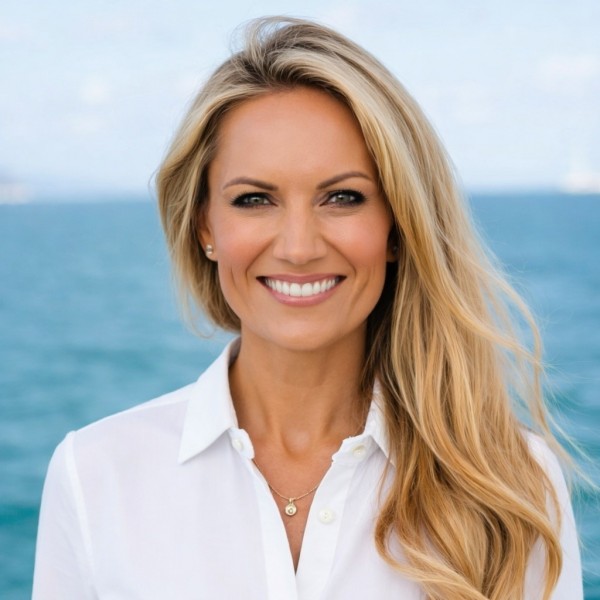
Lana Callahan Matthias Knab, Opalesque: This August, Apex Group launched The Inner Circle, an invitation-only network capping membership at 100 qualified family offices and select institutional allocators. The proposition is unusually spare for a private markets venture: direct family-to-family co-investment, with no GPs, no syndication layer and no externally sourced deal flow. Its founder, Lana Callahan, is Apex Group's Global Head of Institutional Allocators. The inaugural gathering will take place in Grand Cayman on January 12-13, 2027.
Opalesque spoke with her two days after launch about the market conditions that produced the idea, the mechanics of the model, and the question she considers the most consequential of all: how to ensure that the people in the room are who they claim to be.
The diagnosis: Intermediation costs and counterfeit access
Matthias Knab: You have been working on this for more than a year. How did the idea originate?
Lana Callahan: Through my work with thousands of investors globally, I kept hearing the same issues come up again and again.
The first is the state of the secondaries and co-investment market, which at times resembles the Wild West. The current landscape is exploding fees across the board and the trajectory is worsening. Only yesterday something was put in front of me carrying a 25% carry and a 20% one-time fee, at a valuation I would describe as unjustifiable. And critically, none of that economics accrues to the investor selling the secondary. It accrues to the banks and the brokers.
The second problem is fraud, and it's increasing. The proliferation of special purpose vehicles is a major driver of it. Investors subscribe believing they have acquired exposure, and they have not - and that is fraud. They believed they had access to the shares, they paid a considerable sum for it, and when they sought to redeem there was nothing there to redeem.
The third is simply the absence of infrastructure. Family offices have asked me for years to make introductions for something specific they were pursuing globally, and I would go out and try to source the connection personally. There was no structured, organized route to private family-to-family co-investment. So I built one. The concept crystallized about a year ago and we launched on Monday.
The mechanics
MK: How does the model work in practice?
LC: The originating member is a family office, or one of our select institutional allocators - we have a large bank and a pension among them - that is itself invested in the opportunity. It might be a consumer business; one of our families recently acquired Soho House. Or, it might be a robotics company. The condition is that they are currently invested or have previously been invested. They bring that opportunity to The Inner Circle and present it. We also distribute deal flow throughout the year.
Where another member wishes to participate alongside them, I connect the two parties directly. NDAs are executed. The lead family's due diligence is shared, together with the data room and documentation of the underlying company or GP. The member receives the sector expertise from the family that has already underwritten the investment - which is, in my view, one of the most valuable elements of the entire proposition.
The offering rests on four pillars. The first is direct family-to-family co-investment: no brokers, no intermediaries. We hold no GP relationships, we sell nothing, we do not fundraise, and nothing is sourced through external marketers. Origination is entirely internal to the membership.
The second is the in-person programme. Grand Cayman in January is the first; we expect three to four gatherings during 2027, in different regions, with families presenting their own opportunities directly.
The third is access that is genuinely difficult to obtain elsewhere. For Grand Cayman, an NVIDIA executive will be delivering the keynote, and we have access to NVIDIA's co-investments at no cost, which we extend to members. We are also working with Cambridge Consultants - the deep tech firm rather than the advisory business - which employs more than 800 scientists and engineers and holds in excess of 5,000 patents. They are leading a deep tech workshop in Grand Cayman, and we are engaged with them across six distinct workstreams: the patent estate, a technology company they are spinning out, and co-investment alongside infrastructure funds, where there is an emerging trend away from billion-dollar-plus commitments toward co-investing with local family offices. A large multinational technology company, whose name would be familiar, is also spinning out a business.
Conditions for allocators are demanding at present. You find yourself calling around asking whether anyone knows a specialist in a given field, or what the outlook is over ten to thirty years for space, or AI. My intention is to make that materially easier.
The fourth pillar is the direct dialogue with the family that has already committed capital, giving members access to their sector expertise and underwriting process.
And, of course, preferred rates from our fund administrator that is extendable to the member's portfolio. Also members are graciously offering preferred rates at clubs they own, such as SoHo House.
The admissions test
MK: What are your criteria for membership?
LC: It has become considerably harder to assess, because everybody now describes themselves as a family office.
We apply the SEC definition and have layered our own requirements on top. The minimum is $150 million in assets under management. Applicants attest that they are accredited investors, that they meet that threshold, and that they do not raise capital - by which we mean they receive no fees for capital raising.
MK: Do you verify it?
LC: We have a process. The membership application requires a considerable amount of substance: who you have invested in over recent years, a reference from an investee, and a reference from another family office. Applicants then meet the board. We can also run full due diligence through our broker-dealer.
That said, a meaningful portion of this remains self-declared, and I am acutely aware of it. We will do everything we can to ensure the right family offices are in the room. Many of our questions are deliberately elementary - where is your website, what is the legal entity behind your family office - and I find with some frequency that some applicants cannot answer even those. Many of our questions are designed to identify inconsistencies or potential red flags - what is your portfolio diversification strategy, which company or GP did you most recently complete due diligence on, and what is your typical holding period?
It is also worth saying that members are not required to originate. Some will only allocate and have no deal flow of their own; others originate consistently but co-invest rarely. A wide range of profiles fits here. We have very substantial family offices above our large threshold of $5 billion plus and others closer to the $150 million threshold, and I regard that spread as important.
Where an opportunity carries a minimum a smaller member cannot meet - say a $50 million ticket on an NVIDIA co-investment - we can structure an SPV. The distinction being that the member is dealing directly with NVIDIA, rather than with an unknown party assembling a vehicle and asserting access it may not have.
Economics, scale and infrastructure
MK: This is a straightforward membership model, with no broker-dealer/intermediary economics in between.
LC: Correct. Membership is $10,000 annually for one individual. A colleague or spouse attending an event pays a modest additional fee. Membership carries access to all deal flow and to every in-person gathering, with no limit on attendance.
On certain transactions we charge a small fee, in the order of 1% to 2%, not the 25% economics currently circulating in the market. Every opportunity is fully disclosed at the outset: members receive a communication setting out the transaction, the precise fees and all relevant figures, and those terms do not subsequently change.
MK: Are you building a digital workflow, or is this handled by email?
LC: Secure messaging and email. The model is deliberately intimate. We could host it on our platform, but the consistent feedback from family offices is that they are thoroughly tired of maintaining logins across a proliferation of portals. So we keep it simple: we send members what they need, and once NDAs are executed we introduce the parties.
MK: The membership is capped at 100.
LC: We begin with 100 families and assess from there. My longer-term ambition is to build the largest co-investment network globally, potentially structured regionally. But we start at 100 and observe how it functions and how the deal flow develops, because so much of the value resides in the intimacy and trust between members. Scale beyond a certain point erodes exactly the connectivity that makes it work.
This is also a formalization of behaviour that was already occurring. At our previous events I would make introductions and members would begin working together. The Inner Circle is the natural extension of that.
MK: What traction do you have outside the United States?
LC: The majority of members are currently US-based, but we have members in the Middle East, Europe and APAC, as well as institutional allocators including banks and pension funds. The pension interest genuinely surprised me - they are seeking more direct co-investment exposure.
I have been discussing the concept with our families for a year, so there is a committed core group, several of whom attempted something comparable within their own family offices without success and now want to help us scale.
We will begin announcing our committee members shortly, and I think the market will be impressed. A further release will follow on the January event once the agenda is finalized. We also have capacity for one additional world-class strategic partner: NVIDIA covers AI, Cambridge covers deep tech, and I would like a third. The condition is absolute - partners cannot be selling anything. This is knowledge and content. Even our event sponsors are not funds raising capital.
Screening for authenticity
LC: I would value your view on how to filter family offices. It is essential that we have the right people in the room. Some organizations request bank statements; I am weighing going that far.
MK: It is not necessary. I maintain a checklist for verifying a family office, and none of it is intrusive - these are questions any operational family office answers in the ordinary course.
Ask the approximate size of their liquid and discretionary assets. Ask their investment criteria for the asset class in question, since professional family offices operate defined mandates. Ask about portfolio diversification strategy - genuine family offices articulate risk management and allocation fluently, while imposters hesitate or decline to answer. Ask about typical holding periods and exit expectations. Ask what types of co-investment partners they work with; the authentic ones tend to name them.
Then ask which fund or manager they most recently completed due diligence on. Real allocators discuss this readily and in detail, and where they are uncertain, they will invite you to verify the relationship directly.
Vagueness, hesitation or deflection on any of these is itself the signal.
LC: That is helpful - there is one in your list I have not included. We already take references, and I believe we have covered all of those with the exception of requesting bank verification or a reference letter, which was the one additional step I had been weighing.
The differentiators
MK: Is there anything we have not covered that you would want to add?
LC: Three points. First, we hold no GP relationships. This is LP only, direct to direct, and I have not identified anyone operating the model in the way we are. Second, the quality of access. And third, the ability to speak with the party that has already committed capital, with their sector expertise and underwriting behind the opportunity.
The Inner Circle is a brand name for the curated network of family offices operated by Apex Group. Neither Apex Group nor The Inner Circle provides investment, legal or tax advice, and participation does not guarantee any investment opportunity, allocation, transaction or outcome. Co-investments referenced are executed through ApexInvest Markets LLC, member FINRA/SIPC. Further information at www.theinnercircleapex.com
|





 RSS
RSS