|
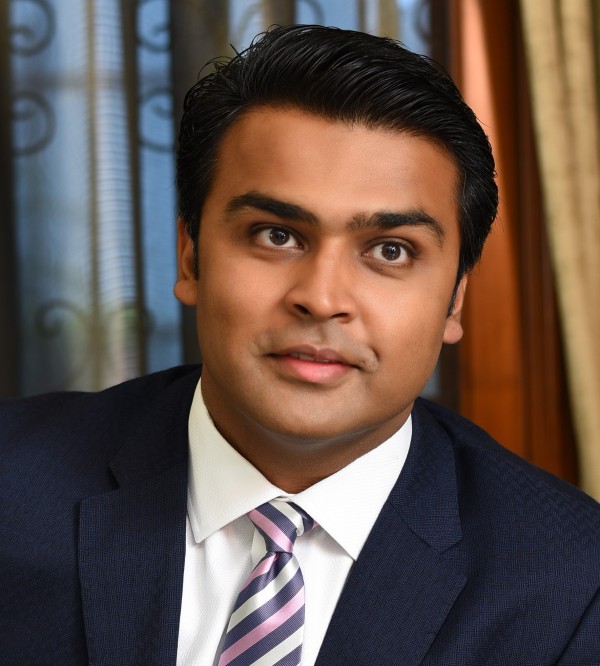
Nishchay Goel Matthias Knab, Opalesque: In the first two articles of this series - Part 1 and Part 2 - Duro Capital's Nishchay Goel and Parikshit Shah laid out the paradox of Indian markets in 2026: record foreign outflows of $30 billion in six months colliding with a bottoming earnings cycle, credit growth back to 16-17%, and reforms flowing straight into corporate P&Ls. In this final article, they open up the portfolio itself: the framework behind every position, the names they have been buying into the downturn, the AI question every allocator asks - and what running the India platform at one of the world's largest single family offices taught Goel about compounding.
The downturn as a gift: From over 20 names to 15
For an active manager, a two-year drawdown driven by flows rather than fundamentals is not just pain - it is a repricing of conviction. Duro used it to tighten the book.
"What the downturn in India has given us is an opportunity to concentrate our portfolio," says Nishchay Goel, Founder and CIO of the Singapore-based, MAS-regulated firm. "We used to have over 20 names in the portfolio. Today we have 15. We have concentrated our capital into opportunities where we have the highest conviction."
"We don't like competition"
Behind every one of those 15 positions sits the same framework - and it starts from a counterintuitive observation about what makes India hard.
"You might have heard Chris Hohn speak about avoiding competition - but Hohn only does developed markets. We do India, and our model of competitive assessment is based on what we see in India," Goel explains. "India has amazing opportunities across a lot of different sectors. But that by itself does not make India exciting - because any time a hot theme emerges, a flood of companies rush in to grab the same opportunity. Supply goes up, pricing goes down, no one makes money. Chasing hot sectors or themes is not the way to invest in India."
"What we look for is companies operating in spaces where competition is either declining or cannot enter. That's what we love."
The current portfolio expresses that framework across three of the four GDP components discussed in Part 2 of this series: the C (consumption), the cyclical banking turn, and the I (investment) - the latter with a global AI twist.
The consumption play: A quick commerce leader bought 40% off its highs
Parikshit Shah walks through a recent addition that illustrates the framework in action: Eternal, the listed Indian consumer internet company with two levers to the business.
"One is food delivery, under Zomato, much like the Uber Eats and DoorDash of the world. The other is something very unique to India, where this company is the market leader: quick commerce, under Blinkit," Shah says. "You place an order on your phone for anything you want - not necessarily food. A packet of chips, even a television or a refrigerator - and more often than not, you'll get it in 10-20 minutes. It's a very, very large market that is still barely penetrated, because this is just a four-year-old business. So, a very long runway for growth, and these guys are well ahead of competition."
Notably, Duro did not chase the story on the way up. "We had always liked the company. What we were waiting for was some proof of concept on the quick commerce side - which they delivered in December, when Blinkit became breakeven. That gave us a lot of confidence that the business not only works, but that it can be done profitably," Shah explains. "We significantly scaled our position in the name around March 2026, when the stock had corrected 40% from its highs. We see potentially close to a 40% IRR in this name over the next three years - and it's already up quite a bit from our buying price."
Goel adds the competitive kicker that makes the position a Duro position: "In food delivery there are two companies in the space, Zomato is the leader, and there is no third player coming in. In quick commerce - which is going to be multiples of what the food delivery business is in India, with industry penetration currently in the low single digits - Blinkit is by far the leader, and we are seeing competition come down because everyone else has been losing money in the space. Blinkit is the only player making money. Those are the kinds of things we look for." An interesting development since this interview is that Zepto, one of Blinkit's loss-making competitors, postponed its planned IPO and is reportedly seeking a smaller private funding round at a steep discount to its October 2025 valuation.
The credit turn: Bottom-of-the-pyramid lenders at 1.5x book
With credit growth recovering from 10-12% back to 16-17% (see Part 2), Duro has increased exposure to financials - but not the obvious ones.
"These are not the standard private sector banks that pretty much everybody owns just because they're large index components," Shah says. "These are very niche, bottom-of-the-pyramid lenders who have gone through a tough cycle over the last two years. With growth coming back, they can potentially compound AUM at 25% - and they're available at close to one and a half times book value with 16 to 17% ROE."
Goel frames the quality argument: "These are leaders in their space, but more importantly, in verticals where competition has gone down. These are large, under-penetrated spaces, and our companies have been operating in them for years and built proficiency in each of these verticals - generating healthy ROEs, growing assets under management at 25-plus percent, and still trading below 1.5 times forward price to book."
India's hidden AI plays: The power value chain
India has no large language model champions and no memory chip makers - a fact that has cost it dearly in benchmark flows, as AI capital rotated to Korea and Taiwan. But Duro has found a different route into the same global buildout: power infrastructure.
"While India does not have direct AI plays, we do have companies in the power value chain which are competing with the best in the world globally," Shah says. "We own two names here. One is the only Indian company able to supply transmission towers to the US - it is benefiting from the massive T&D capex program going on there, driven by all the power requirements coming from the data centers being built. The other is a global leader in steam turbines below 100 megawatts - again an Indian company that has done very well competing with the best global players, set to benefit significantly as the need for power goes up. And we know these companies well - we have tracked them for a long period of time."
Goel quantifies both the entry point and the prize: "One of them we bought at below 18 times earnings, growing earnings upwards of 35 to 40%. And the US is going to spend $250 billion on its transmission infrastructure over the next three to four years. This company is going to be one of the leaders in monopole tower supplies to the US - and it does so at margins that are significantly higher than what it earns on domestic Indian sales."
"Will AI kill Indian IT services?" - the question allocators always ask
Goel raises the elephant in the room himself, because he hears it in every allocator meeting: Indian IT services is around 7% of the economy, AI is going to kill IT services - so why look at India at all?
His response comes in three parts. First, perspective: "Indian IT services has not been a tremendous growth area for the Indian economy for many years. Net hiring at some of the largest Indian IT services companies has been negative for the last four years - and that cannot just be attributed to AI. The rationalization of the workforce has been going on for three or four years."
Second, the offsetting growth engine: "New opportunities are emerging in the form of global capability centers - GCCs - where foreign companies are setting up their own presence in India, not just giving business to Indian IT services companies. This has been a significant addition to Indian economic growth, and it continues."
Third, the technology itself may loop back: "Today we are primarily using large language models. Tomorrow we will also use small language models - and small language models will require companies to use their own data: refine it, store it, analyze it, and train on it to build AI solutions targeted to their own businesses. It could very well be the IT services businesses that do that work for them."
The decisive point, however, is portfolio construction: "IT services may be impacted, yes, and IT services contributes to the Indian economy, yes. But does that mean our portfolio will be impacted? We do not own a single IT services business. India and the Duro portfolio are two very different things. It depends on an active manager finding opportunities that might actually be benefiting from AI globally - and that's the difference we would like to highlight."
What a family office seat teaches you that a hedge fund seat can't
Before founding Duro, Goel was a Managing Director at Mousse Partners, the New York-headquartered single family office ranked among the largest in the world, where he ran the India investment platform for a decade. I asked him: what did investing family office capital teach him that a typical hedge fund seat wouldn't have?
"I have worked both at a hedge fund and at a large family office, so I can speak from experience gained at both kinds of investing platforms," Goel says. "The biggest thing I learned from my time at the family office is that you do not have a fixed time horizon - you can take long-term bets. That is what teaches you to analyze businesses from a long-term perspective."
"And single-handedly, the biggest strength one needs to invest in India is to understand what compounding of capital truly means - because it is possible in India. Sitting in a seat with no pressure of short-term returns shaped my personality as an investor. One of the biggest things for an investor is that their personality has to suit their investing style. That is what we have been able to build at Duro."
The entry point - and who should not invest
Goel sums up the setup as he sees it: "You can literally say we are at the beginning of a cycle. The December 2025 quarter was the bottom for earnings, and in March we started seeing companies beat expectations. In terms of valuations, we are much below the last five years' average valuations in India, and almost equal to the last ten years' cyclically adjusted valuations. As money comes back into the country, valuations may likely not deteriorate - and could even get more expensive as capital chases India. Combine that with extremely negative foreign positioning and a currency that probably gives you a good base for entry, and you are at a solid entry point."
Even the geopolitical disruption, he argues, works in favor of the strongest businesses: "The cycle has been disrupted by the events in the Middle East - which means the rubber band is stretched. Disruptions, for great businesses, are opportunities. It is the strongest that benefit from disruption the most."
And beneath it all sits the structural domestic bid: "Indians are putting $60 billion of new capital every year into Indian equities - with only 6 to 7% of household savings in equities, versus 40 to 50% in the US. We are not saying India goes there. But imagine it just goes to 12%: you suddenly double what's coming in every year from domestic capital. We may have that structural support for the next few decades. The marginal change will come when the foreigners come back - and those flows could take valuations up significantly."
He is equally direct about who should stay away - an unusual stance for a manager talking to allocators. "If you are looking to come into India for just the next one year, please don't. India is a long-term market - over the last 30 years, one of the best performing global markets on a dollar basis. A lot of the bad experiences you hear about India are, more often than not, people who don't understand India well enough and who chase it when it becomes extremely hot. We are nowhere close to such a point. If you are looking at a long-term play - and cycles typically last at least three to four years on the way up - then this is a good time to be looking at India."
Webinar: "India's Foreign Investor Exodus: A Warning or An Opportunity?" - Hear the full thesis and put your questions directly to Nishchay Goel and Parikshit Shah of Duro Capital on Thursday, September 24th at 11am ET (4pm UK, 5pm CET, 6pm Riyadh, 7pm Dubai, 8:30pm Delhi). Register here: www.opalesque.com/webinar. A replay will be provided to all registrants.
This article is for informational purposes only and does not constitute investment advice or an offer to sell securities. Past performance does not guarantee future results. Discussions of individual securities reflect the manager's views as of the date of the interview and are not recommendations. Investors should conduct their own due diligence and consult with qualified advisors before making any investment decisions.
|





 RSS
RSS