|
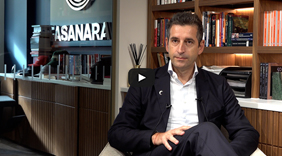
Arthur Fery Matthias Knab, Opalesque for New Managers: In Part 1 of Opalesque's conversation with Chenavari Investment Managers founder and CEO Loic Fery, the European alternative fixed income credit specialist reflected on 18 years of developing the firm, the growth challenges he would possibly manage differently, and on the humility doctrine at the heart of Chenavari's investment culture. In this second part, the conversation turns to the other arenas of Fery's life - football, family, and the question of where high performance actually comes from - before Chenavari's Kirstie Sumarno offers an inside view that Fery himself would never volunteer.
Seventeen years of FC Lorient: The credit investor's football club
For 17 years, Fery did something almost no one else in the hedge fund world has attempted: he simultaneously ran an alternative asset manager and owned a Ligue 1 football club, FC Lorient in Brittany. Asked what football taught him about managing a fund, his first answer was characteristically unsentimental: "No, I don't think there is anything that football taught me to manage the fund."
But the parallels he did draw are instructive. "Performance on a football pitch is not one individual skill, one person - it's a team. When it comes to an investment firm, it's certainly not just one person, but the whole investment team that forms the talent, together with the teams in operations and all the functions around it - marketing, finance, legal, risk. All of those teams should be oiled properly for the fund to perform."
The second parallel concerns the psychology of elite performers: "Top talents in finance can sometimes have similar behavior to top talents in sports. And the way you manage them can have similarities with the way you manage your top investment talents in the dealing room: you need to make sure they're happy, that have the tools and resources they need to perform best. You also sometimes have to be tough with them, because if you just spoil or praise them, you may not get the best of them. And you have to remind them constantly that they are nothing without the rest of the team."
Under Fery's ownership, FC Lorient became known for something rare in professional football: financial discipline. "Over the past 17 or 18 years, I think we only had three years where we lost a little bit of money - the rest of the years the club financials were basically positive. That's what FC Lorient has been in particular known for in Europe. I've always wanted to manage FC Lorient with a balanced business model, avoiding large financial losses commonly seen in football. We developed the club through significant investments in infrastructure, especially around the academy, where we have been very successful in developing young new talents over the past 15 years."
Seeking to ensure long-term financial stability of the club through a balanced model is certainly not surprising from Fery: his credit investor's instincts probably followed him in Brittany. Structural changes in French football landscape eventually led him to partner with a larger group: "We managed to balance the accounts of the club for many years until some structural changes happened in French football - in particular the drop in TV rights. That's when I decided to partner with a very well capitalized football group called BKFC that owns AFC Bournemouth in Premier League. I am now a minority shareholder in a much larger football group and still remain Chairman of FC Lorient."
Arthur at Wimbledon: Harvesting the seeds
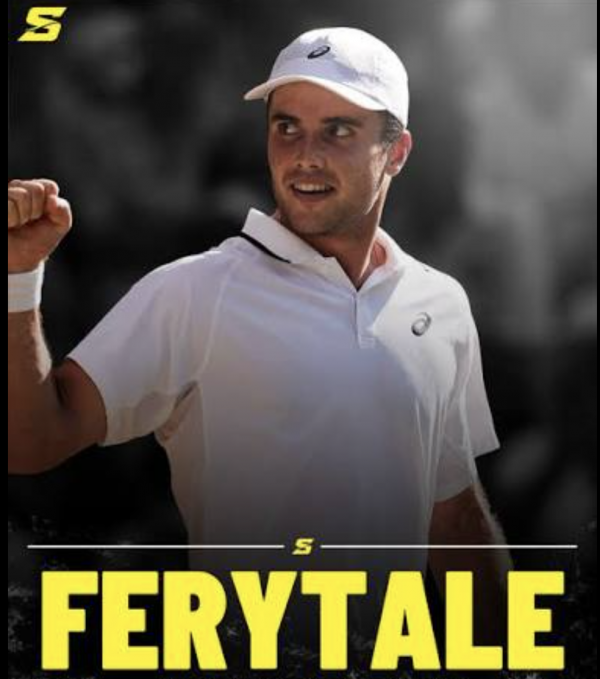
Another big sports story in the Fery family made headlines around the world just weeks before this conversation: his son Arthur Fery's unexpected incredible run as a wild card to the Wimbledon semifinals - a first for a British player in the Open era, as his father noted.
"It was obviously a huge satisfaction and emotions for the family, and I'm particularly glad for him," Fery said, "because what he has been harvesting during those two weeks at Wimbledon is the product of the seeds he planted in the past many years - through hard work, through resilience, because he was injured for some time, and through the tough choices he made."
The tough choice in question will resonate with any parent weighing ambition against prudence. "He made the choice to go to university while the sports world was pushing him to go pro earlier. He went to Stanford, kept playing tennis there, and was number one on the U.S. university circuit, after having been number 12 in the global junior rankings before he went to the U.S. He delayed his move to the pro tour a little - a deliberate choice, because he didn't feel ready at the time. And having a backup - a great academic degree from Stanford - certainly gives increased confidence, in case the tennis career didn't turn out to be what he was hoping for."
The Wimbledon run itself, in his father's telling, was a study in resilience: "He took each match one after the other. As he said himself, he never projected further than the next match. He played and won his first five-set match - and became the only player ever to win two five-set matches in a row in fifth-set tiebreaks. In both cases he had been down two sets to one with a break against him. Arthur impressed all of us through the resilience he demonstrated." The run ended against Alexander Zverev in the semifinal - and even that, Fery noted, was immediately converted into material for improvement: "After losing to Zverev, he was already working with his coach on what he could do to be better in those games. What I really like is not just the impressive results - it's what his mindset has been, the efforts, and the journey he's been through." After Wimbledon, Fery's son Arthur appears as number 36 in the ATP rankings.
Taught or inherited? The high-performance question
Knab pressed on the natural follow-up: is that kind of resilience and dedication taught, or inherited? Fery's honest answer - "I don't know" - quickly developed into perhaps the most transferable idea of the entire conversation, one he explicitly extended from parenting to the corporate world as well.
"If you instill the idea that there's no ceiling to what your performance can be - if you believe it's possible to achieve whatever wild dreams you have - and you instill that in your children, or in your team, that's a mindset. That's the starting point. It's not going to resonate with every human being the same way, so there's probably some element that is a given, a gift. But resilience and mindset is something you can influence, or at least contribute to."
And the crucible, as ever, is adversity: "There's no recipe. Everyone will face satisfaction, disillusion, setbacks. How you deal with setbacks is probably the most defining part of what high performance requires, because I don't know anyone who has achieved high performance and never faced setbacks. Stay humble, be yourself, believe in yourself, and work as a team - because no one achieves incredible things being alone." His son, he pointed out, said the same thing about the team he assembled around him at Wimbledon. "In my view, a great team is a necessary condition to achieve great things," Fery concludes.
The view from inside: "He definitely brings the energy"
As the conversation closed, Chenavari's Kirstie Sumarno, who heads investor relations at the firm, offered the perspective Fery would never offer about himself.
"Loic won't say it for himself, but he definitely is a driving force of the culture of the firm," she said. "If you ask anyone at Chenavari, he brings the energy and the ambition, and people feed off that enthusiasm."
She added a detail that says as much about the firm's culture as any risk framework: "One thing that's quite unique about Chenavari - is that for a group CEO he's very approachable. Unlike other firms, he'll go and sit with everyone when he comes into the office, even the interns - he'll find out about them. People feel inspired, they feel like he wants to know them. It brings people together around a common goal, everyone working as a team and feeling part of Chenavari. It's something Loic probably doesn't see himself, but it's very apparent."
It is a fitting coda. The founder who refuses the word "success," who insists that nothing matters more than the next day of performance, and who shaped Chenavari - and, it seems, his family - on the twin pillars of expertise and humility, is described by his own team in exactly the terms he uses for everyone else: as one part of a team that is nothing without the rest.
Read Part 1 of this interview - Chenavari at 18: The growth lesson, the humility doctrine, and crisis-tested institutional capability - at www.opalesque.com.
|





 RSS
RSS