|
|
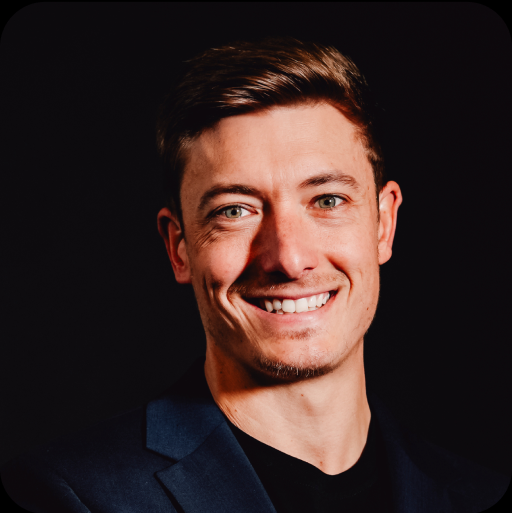
James McDowall Matthias Knab, Opalesque for New Managers:
In Part 1, Arcanum Capital's James McDowall made the case that the stablecoin opportunity is finally real.
In this second installment ahead of our June 30 Investor Workshop, he explains how Arcanum gets in front of the best companies before the rest of the market hears about them - and the discipline that decides whether a deal gets a check. The interview has been edited for length and clarity.
The sourcing edge
Matthias Knab: How is Arcanum positioned to benefit from this stablecoin opportunity we've been discussing, and how do investors benefit in turn?
James McDowall: One of our real key differentiators is our ability to generate alpha, and that comes from a distinct sourcing advantage. A lot of the innovation still comes out of Silicon Valley, where Luchang is based, so we get the first look at many of the deals. We can find companies at the seed or even pre-seed stage that most allocators will not hear about until a Series B or a pre-IPO round. We are on the ground floor, finding entrepreneurs within our close networks and getting warm introductions very early.
It is that information asymmetry and deal-flow access - through people like Tether, where we are very close to the ventures and business-development teams, and through the Draper ecosystem, where Luchang is a mentor and global ambassador for Draper University. She also spends time around Stanford and Berkeley, right at the centre of the whirlwind, with first access to the entrepreneurs coming out of those programs.
The screening funnel
Matthias Knab: Walk us through the screening process. How many deals do you see, and how many do you actually invest in?
James McDowall: One of the biggest differences between Fund I and Fund II is our level of selectiveness. In Fund I, we were a little more keen to write checks - a lot of excitement, a lot of hype, a lot of new founders, and it was relatively easy to raise capital. Today, deal-flow quality is generally higher and there is less of it, which is what happens in a liquidity-contraction cycle when venture capital is tight. The flow goes from abundant and low-quality to less frequent but better.
If you count every source - cold emails, introductions, deal-flow groups - we probably see a deal a day on average, so roughly 30 a month. Honestly, most cold emails we delete within about five seconds, because the vast majority of what we invest in comes from our close networks. If someone arrives cold and we have never heard of them, it is very unlikely the deal is worth doing. Not impossible, and if it looks good we will absolutely have a conversation, but most are not.
The first step is an in-person meeting or a call, depending on geography, and then we ask some very difficult questions. What is the founder's background - do they have real expertise in this sector? Is the problem real, and is the total addressable market big enough? As a venture allocator you have to ask one question above all: can this company pay back the entire fund? Venture works on a power law. You have a high failure rate, you make a lot of bets, but each one has to have a genuine chance of returning the whole fund. If a company is valued at $5 or $10 million, it has to have the potential to reach hundreds of millions, or even billions.
So we are only investing in exceptional entrepreneurs with a real edge - whether that is technology, networks, regulatory arbitrage, or some of the best developers in their sector solving a problem no one else can. There has to be something that makes us say "wow, no one else can do this, and no team is better positioned to pull it off." Once it clears that bar and the investment committee, we size the check by conviction. A team we love but with a very hard problem to solve might get a smaller check; an exceptional founder already generating revenue at a reasonable valuation, with lower risk, might get a larger one.
Where the talent really is
Matthias Knab: Crypto was supposed to flatten the world and give everyone an equal chance to build. Is it really a global industry, or are there clear hubs?
James McDowall: If we start with fintech, London is actually one of the world's leading hubs, on the strength of its banking and capital markets, open banking, payments, and a deep talent pool. New York has Wall Street, big asset management, enterprise fintech and distribution. San Francisco - where Stripe, Plaid and Brex came from - is more about deep-tech innovation than fintech per se. The more financial the innovation, the more it tends to be New York and London.
But for where we focus, London gets less attention, and we actually have no investments there. That is the crossover with crypto - London has not been very crypto-friendly on regulation, so a lot of entrepreneurs in our sector congregate in places like Dubai and Abu Dhabi instead. Those governments have set themselves up to attract young people building companies, with clear regulation through the DIFC and the ADGM, plenty of capital, and a tax question that matters enormously. If you build a company and start making millions, do you want to hand 40% to the UK government, or live in Dubai for a few years and pay no tax? That said, the recent war has changed things - entrepreneurs do not want to be in a war zone, so a lot have moved back to San Francisco or New York.
For our sector, San Francisco and New York are number one and two. To raise money, founders need to be where the money is. You have the deep innovation and technical talent in San Francisco, and the deep liquidity and capital in New York.
The more AI-heavy and academically difficult the technology, the more likely the team is in San Francisco; the more finance-heavy and network-dependent, the better positioned they are in New York. London is trying to catch up - the FCA is giving guidance - but right now the US is winning that race, especially with the GENIUS Act.
How the Tether relationship began, and how Zug lost its lustre
Matthias Knab: Your firm is backed by Tether. Tether also invests in your funds, which gives you an incredible sourcing and strategic advantage. How did the Tether relationship come about?
James McDowall: I lived in Switzerland for five years. There were two key locations: Zug, the original "Crypto Valley," which became one of the world's leading blockchain hubs and was among the first jurisdictions globally to experiment with accepting Bitcoin for certain municipal services. At its peak, Zug attracted entrepreneurs, investors and foundations from all over the world and helped establish Switzerland as a global centre for digital assets.
As the industry matured, however, the landscape evolved. Zug remained an important hub for blockchain innovation, investment and regulation, but it was also one of the most expensive places in the world to live and build a company. During the ICO boom, capital was abundant and founders were willing to absorb those costs. When that cycle ended and investment capital became much harder to access, many entrepreneurs simply could no longer justify the economics of building there. Founders relocated, some returned home, and attention increasingly shifted towards jurisdictions offering a better balance of affordability, quality of life and support for innovation.
One of the cities that increasingly attracted attention was Lugano, in the south of Switzerland on the Italian border. It did not try to out-Zug Zug. Instead, it offered something different: better weather, palm trees, great Italian restaurants, a lower cost of living, more affordable property, and a welcoming atmosphere for entrepreneurs. At the same time, crypto payment infrastructure was rolled out across the city, enabling merchants to accept Bitcoin and stablecoins, while the city's partnership with Tether helped position Lugano at the forefront of real-world digital asset adoption.
A lot of that momentum was driven through Lugano's collaboration with Tether, whose leadership had deep ties to the region. I started spending a lot of time in Lugano, getting to know the entrepreneurs and local government, bringing founders there and helping them establish operations. Over time, we built strong relationships across the ecosystem, including with local stakeholders and Tether's leadership.
Since then, Tether has become increasingly global, with teams and operations spanning multiple regions including the United States and the Middle East. But for me, Lugano was where many of those relationships were first formed and where I gained a front-row seat to the emergence of stablecoins, digital payments and the future of financial infrastructure.
In Part 3, the numbers: why Fund II is up 114% and still open at par, the two checks driving the returns, and the operating architecture built for institutional diligence.
|





 RSS
RSS