|
Matthias Knab, Opalesque for New Managers: Somewhere in Lagos, or Sao Paulo, or a town in rural India, someone is holding a US dollar on a phone for the first time - no bank account, no branch, no permission required. Multiply that by hundreds of millions of people and you start to see why "banking the unbanked," after a decade as a slogan that never quite met the infrastructure, is finally becoming an investable reality. And that's because something rare is happening in digital assets: Regulation, distribution, the institutional adoption curve and underlying economics have aligned at the same time. The result? Real world use cases and opportunities are moving far faster than almost anyone outside the industry realizes.
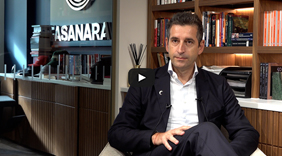
Ahead of our June 30 Investor Workshop, "Investing Alongside Tether and Draper," I sat down with James McDowall, Founding Partner of Arcanum Capital - the BMA-regulated venture manager anchored by Tether and Tim Draper - to analyze the changed opportunity set, and how investors can participate.
This first part is about the "why now." Parts two and three cover how Arcanum sources its deals, and where the returns are actually coming from.
The interview has been edited for length and clarity.
The biggest opportunity
Matthias Knab: When we talk about the future of money, what excites you most? Where is the biggest opportunity?
James McDowall: I personally think one of the biggest opportunities is banking the unbanked. It may not turn out to be the biggest in pure total-addressable-market terms, but on a humanitarian level, and even a philosophical level, it reaches the largest number of people. In emerging markets - across Africa, India, much of South America - there are hundreds of millions, if not billions, of people who do not have access to first-world banking, or even to a stable currency.
For those people to be able to download a mobile app, transact peer-to-peer, and hold a stable currency in a wallet they control, outside the banking system, is completely revolutionary. We take it for granted in the first world. A small business owner forced to transact in a hyperinflating currency, or a saver with no access to the US dollar or the US stock market, can now hold a US-dollar stablecoin on their phone. With meaningful adoption, that is one hell of an opportunity.
Matthias Knab: Let me push back a little. "Banking the unbanked" has been floating around as a slogan for eight or ten years. So what is actually different now? Is it really happening, at what scale, and - from an investor's point of view - who are the winners?
James McDowall: That is exactly the right question, and you are correct, people have been saying this for a decade. The problem was that there were several bottlenecks: regulation, distribution, trust, and to some extent merchant acceptance. What has happened over the last 12 to 18 months, especially with the GENIUS Act, is an inflection point. Stablecoins have escaped the Wild West crypto bubble.
Ten years ago, crypto was speculation-heavy and operated in a grey area all around the world. The wallets were terrible, on- and off-ramps barely existed, compliance tooling was immature, and stablecoin liquidity was limited. Today there are many more wallets, the user experience is dramatically better, global liquidity is getting deeper, and API infrastructure - the kind of thing we invest in - is abstracting away the complexity. For the first time, companies can come into a more mature environment and see very quick adoption, rather than being held back by all those bottlenecks. This is no longer a future use case. It is actually happening.
Why stablecoins specifically
Matthias Knab: You have been investing in blockchain for a decade. Why double down on stablecoins now?
James McDowall: Because stablecoins have emerged as the number-one use case for blockchain technology in terms of product-market fit. They have become the biggest problem-solver for enterprises and individuals alike. They run 24/7. You do not have to wait for a bank to open or for the SWIFT system. You can send any amount, from anywhere to anywhere, and it settles instantly and almost for free. For cross-border transactions and remittances, that is an absolute game changer.
Matthias Knab: Is that just Tether? What should people watch to understand what is going on?
James McDowall: Tether is the first and largest issuer, with around 60% market share. Total stablecoins in circulation are just over $300 billion, and Tether's USDT is roughly $195 billion of that. The other leader is USDC, issued by Circle, at around $75 billion. So it is effectively a duopoly, and we do not see anyone overtaking either of them in the short to medium term - they are too entrenched. Every crypto asset is paired against them on the exchanges, the liquidity is deep, and they are easy to move back into fiat on the other side. We are backed by Tether, which gives us an incredible sourcing and strategic advantage. We can talk to them about regulation and positioning and see where they are heading.
The five-year picture
Matthias Knab: Where do stablecoins sit in five years? What is your most optimistic outcome?
James McDowall: Because of the GENIUS Act, there is now a convergence that will take stablecoins from around $300 billion in circulation to $2 to $3 trillion within five years. That is our prediction, and it is shared by several major asset managers in their published research. The reason is the US national debt. Every time a stablecoin is issued, Circle or Tether buys US Treasuries. The United States has realised it can increase demand for short-term government debt by proliferating stablecoins around the world. That is squarely aligned with US fiscal policy, and in a multipolar world where BRICS is trying to get away from the dollar, increasing stablecoin adoption - and therefore Treasury demand - helps the dollar and helps maintain its reserve-currency status.
If anything, the forecast could be higher. The main thing holding it back is the banks pushing back on the yield that stablecoin holders can earn, because they are fearful of a run on deposits. But even at $2 to $3 trillion, it is a massive opportunity.
Matthias Knab: What does that mean for the real economy?
James McDowall: The real economy does well when money moves fast - economists call it the velocity of money. When money moves quickly, businesses get built faster and stocks and companies do well. Stablecoins speed everything up. A large commodity trading company can pay its partners and suppliers with instant settlement outside the banking system, so the money is not locked up for two or three days in escrow - it can be put to work elsewhere. Global business only benefits from money moving faster.
Matthias Knab: There is another piece we have not touched on yet, which is AI. If autonomous agents become economically active, what kind of money do they use? Do they use banks, SWIFT and wire transfers, or does that push the world even further toward stablecoins?
James McDowall: This is one of the most important parts of the thesis, and I think it is still massively underappreciated. AI agents are not going to use correspondent banks, SWIFT messages, wire instructions, cut-off times and manual approvals. That is not how machine-native finance will work. If you have autonomous agents negotiating, contracting, paying for compute, settling invoices, purchasing data, executing treasury actions or moving capital between applications, they need money that is programmable, instant, global and available 24/7.
That money is stablecoins.
Stablecoins are not just a better payment rail for humans. They are the settlement layer for autonomous finance. An AI agent cannot wait three days for a bank transfer to clear. It cannot operate around bank holidays. It won't fill out a wire form. It needs an API-native financial system where value can move in seconds, where permissions can be encoded, where transactions can be audited on-chain, and where smart contracts can enforce the rules.
That creates an enormous venture opportunity. You need infrastructure for agent wallets, identity, permissions, compliance, risk controls, transaction monitoring, programmable treasury, escrow, payroll, invoices, insurance, credit and capital markets. Then you need the applications built on top of that infrastructure.
We believe the convergence of AI and stablecoins will create an entirely new financial stack. The internet created digital information. AI creates autonomous decision-making. Stablecoins give those autonomous systems money they can actually use.
For investors, that is the point. This is not only about remittances or cross-border payments. Those are already huge. But the bigger opportunity may be that stablecoins become the default financial rail for machine-to-machine commerce and agentic finance. If that happens, the companies being built today at seed stage could become some of the most important financial infrastructure companies of the next decade.
And the rest of the world's currencies
Matthias Knab: We have talked a lot about the dollar. What about a euro stablecoin, or other currencies?
James McDowall: The US-dollar issuers were keen to get into Europe, but Europe is doing what it does best and regulating heavily. MiCA makes it difficult for the likes of Tether to grow USDT adoption there, so euro stablecoins will do well instead. We were told on a recent call with one of Europe's largest banks that a consortium of around 15 very large banks is coming together to launch a euro stablecoin. That is different from the US model of two private issuers - in Europe it will likely be bank-led, because the regulation has made it hard for a private company to issue currency.
Either way, it gives rise to the same venture opportunity for us. We do not care who issues the stablecoin. What we care about is what products and services entrepreneurs can now build on top of it - prediction markets, neobanking apps, decentralised applications you can fund by depositing and withdrawing stablecoins, and programmable finance built with smart contracts.
In Part 2, James explains how Arcanum actually finds these companies before anyone else - the sourcing edge, the screening funnel, and the question every deal has to survive.
|





 RSS
RSS