|
|
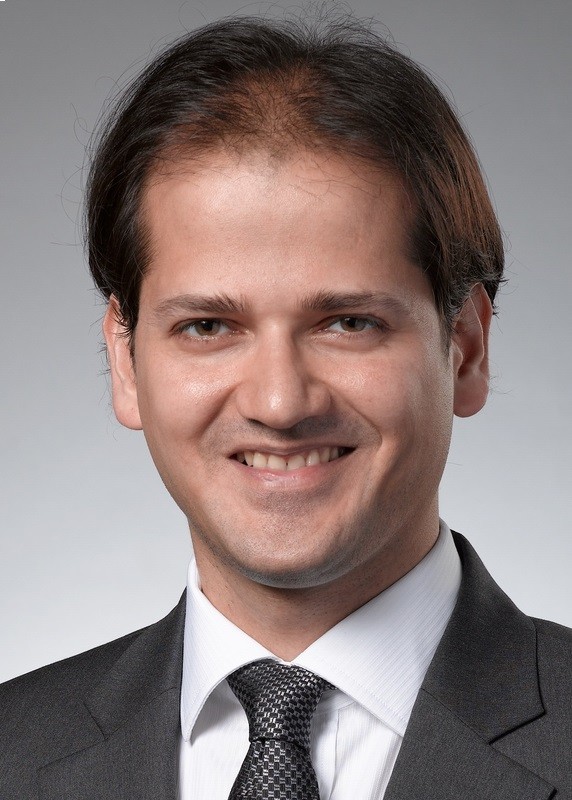
Ruchir Desai Matthias Knab, Opalesque for New Managers: How a specialist manager built a 14-year track record delivering +143% returns in the fastest-growing economies on earth - markets that global capital systematically refuses to look at. Part 1 of 2.
Pakistan is trading at 7.6 times earnings. Bangladesh at 9.1 times. Uzbekistan banks are paying 13% dividend yields. These are not distressed assets in post-crisis freefall. These are the fastest-growing economies on earth - IMF-projected GDP growth averaging 4.1% annually through 2030 - and they are virtually absent from institutional portfolios.
Ruchir Desai, Co-Fund Manager of theAFC Asia Frontier FundatAsia Frontier Capital (AFC), has spent 14 years building a case that this institutional blind spot is not just a curiosity - it is one of the most compelling alpha opportunities available to global allocators. The evidence is difficult to argue with: since the fund's launch in March 2012, the AFC Asia Frontier Fund has returned+142.9%net of fees against+27.5%for the MSCI Frontier Markets Asia benchmark over the same period. That 115-percentage-point gap was accumulated with an annualised volatility of just 10.3% - lower than the MSCI World, MSCI Frontier Markets, and MSCI Emerging Markets indices. The five-year annualised return stands at +11.6% with a Sharpe ratio of 0.83. In 2025 the fund returned +19.75%, and it is up +6.1% year-to-date through February 2026.
But performance numbers alone do not explain why this strategy is worth examining closely. The more important story is structural: why these markets have been ignored, why that ignorance persists, why it creates a durable information advantage for a specialist with genuine on-the-ground presence - and why the confluence of demographics, supply chain realignment, and stabilising macroeconomics is creating a rare entry point at the fund's all-time low portfolio P/E of 6.98 times.
The Blind Spot: Under-Researched, Not Undiscovered
AFC manages four funds spanning the breadth of the Asian frontier universe from its base in Hong Kong, with a team of 10 investment professionals resident across Hong Kong, Vietnam, Uzbekistan, Thailand, and Iraq. The flagship fund's investment universe encompasses 18 countries - Bangladesh, Cambodia, Georgia, Iraq, Jordan, Kazakhstan, Kyrgyzstan, Laos, Maldives, Mongolia, Myanmar, Oman, Pakistan, Papua New Guinea, Sri Lanka, Timor-Leste, Uzbekistan, and Vietnam - with a combined GDP of USD 2.5 trillion and a population of 757 million. For reference, that is comparable in economic and demographic scale to India, yet these markets are almost entirely absent from the global institutional asset allocation conversation.
Is "systematically ignored" the right description? Desai offers a more precise formulation: deeply under-researched relative to opportunity.
"The other way to look at it is that they're very under-researched," Desai explains. "Someone doing emerging markets is fully focused on India, China, Indonesia, Brazil. There isn't the bandwidth to cover so many smaller markets. JP Morgan covers all these names in India and China - but they will cover probably five names in Vietnam because the market caps are smaller, and nothing in Pakistan or Sri Lanka or Bangladesh."
This is not a temporary gap. It is a structural feature of how institutional research and asset allocation are organized. The major investment banks concentrate coverage where assets under management justify the cost. The major index providers weight by market cap and liquidity thresholds. The major allocators construct portfolios around index weights and peer comparisons. The result is a self-reinforcing cycle in which the fastest-growing, cheapest, and most demographically compelling markets in the world remain systematically under-owned - not because sophisticated investors have looked and rejected them, but because the institutional infrastructure of global investing has never been built to look at them in the first place.
For a specialist with local analysts on the ground, direct access to company management, and 14 years of accumulated pattern recognition across these markets, this structural neglect is the source of the edge.
The Research Machine: 3,000 Companies, 200 Targets, 50 Convictions
The investment process at AFC combines a disciplined top-down country allocation framework with rigorous bottom-up stock selection - two approaches that Desai insists must work together rather than independently.
The universe begins with approximately 3,000 listed companies across AFC's 15 active markets. A proprietary screening tool narrows this to a focus list of roughly 200 names, applying both valuation metrics - price-to-earnings, price-to-book, EV multiples - and fundamental quality screens including return on equity, five- and ten-year earnings growth, and cash from operations. From that shortlist of 200, the portfolio holds 50 to 60 high-conviction positions, currently 62 holdings, with individual positions capped at 5% at cost and top-sliced when they exceed 10%.
The portfolio has a deliberate bias toward consumption-focused names - but Desai defines "consumption" broadly. Banks and fintech companies serve a young, rapidly bancarising population. Telecommunications companies are infrastructure plays on urbanisation. Cement companies in Pakistan and Bangladesh are quasi-consumption names because per-capita cement consumption in these markets remains far below levels that have historically preceded decades of construction expansion. Automobile companies, consumer staples, food and beverage - each reflects a common underlying thesis: disposable incomes are rising, under-penetration of consumer goods is profound, and the demographic base to sustain that growth for a generation is already in place.
"The whole story - one of the key aspects of investing in these markets - is the demographics," Desai explains. "Young population, fast-growing, disposable incomes are rising, a lot of under-penetration of consumer goods. So the portfolio has a bias towards consumer-focused companies - it could be a broad array of them."
Annual turnover in the portfolio has remained below 20% since inception. Holding periods are three to five years at minimum, and some positions have been held for seven to eight years. This is not trading around momentum or positioning around quarterly earnings beats - it is long-term ownership of businesses benefiting from secular demographic and economic transitions that operate on decade-long timescales.
Top-Down Country Allocation: Getting the Macro Right Before Picking Stocks
Not all 18 countries in AFC's universe receive equal capital at any given moment. The top-down allocation framework is designed to manage one of the most significant risks in frontier investing: currency depreciation driven by macroeconomic instability.
"You lose most from currency devaluation," Desai explains bluntly. "If there's a crisis or some kind of major economic shock. We don't hedge currency risk - it's difficult to do so in these markets. Therefore we have to try and get the top-down right."
The top-down assessment tracks the standard macro metrics - current account deficit, foreign exchange reserves, interest rates, inflation, budget deficit - but also the drivers of those metrics: GDP growth trajectory, inflation dynamics, fiscal discipline, and crucially the political cycle. Elections matter in these markets not just for policy continuity but because governments approaching elections tend to increase fiscal spending, widening deficits, accelerating inflation, and weakening currencies. Coalition governments in particular can stall reforms that frontier market economies need to sustain their growth trajectory.
This framework is not theoretical. In 2022, when the war in Ukraine drove oil prices sharply higher - particularly damaging for Bangladesh, Pakistan, Sri Lanka, and Vietnam, which import all their fuel needs - AFC had already substantially reduced exposure to South Asia because the macroeconomic position was fragile. Sri Lanka subsequently defaulted on its external debt and saw 80% currency depreciation. Pakistan came close to default with 35-40% currency depreciation. AFC was underweight both. The same analysis that flagged the vulnerability in 2022 is now pointing the other direction: Sri Lanka has restructured its debt and is on an IMF programme; Pakistan is also on an IMF programme with greatly improved foreign exchange reserves; Bangladesh has a majority government in place and is pursuing reform. All three are now meaningfully overweight relative to 2022 positioning.
"The countries like Bangladesh, Pakistan, Sri Lanka, Vietnam are in a much stronger macroeconomic position compared to 2022," Desai says. "I don't expect the kind of major currency depreciation we saw then. Maybe 5-6%, which is very normal for an emerging market."
For stable macro environments - Vietnam, Uzbekistan, Kazakhstan - the team moves directly to stock selection without the additional layer of macro caution. For markets in recovery or transition, the top-down work determines not just whether to invest but when to begin increasing exposure.
On the Ground: The Information Advantage That Bloomberg Cannot Replicate
Screening tools and financial models are necessary but not sufficient. The genuine differentiator in AFC's process - the component that cannot be replicated by a generalist EM manager covering these markets from a distance - is systematic, sustained on-the-ground presence.
Over the past three years, Desai and AFC CEO Thomas Hugger have conducted more than 300 company meetings across their markets, visiting Bangladesh, Sri Lanka, Vietnam, Kazakhstan, Uzbekistan, Pakistan, Georgia, Iraq, and others on regular annual or semi-annual trips. The commitment is structural rather than opportunistic - every major position receives at least one on-the-ground visit per year, and larger positions are visited more frequently.
What this access provides goes beyond verifying the numbers in a financial model. In frontier and smaller emerging markets, companies are far more accessible than in larger markets. "You meet the CEO, or the CFO, or the chairman," Desai notes. "It's direct access to the top management. You get a bird's-eye view of what's going on from a country perspective, from a company perspective, and what their vision is for the company." In India, a visiting fund manager typically meets the head of investor relations. In Sri Lanka or Pakistan, you sit across the table from the person making strategic decisions.
This access matters not just for information quality but for information synthesis. A fund manager who has been meeting the management of Bangladeshi garment exporters for a decade, visiting Vietnamese industrial parks annually, and tracking Central Asian banking sector development since before most Western allocators knew Uzbekistan had a functioning stock exchange, has built a pattern recognition database that no screening tool can replicate. The understanding of how management teams respond to adversity, how governments implement (or abandon) reform programmes, how consumer spending behaviour shifts at specific income thresholds - these are accumulated through years of direct engagement, not through reading equity research reports.
The Structural Thesis: Five Interlocking Tailwinds
AFC's long-term conviction in Asian frontier markets rests on five structural drivers that Desai argues are still in early innings despite the fund's 14-year track record.
Demographics.Approximately 45% of the population across AFC's investment universe is under age 24. This is not a static fact - it is a decades-long consumption tailwind. As these populations enter the workforce, form households, and begin purchasing durable goods, financial services, and housing, the demand trajectory for the kinds of consumption-focused businesses AFC owns is powerful and predictable. This inflection point is well-documented in economic history: it is the same demographic dividend that drove South Korea, Taiwan, and China's economic acceleration in earlier decades.
Urbanisation.Most markets in AFC's universe have urbanisation rates still well below 40%. Historically, urbanisation above this threshold triggers a structural acceleration in consumption, infrastructure investment, and formal financial sector participation. AFC's portfolio is positioned to benefit from this transition at its earliest and most lucrative stage.
Supply chain diversification.Vietnam's exports to the United States grew from USD 42 billion to USD 120 billion between 2017 and today. Bangladesh is now the world's second-largest garment exporter. Cambodia, Pakistan, and others are actively competing for manufacturing investment relocating out of China as geopolitical tensions and rising Chinese labour costs make diversification strategically imperative for global companies. This is a structural shift with a multi-decade horizon, and AFC's markets are among the primary beneficiaries.
Low correlation.The AFC Asia Frontier Fund has maintained a correlation of 0.49 with the MSCI World since inception - the lowest measurable figure for a diversified equity strategy of its tenure. This is not a theoretical property of frontier markets in general; it reflects the specific character of domestic-driven economies where the performance of a Bangladeshi bank or a Vietnamese consumer staples company is determined largely by local credit cycles, local income growth, and local policy - not by the S&P 500 or European interest rate expectations. For an institutional allocator constructing a portfolio against a global benchmark, this correlation profile is increasingly valuable as traditional diversifiers underdeliver.
Valuation.The portfolio currently trades at a trailing P/E of 6.98 times - its all-time low since the fund's inception - with a portfolio dividend yield of 4.04% and a price-to-book of 1.32 times. Pakistan trades at 7.6 times earnings against India at 22.4 times. Bangladesh at 9.1 times. These are not stressed multiples reflecting fundamental impairment - they reflect the persistent neglect of under-researched markets where limited institutional participation keeps valuations structurally compressed relative to comparable businesses in better-covered markets.
The Flows Cycle: Why 2017 Was the Peak - and Why That Is Now Reversing
The decade from 2017 to 2022 was difficult for frontier market allocations - and Desai is candid about this rather than glossing over it with retrospective optimism.
Frontier markets peaked in 2017 from both a flows and valuation perspective. What followed was a sustained period of headwinds that compounded against each other: the first Trump presidency and its associated trade war with China dampened Asian sentiment broadly; the Federal Reserve's rate hiking cycle in 2018-19 made US assets more attractive and frontier markets more expensive to hold; the pandemic in 2020-21 caused widespread outflows from less liquid strategies; the Ukraine war in 2022 drove oil prices higher, hitting the fund's net-oil-importing markets hard and triggering macro crises in Sri Lanka and Pakistan simultaneously.
Through all of this, the outperformance of US equities - particularly technology stocks - created a powerful gravitational pull drawing allocations away from frontier markets and into the S&P 500. For a strategy that requires patience and a five-year time horizon, this was a challenging environment not just operationally but in terms of investor psychology.
The picture from 2023 onward looks substantially different. AFC's markets have recovered strongly on both macro and market levels. The fund returned +19.75% in 2025. Vietnam is growing at approximately 8% GDP. Uzbekistan at 8%. Kazakhstan and Georgia remain fundamentally stable. Sri Lanka has successfully restructured its external debt. Pakistan has completed macro stabilisation under its IMF programme. Bangladesh held a successful election and has a majority government pursuing reform.
"From 2023, 2024, and 2025 we had very strong returns from our markets," Desai says. "We've seen the fund's AUM grow in the last 24 months, a lot more interest, a lot more subscriptions coming in - because people see the performance, they see the improvement happening on the ground."
Critically, the re-engagement of foreign investors in these markets is still in early stages. Domestic retail and institutional investors have been the primary market participants for most of the past five years, with foreign allocations remaining a fraction of their pre-2017 levels. When foreign capital does return - as the macro recovery continues and the performance evidence accumulates - even modest inflows into markets of this size can have a meaningful price impact. That is the asymmetry Desai is positioning for.
The Investment Horizon: Why Five Years Is the Right Frame
Desai is direct with prospective investors about what kind of capital is appropriate for this strategy: long-term, patient, and capable of looking through short-term noise.
"Our portfolio turnover is less than 20% since inception," he notes. "We buy a position, you hold on for three to five years, even more. There are some positions in our fund which have been there for the last seven to eight years - some since inception." For any investor considering an allocation, he recommends a five-year horizon as the minimum - "more five years than three years, because you have various cycles and shocks. You've got to take that noise out and take a five-year view on the fund and on these markets."
This is not a caveat designed to excuse short-term volatility. It reflects a genuine structural feature of how value is created in frontier markets: the demographic and economic transitions that drive AFC's thesis operate on decade-long timescales, and the companies that benefit from them compound most powerfully for investors with the patience to hold through the inevitable short-term dislocations - currency pressures, political noise, commodity price spikes - that characterize emerging and frontier market investing.
The Sharpe ratio of 0.83 and Sortino ratio of 1.16 over five years suggest that the risk-adjusted return profile compares favorably not just against frontier peers but against the broader alternative investment universe. And the correlation of 0.49 to the MSCI World means that an allocation to AFC genuinely diversifies rather than simply adding a levered beta exposure to global risk-on sentiment.
What Allocators Should Learn From This Story
1. Under-Researched Is Not the Same as Uninvestable
The absence of major investment bank coverage in Bangladesh or Pakistan does not reflect a considered institutional judgment that these markets are too risky. It reflects a business model that cannot justify the cost of thorough coverage of smaller markets. For a specialist with 14 years of on-the-ground relationships, this creates a durable information advantage - not a temporary arbitrage to be traded away.
2. The Correlation Benefit Is Real - and Increasingly Valuable
A 0.49 correlation to the MSCI World over 14 years is not a marketing claim - it is a structural feature of investing in domestically-driven economies where the performance of a Vietnamese consumer staples company or a Sri Lankan bank is almost entirely disconnected from the decisions of the Federal Reserve or the earnings multiple of Nvidia. In a world where traditional fixed-income diversification has become structurally unreliable, this kind of genuine low correlation deserves more attention from institutional allocators.
3. Valuation at All-Time Lows Matters - Especially With a Growth Tailwind
A portfolio P/E of 6.98 times represents an entry point at the all-time low for a fund with a 14-year track record. Pakistan at 7.6 times versus India at 22.4 times is not a value trap reflecting structural impairment - it is the persistent compression that characterises neglected markets entering a cyclical and structural recovery. The combination of historically cheap valuations and IMF-projected 4.1% average GDP growth through 2030 across the investment universe is unusual.
4. On-the-Ground Presence Cannot Be Outsourced or Simulated
The competitive advantage of a fund that has been meeting company management face-to-face in Dhaka, Karachi, Tashkent, and Ho Chi Minh City for 14 years is not replicable by a generalist EM manager with an occasional investor tour. In markets where sell-side coverage is thin, corporate governance standards are less developed, and the most important information often lies in reading management behaviour under stress, direct access built over years of relationship building is the information edge.
5. The Supply Chain Story Is Not Priced In
Vietnam's export growth from USD 42 billion to USD 120 billion since 2017 reflects a structural manufacturing shift that is still early-stage. Bangladesh's emergence as the world's second-largest garment exporter took decades and is now accelerating into higher-value sectors. Central Asia's growing role as a geoeconomic corridor is just beginning to attract the infrastructure investment that will compound economic growth. These are not themes that appear in mainstream institutional investment narratives - which is precisely why the markets that benefit from them trade at 7 to 9 times earnings.
6. Small AUM With Large Institutional Infrastructure
At USD 26.4 million AUM, the AFC Asia Frontier Fund sits firmly in small-manager territory - with all the capacity advantages that implies in terms of position sizing and alpha generation. But it operates with institutional-grade infrastructure: Cayman Islands domicile, DBS Hong Kong as custodian, Ernst and Young as auditor, and Trident Fund Services as administrator. For allocators who have hesitated to engage with smaller managers due to operational risk concerns, AFC offers a 14-year operating history and fully institutional service provider relationships. The fund has also won the Asia Asset Management Best of the Best 2026 award for Frontier Markets and the Asian Investor Asset Management Awards 2025 for Emerging Market Equity - external validation of the track record from the most rigorous peer-reviewed evaluations in the Asian investment industry.
The Road Ahead: IMF Programmes, Demographic Dividends, and a Supply Chain Reordering
Looking forward, Desai remains constructive on the core thesis. The macro stabilisation in South Asia is well underway but not fully priced into market multiples. The supply chain diversification away from China is accelerating with every new tariff announcement and geopolitical friction point, directly benefiting Vietnam, Bangladesh, Cambodia, and Pakistan. Central Asia - Kazakhstan, Uzbekistan, Georgia - is emerging as a geoeconomic corridor that is only beginning to attract the institutional investment its growth trajectory warrants.
Iraq is described internally as a "transformational story in the Middle East" - a market where AFC's specialist Ahmed Tabaqchali, based between Iraq and London with 25 years of capital markets experience across the US and MENA, has been building a research base that most Western allocators have never engaged with.
The portfolio is positioned at the intersection of all of these themes - cheap valuations, strong macro recovery, powerful demographics, and supply chain tailwinds - in a universe that the institutional world has yet to rediscover.
"As and when some of this noise kind of goes away," Desai concludes, "you will see those flows come back and returns come back quite nicely."
For allocators who have been building exposure to India at 22 times earnings and China at uncertain multiples for the past decade, the arithmetic of Asian frontier markets at 7 times earnings with 8% GDP growth - managed by a team that has been on the ground for 14 years - deserves serious attention.
Conclusion: The Case for the Blind Spot
Asia Frontier Capital's story is ultimately about the durable value of specialist knowledge in markets that generalist capital cannot efficiently access. In a world increasingly dominated by passive flows, mega-cap concentration, and index-driven asset allocation, the AFC Asia Frontier Fund represents something increasingly rare: a genuine active management proposition where the information advantage is structural, the valuation is historically compelling, and the growth tailwinds are real and measurable.
The +142.9% since inception against a +27.5% benchmark return is not an accident of a single good year or a concentrated bet on one market's recovery. It is the compound product of 14 years of on-the-ground presence, disciplined top-down macro management, patient bottom-up stock selection, and the willingness to invest in markets that the rest of the institutional world has decided are not worth understanding.
For allocators searching for genuine diversification, historically cheap entry points, and managers whose information advantage cannot be replicated by a terminal subscription - the Asian frontier universe, and the team that has been quietly compounding in it for 14 years, offers exactly what the broader market currently does not: alpha in the blind spot.
Join Ruchir Desai live on April 21st
Want to hear more from Ruchir Desai about the AFC Asia Frontier Fund and the investment opportunities they are seeing across Bangladesh, Pakistan, Vietnam, Uzbekistan, Iraq, and the broader Asian frontier universe? Join the live conversation at the Small Managers - BIG ALPHA Investor Workshop on April 21st (11am ET), for qualified investors only.
Register now: https://www.opalesque.com/webinar/ A replay will be provided.
---
IMPORTANT DISCLAIMER: This article is for informational purposes only and does not constitute investment advice or an offer to sell securities. Past performance does not guarantee future results. Investors should conduct their own due diligence and consult with qualified advisors before making any investment decisions. Hedge fund and alternative fund investments involve significant risk of loss and are suitable only for sophisticated investors who can afford to lose their entire investment.
|





 RSS
RSS