|
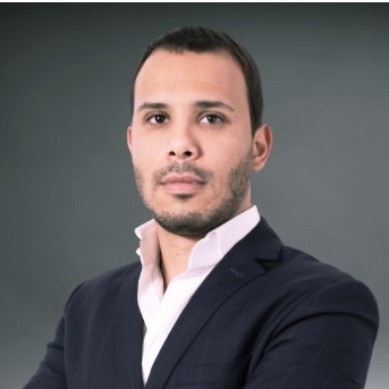
Youssef Sbai Matthias Knab, Opalesque for New Managers: How a EUR 2 billion track record in European real estate led one manager to launch a vertically integrated value-add strategy that controls the entire project lifecycle - from land acquisition through development to institutional exit.
In an industry where most real estate private equity managers position themselves as passive capital allocators, Youssef Sbai is doing something fundamentally different: he's operating the assets himself.
As Managing Director and Portfolio Manager at Katch Investment Group, Sbai has built a European real estate platform that doesn't just invest in projects - it develops them, manages them, and controls every stage of the value chain. From hiring project managers and contractors in Spain to developing student accommodation towers in central London, Katch's approach represents a hybrid between traditional investment management and direct real estate operations.
"If you are just an equity investor, you don't have control, you don't have decisions and you don't lead the process of asset management," Sbai explains. "It's going to be very difficult to lead the success of each project that we are investing in or developing."
This isn't about taking operational control for its own sake. It's about creating information advantages, catching problems early, and ensuring that business plans actually get executed - not just underwritten in Excel models that bear little resemblance to reality.
From Advisory to Execution: EUR 2 Billion in Transaction Experience
Sbai's path to Katch Investment Group reads like a masterclass in European real estate private equity. After completing his master's degree in corporate finance and investment banking, he started his career at Catella, the Swedish-turned-German real estate firm, before moving to CBRE's valuation side advising institutional investors across Europe.
But valuation work wasn't enough. "I wanted to focus on the investment side," Sbai recalls. He moved to a boutique investment firm where he advised major institutional investors - including Primomial (now PRAEIMIA), one of France's largest REITs - on acquisitions across France, Germany, and Spain.
The numbers from that period are striking: "We managed to invest over one and a half or two billion euros at the time for them between the different countries," Sbai notes. As investment manager leading the French market while supporting deals in Germany and Spain, he wasn't just analyzing opportunities - he was originating deals, leading underwriting, and supporting closings across multiple jurisdictions.
In 2019, he moved to the UK, joining Altus Group, managing the EMEA advisory team. There he advised US institutional investors - firms like Invesco, Blackstone and AIG - on their European acquisitions, looking at portfolios across both Western and Eastern Europe.
This cross-border, multi-billion-euro experience across advisory, valuation, and principal investing created something valuable: pattern recognition about what actually works in European real estate, and what doesn't.
The Katch Opportunity: From Debt to Equity Value-Add
When Katch Investment Group approached Sbai, the initial mandate was to develop their European debt activity, focusing on French and Spanish markets. But within a year, both Sbai and the firm's partners identified a more compelling opportunity.
"After less than a year, we quickly identified a potential opportunity on the equity side, especially on the value-add space," Sbai explains. "This is when, in consultation with the CEO and the other partners, we agreed to set up a new strategy together that I would be creating from scratch."
They started by creating an investment vehicle that Sbai and the partners owned together, operating initially in Spain. When historical investors and prospects showed strong interest, they formalized it into their first dedicated fund - Katch European Real Estate Partners (KEREP).
The strategy targets assets to refurbish, reposition, and elevate across the UK, France, and Spain. Last year, they expanded into new development, particularly in student accommodation.
Katch Investment Group, founded in 2017, manages approximately $1.5 billion in gross assets across alternative investment strategies. The European real estate platform now represents one of their core growth areas.
The Spanish Integration Model: Vertical Control From Origination to Exit
Sbai's "secret sauce," as he calls it, varies by market - but the Spanish strategy demonstrates the integration philosophy most clearly.
"The Spanish market is quite difficult," Sbai explains. "When we started our first project, we saw all the complications that we had. And we decided very quickly that in order to make it work, to make our projects work properly, we had to integrate some of the value chains."
This wasn't incremental integration. It was comprehensive:
- Katch launched its own development company
- They hired their own project managers
- They directly contract with key construction partners
- They control cash flow throughout the project lifecycle
- They originate deals with internal teams
- They handle underwriting in-house
"We have our own team, our own people on site going every day to the different projects, participating in the weekly construction meetings," Sbai emphasizes. "That's a key element to control and also identify potential difficulties or problems at quite early stages and address them."
This level of operational involvement is unusual for institutional real estate investors. Most funds hire third-party developers or asset managers and remain at arm's length from actual construction and project management. Katch is doing the opposite - getting their hands dirty with the daily details that determine whether a business plan succeeds or fails.
The positioning is also relatively unique in the Spanish market: "We are quite early stage on this approach. There are not many investors operating in the market like this."
The UK Partnership Model: Joint Ventures With Proven Operators
While Spain required full integration, Katch's UK strategy demonstrates a different approach: strategic joint ventures with established operators who have proven track records.
For their UK student accommodation development, they partnered with a UK asset manager experienced in PBSA (Purpose Built Student Accommodation), as well as build-to-rent and build-to-sell projects. But Katch isn't a passive capital partner - they're co-asset manager and co-developer (in France) on these projects.
"We are in the heart of the operations," Sbai stresses. "If you are just an equity investor, you don't have control."
The flagship UK project demonstrates this philosophy in action: Katch and its JV partner acquired a plot of land in Elephant and Castle, central London, to develop a 24-storey building with 244 beds dedicated to student accommodation. They're not buying an existing income-generating property or providing capital to a developer who runs the show - they're acquiring land, developing the project, and maintaining control throughout the construction process.
The French strategy follows similar logic: partnership and joint ventures with proven local operators, but with Katch maintaining board seats and co-management responsibilities rather than writing checks and hoping for the best.
The Student Accommodation Thesis: Supply Constraints Meet Institutional Demand
Sbai's conviction about UK student accommodation rests on a straightforward supply-demand mismatch that institutional capital is beginning to recognize.
"There is a massive shortage of accommodation for students, especially for international students," Sbai explains. "Despite the political situation in the UK, the demand is very strong. This asset class is very resilient and showed strong resilience since COVID."
But the real opportunity isn't just buying existing student housing - it's developing new supply in markets where land availability is severely constrained.
"You have very limited land available in central London or in central Bristol - major student cities in the UK," Sbai notes. "And we are seeing massive capital deployment from institutional investors towards key-ready assets. They're actively looking, they want to build their portfolio, they want to operate their assets, but they don't have enough supply."
This creates the classic arbitrage: institutional capital desperate for product, but no one willing to take development and construction risk to create that product. Most institutional investors want income-generating assets that are already operational - they've hired student accommodation operators to run their portfolios, but they're not positioned to source land and develop new buildings.
"We need to position ourselves early in that chain of value, create new product, and provide it to these institutional investors who are actively looking for this type of asset, with a target of 1,500 beds," Sbai explains. "That's really our focus for 2026."
The Spanish Economic Story: Europe's Growth Leader
While UK student accommodation offers structural supply-demand dynamics, Sbai's enthusiasm for Spain rests on macroeconomic fundamentals that many investors have overlooked.
"In 2025, Spain has shown the highest growth, economical growth in Europe," Sbai emphasizes. "It's three and half times France, two to three times the UK compared to 2025. It's a very strong market actively growing with massive demand for infrastructure and housing."
This isn't just about GDP numbers - it's about what economic growth means for real estate fundamentals. Population growth, employment growth, and income growth all drive housing demand. Infrastructure investment creates new submarkets and increases land values. A growing economy supports development activity and provides exit liquidity through both owner-occupier and institutional buyers.
"This is where we see huge potential for scale in our business as well," Sbai notes. The combination of strong fundamentals and Katch's integrated operating model in Spain creates a platform that can grow significantly without hitting the capacity constraints that limit most real estate private equity strategies.
Operating Assets: The Future of Real Estate Value Creation
Beyond specific geographic or property type bets, Sbai articulates a broader thesis about where real estate returns will come from in the current environment.
"We truly believe that operating assets are the future," Sbai states, "because this is where you can create value based on your ability to improve the daily operations of the asset or reduce the cost or increase the income."
This represents a fundamental shift from the real estate private equity playbook of the past two decades. During the zero-interest-rate era, many strategies worked primarily because of market appreciation and cap rate compression. Buy an asset, hold it for a few years while rents grow modestly, sell it at a lower cap rate, generate acceptable returns.
That playbook doesn't work when interest rates reset and cap rates expand rather than compress. In the current environment, returns have to come from actual operational improvements - not financial engineering or riding macro tailwinds.
"This is a trend that we see with institutional investors today," Sbai observes. Major allocators are recognizing that passive real estate ownership won't generate the returns they need, so they're seeking managers who can genuinely create value through active asset management and operational improvements.
Katch's integrated model positions them to capture this trend. When you control the development process, manage the contractors, oversee construction, and handle day-to-day operations, you can actually implement the business plans that generate value-add returns. When you're an arm's-length equity investor hoping a third-party developer executes well, you're accepting the returns they deliver rather than creating returns yourself.
The Competitive Positioning: Early Stage Differentiation
When asked whether Katch's integrated approach represents an industry trend or unique positioning, Sbai's answer reveals how much opportunity remains.
"In Spain, we are quite early stage on this approach. We're the only - maybe there's a couple more - but there are not many investors operating in the market" at this level of integration.
For UK student accommodation development specifically, most institutional investors have created operating companies for existing assets - managing buildings that are already income-generating. "But they are not acting at the early stage as we do in the sourcing of land, development of the project, and delivering a key-ready scheme," Sbai explains. "They don't want to take the development and construction risk usually."
This creates a significant first-mover advantage. While competition for stabilized income-generating student accommodation is intense - driving cap rates down and returns lower - competition to acquire land, navigate planning, manage construction, and deliver new product is much less crowded.
The risk is higher, certainly. Development carries construction risk, lease-up risk, and execution risk that stabilized assets don't. But the returns are commensurately higher for managers who can actually execute - and Katch's integrated model is designed precisely to manage and mitigate those risks through direct operational control.
What Allocators Should Consider
For family offices, endowments, foundations, and institutional allocators evaluating European real estate private equity opportunities, Katch's approach offers several distinctive characteristics:
1. Genuine Value-Add Through Operations, Not Just Underwriting
Many "value-add" strategies are really core-plus investments with modest business plans. Katch's integrated operating model creates value through hands-on development and asset management - the returns come from execution, not hoping someone else executes well.
2. Geographic Diversification Across High-Conviction Markets
The strategy operates across the UK, France, and Spain - three of Europe's largest economies with different market dynamics and different stages in their real estate cycles. This diversification reduces concentration risk while enabling capital deployment wherever the best opportunities appear.
3. Information Advantages Through Direct Operations
When your people are on construction sites daily, attending weekly meetings, and directly managing contractors, you know what's actually happening - not what a third-party developer wants to tell you in monthly reports. This information advantage matters enormously in complex development projects.
4. Structural Supply-Demand Dynamics in UK Student Housing
The student accommodation thesis doesn't depend on market timing or interest rate cycles. It rests on fundamental supply constraints (limited land in prime locations) meeting strong institutional demand for new product. These dynamics persist regardless of broader market volatility.
5. Spanish Economic Growth Story Still Underappreciated
While many investors remain hesitant about Southern Europe, Spain's economic outperformance relative to France and the UK creates real estate fundamentals (employment growth, household formation, income growth) that support both development activity and exit liquidity.
6. Scalable Platform With Significant Growth Potential
At $1.5 billion in gross assets under management, Katch has institutional infrastructure and operating capabilities that can scale significantly. The integrated model they've built in Spain is replicable across additional markets and property types as the platform grows.
7. Experienced Team With EUR 2B+ Transaction History
Sbai's background executing transactions across France, Germany, Spain, and the UK for major institutional investors brings genuine expertise - not just in underwriting, but in what actually works when you try to close deals and execute business plans across different European jurisdictions.
Looking Forward: The 2026 Focus
As Sbai articulates Katch's priorities for the coming year, student accommodation development represents the primary growth area - but the Spanish platform continues building momentum.
"That's really our focus for 2026," Sbai says of the UK student housing opportunity. The pipeline includes additional land acquisitions in prime student markets where supply constraints and institutional demand create favorable dynamics for new development.
In Spain, the platform they've built - with in-house development capabilities, direct contractor relationships, and on-the-ground project management - positions them to scale their activity as the Spanish economy continues outperforming the rest of Europe.
And across both markets, the fundamental thesis remains: operating assets generate better risk-adjusted returns than passive ownership when you have the capabilities to actually improve operations, control costs, and increase income through hands-on management.
The Integration Advantage
Youssef Sbai's journey from advisory to principal investing to operator represents more than just career progression. It reflects a fundamental insight about what creates value in European real estate private equity today.
Financial engineering and market beta can't generate attractive returns in an environment where interest rates have reset and cap rates have expanded. Passive equity investment and hoping third-party operators execute well doesn't create the information advantages or operational control that mitigate development risk.
What works is genuine integration: controlling the value chain from land acquisition through development, construction, and lease-up. Having your own people on site daily. Catching problems early. Making decisions quickly. Ensuring that business plans get executed, not just underwritten.
This is harder than writing checks and monitoring reports. It requires more operational infrastructure, more local market expertise, more hands-on involvement. But for sophisticated allocators seeking managers who can deliver differentiated returns through actual value creation rather than market timing, Katch's integrated approach represents exactly what European real estate private equity needs in the current environment.
For allocators willing to look beyond traditional passive real estate strategies, Katch Investment Group offers something increasingly rare: genuine operational capabilities that create value through direct involvement rather than hoping someone else creates it for you.
Join Youssef Sbai Live
Want to hear more from Youssef Sbai about Katch's integrated approach to European real estate value-add investing? Join Youssef and his co-panelists Edward Lam (Sloane Robinson), Jonathan Jacoby (Tabor Asset Management), and Rob McGregor (Coromandel Capital) for a live conversation at the Small Managers - BIG ALPHA Investor Workshop on February 12th (for qualified investors only).
Register now: https://www.opalesque.com/webinar/
IMPORTANT DISCLAIMER: This article is for informational purposes only and does not constitute investment advice or an offer to sell securities. Past performance does not guarantee future results. Real estate investments involve significant risks including loss of principal, illiquidity, development risk, construction risk, and market risk. Investors should conduct their own due diligence and consult with qualified advisors before making any investment decisions. Alternative investments are suitable only for sophisticated investors who can afford to lose their entire investment and who do not require liquidity.
|





 RSS
RSS