|
Matthias Knab, Opalesque for New Managers: Investors from 27 Countries Tune In to Learn How Europe's Largest Blockchain Allocator Achieves 30%+ Net IRR
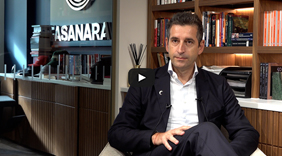
This week's Opalesque Master Class "Mastering Manager Selection in Blockchain Venture" drew professional investors from Australia to Uruguay, family offices to sovereign wealth funds, all seeking answers to the same question: How do you capture the blockchain infrastructure build-out without getting burned?
The timing couldn't be better. Fresh Cambridge Associates research confirms what early movers already knew: blockchain and crypto venture capital funds have outperformed traditional VC over both 5-year and 10-year periods, with top-quartile managers delivering 25.8% net IRR over the past decade versus 16.4% for traditional VC.
But here's the critical insight that dominated the session: dispersion in this space is extreme. The gap between top-quartile and bottom-quartile managers isn't just wide - it's career-defining.
And, crypto-VC isn't your traditional venture game:
"Of the 50-plus specialized managers we work with, only two have pre-existing venture capital backgrounds. Your traditional venture capital relationships won't give you this exposure." - Ruud Smets, Partner and CIO, Theta Capital Management
The Infrastructure Shift Is Actually Happening
The masterclass opened with a compelling thesis: blockchain isn't just another technology - it's a fundamental infrastructure shift comparable to the early internet, but this time for economic activity rather than information.
"Blockchain commoditizes trust just like AI commoditizes intelligence," Smets explained. "It turns trust into an infrastructure that's incorruptible and can't be turned off."
The numbers back this up:
- Cumulative on-chain transaction volume: approaching $90 billion
- On-chain businesses generating real revenues: over $80 billion to date
- Decentralized trading volume: $4-5 trillion annually, rivaling centralized exchanges
- Stablecoin on-chain supply: $300 billion, expected to exceed $3 trillion by decade's end
- Tokenized real-world assets: $30 billion (still super early)
One standout example: Hyperliquid, a derivatives exchange about two years old, is generating $1 billion in net profit. Another: Aave, a lending protocol that ranks as the 37th largest bank globally based on deposits - and it's pure code.
"These are blockchain protocols that anyone in the world can use 24/7 to swap assets, earn interest, or borrow against collateral," Smets noted. "No intermediaries. No thousands of employees. Just infrastructure."
Three Parallel Paths Driving Adoption
The session detailed three critical developments converging to accelerate blockchain adoption:
1. Technology Maturation
Just three years ago, sending $1 over blockchain could cost $25 in fees. Today it costs less than a cent. Ethereum launched as a generalizable blockchain platform in 2015, but it took until 2020 before truly useful applications emerged. Now in 2025, the technology has reached genuine usability at scale.
2. Regulatory 180-Degree Turn
The most dramatic shift: US regulatory posture has flipped from hostile to embracing. The Genius Act now regulates stablecoins. The Clarity Act - expected to have even bigger impact - will bring regulatory clarity to blockchain infrastructure assets broadly.
"Everyone is now designing their stablecoin strategy, and that's even before the Genius Act is fully effective," Smets observed. "Expect the same explosion once the Clarity Act is signed into law."
3. Traditional Assets Moving On-Chain
With stablecoins, existing assets started moving on-chain. Now it's bonds, equities, and more. Treasury Secretary Scott Bessent expects stablecoin supply to exceed $3 trillion by decade's end, up from $300 billion today.
An additional game-changer: AI agents are becoming economically active and naturally use blockchain rails. Gartner predicts AI agents will conduct $30 trillion in purchases by 2030.
"This is a separate development that's really coming into play as we speak," Smets emphasized. "A great way to invest in AI is actually to invest in blockchain infrastructure - you don't have to invest in multi-trillion dollar companies, you can invest in upcoming networks that will profit most from AI agents participating in the economy."
Why Venture Capital, Not Hedge Funds?
Given Theta's hedge fund background, moderator Matthias Knab pressed on why they focus exclusively on VC rather than digital asset hedge funds.
The answer was twofold: First, we're at the zero-to-one moment when this infrastructure layer is being built - by definition requiring venture capital. Second, specialized blockchain VCs have clear structural advantages:
- Signal value: Their backing increases the success probability of protocols
- Capital efficiency: Initial capital needed is limited, but outcomes can be massive
- Pivot capability: Teams that fail at one thing often successfully pivot (low write-off rates despite early-stage focus)
- Fast liquidity: 3.5-4 years from seed investment to liquid token, versus 7-10+ years in traditional VC
Result: Theta's vintages have all started distributing capital within four years, with each vintage performing in the top decile of single-manager VCs despite the diversification benefits of a fund-of-funds approach.
Since 2018, Theta has achieved a net IRR north of 30%.
The Manager Selection Minefield
This is where attendees leaned in. Investment Associate Leopoldo Ochoa walked through Theta's hard-won lessons on manager selection - and the red flags that separate winners from capital destroyers.
Key Selection Criteria (surprisingly similar to traditional VC):
Intellectual humility: "In a space where information changes daily, we want managers who can adapt their strategy and internalize new information rather than rigidly stick to outdated theses."
Independent thinking: "We dislike when managers continuously depend on each other or when a GP's pitch is all about their co-investors. Each GP in our portfolio has very unique characteristics."
Hustle: "Teams of fewer than 10 full-time employees managing large deal volumes. They need to be hustlers from day one."
The Red Flags (crypto-specific):
Weak valuation methodology: "Crypto has different instruments - equity, tokens, token warrants, convertibles. Poor valuation methodology can make funds appear to have great DPI when they're actually overselling returns. You need expertise to look under the hood."
Poor custody setup: "Custody in crypto is on-chain, meaning people can see your flows. We need managers with strong setups - who holds private keys, who can move funds, proper trade allocation policies. Weak custody plus weak valuation is a massive early-stage red flag."
Momentum chasers without edge: "Many GPs in 2017-2018 got incredible results just from being in the right place at the right time, not from having a real edge. Their initial edge from social proximity or momentum has eroded. Disciplined managers who raised the right capital and deployed with discipline are massively outperforming those who over-raised or didn't understand capital management."
The FTX litmus test: "Of our 50-plus managers, none invested with FTX or Celsius. Meanwhile, arbitrary generalist investors or pension funds that dabbled in blockchain in 2019-2020 all invested in these names because they were business models they could relate to from their existing world."
Portfolio Construction Philosophy
Theta's approach isn't spray-and-pray diversification. It's deliberate exposure optimization.
"We optimize for highest possible look-through ownership in all promising companies and networks," Smets explained. "We map the blockchain landscape ourselves, identify interesting areas, technology ecosystems with traction, application areas coming into play, then match this with a first layer of seed/pre-seed focused funds where we take big stakes for high look-through ownership."
On top of this foundation, they work with larger funds ($200-600 million) that will win and lead Series A rounds of breakout winners across different map areas.
"You don't want to try picking the winner too early with emerging technology," Smets cautioned. "There will be multiple winners in multiple areas. We have exposure to the top four-five names in each area, ride the winners, scale out of those that don't get there."
Attendee Reception
Feedback was immediate and enthusiastic. "Thank you for this amazing webinar!" wrote one CIO from a single family office. Questions poured in throughout the session covering everything from specific protocol examples to custody concerns to minimum investment levels.
The geographic diversity told its own story: investors from the Middle East, Europe, Asia-Pacific, and the Americas all seeking the same thing - a roadmap through the noise to capture genuine infrastructure opportunity.
Why This Matters Now
Blockchain venture is entering an institutional phase. The 2025 capital surge isn't speculative froth - it's professional allocators who've done the homework making conviction bets on infrastructure.
But as the Cambridge Associates data makes brutally clear: aggregate performance masks enormous dispersion. The asset class as a whole may be outperforming, but your individual allocation will succeed or fail based on manager selection.
With 200+ funds competing for capital, only a handful deliver sustainable risk-adjusted returns. The difference between top-quartile and bottom-quartile isn't subtle - it's existential.
Getting it wrong means permanent capital impairment. Getting it right means capturing what may become the most valuable infrastructure in the world.
Watch the Full Masterclass
This article captures highlights, but the 60-minute session contains much more: detailed examples of on-chain businesses, specific return expectations for investors, discussions of valuations across different crypto instruments, custody architecture details, fund construction nuances, and extensive Q&A covering Asia/Middle East developments, institutional access, and more.
The user-friendly video replay is available here:
https://www.opalesque.com/webinar/index.php?id=89#pw89
Whether you're evaluating blockchain venture for the first time or refining your existing approach, this session provides a repeatable framework from an allocator who's been living this space since 2018.
Key Takeaways:
- Blockchain VC has outperformed traditional VC over 5 and 10 years (Cambridge Associates data)
- Top-quartile BCVC: 25.8% 10-year net IRR vs. 16.4% for traditional VC
- Theta's portfolio: 30%+ net IRR since 2018, with distributions starting within 4 years per vintage
- Critical differentiator: manager selection in a field with 200+ funds and extreme dispersion
- Infrastructure shift accelerating via technology maturation, regulatory clarity, and asset tokenization
- Specialized crypto-native VCs delivering structural advantages over traditional VC or hedge fund approaches
- Red flags include weak valuation methodology, poor custody, momentum chasing without sustainable edge
For professional investors only. Past performance is not indicative of future results. All investments carry risk.
|





 RSS
RSS