|

Jerome Callut B. G., Opalesque Geneva: Unlike conventional CTAs that may cluster around similar trend-following signals, DCM Systematic, a Geneva-based quantitative investment manager, has developed a multi-strategy architecture that captures alpha through behavioural, relative value, and macro approaches, providing genuine diversification for institutional portfolios.
DCM's flagship strategy, DCM Diversified Alpha, was launched in February 2016 and aims to deliver uncorrelated absolute returns by using a non-trend approach to trade liquid futures markets.
"An investor doesn't need DCM Systematic to invest in another trend following. So we decided to do something completely different and uncorrelated to the trends," said Gaetan Maraite, CEO and co-founder, in an interview on Opalesque TV.
Three approaches
Jerome Callut, head of research and one of the three co-founders of the firm, explains that the fund blends many different sources of alpha, none of which about trend following.
The strategies fall into three broad styles of approach to look at different types of market inefficiencies: behavioural, relative value, and macro.
The first one is a behavioural model, which anticipates how other large market participants are trading and trying to take advantage of their market impacts. The second is relative value strategies in which the focus is on different kinds of spreads or market-neutral-type of exposure in certain sectors. That gives them an edge because it is not a place where many large players can go, Callut notes. The third category is macro models which look at longer-term models or lead-lag relationships between different asset classes.
"So you see, these three pillars all together are really complementary to trend following because they don't overlap with that, and anything that would have a significant correlation to trend would not be included in a program."
The program is liquid, thanks to its focus on liquid futures contracts in equity indices, treasuries, commodities and FX. The average holding period is about 20 days.
Risk is considered as seriously as generating alpha. "We do have 25 strategies, and each of them is equipped with a specific risk engine," he says.
New strategies can be implemented into the program because the multi-strategy architecture lends itself to it. So it is always evolving. "We have a team of five quants plus a CTO and we are very passionate about cracking on new challenges, finding new sources of alpha or ways to improve existing models and the risk system," Callut notes.
In a portfolio, Diversified Alpha can be used as a pure alpha play. It is popular with CTA allocators because of the low correlation with their existing CTAs. It can also be used as a tail risk protection. It is offered as an SMA or within a commingled structure with higher leverage, and there is the Luxembourg-domiciled fund with weekly liquidity.
Craft and learning in AI
Callut has been an early adopter of machine learning - a subset of AI which uses algorithms that learn from data to make predictions - and is fascinated by the recent breakthroughs. "When I started in machine learning, it was also about forecasting what comes next, like the large language model. Back then, it was more about Markov models or hidden Markov models."
But it is different in the financial realm as there is much less data on that subject. "Something like chat GPT is trained with trillions of tokens, whereas on finance, you have much less observation, first, and second, there's much more noise, meaning that you cannot necessarily link a cost to an effect in such a clear-cut way," he notes. "And third, there's a problem of stationarity, meaning that something that was true 10 years ago might have disappeared. Think of an anomaly in the market, in the pricing; you might have learned something from a data set that goes back 10, 15 years ago, and that has been arbitraged out by some players, and your model will still remember it as present."
"It still takes a lot of craft and knowledge of the space to correctly apply this machine learning or deep learning techniques so that they are dealing correctly with the noise and that they are not focusing too much on effects that have disappeared," he concludes. At DCM, the managers use machine learning as a research tool only.
CTA (Commodity Trading Advisor) funds use a methodology, either systematic (model-driven) or discretionary (decision driven) to trade a wide range of futures and indices. Most CTAs are trend-following: they make money by identifying trends in underlying markets and putting on trades that make money as long as the trend remains in force. The Eurekahedge CTA/Managed Futures Hedge Fund Index was up 2% in November (4% YTD). The Barclay CTA Index was up 0.8% (3% YTD) and the HFRX Systematic Diversified CTA Index gained +1.60% (0.5% YTD) as the US dollar gained against most currencies and commodities saw mixed performance.
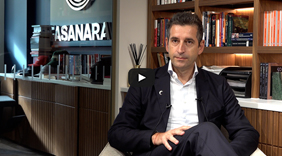
You can watch the whole interview here:
DCM Systematic: Scientific methods and AI power outperforming "Non-Trend" CTA strategy
Related article:
20.Nov.2024 Opalesque Exclusive: Convert arb strategy benefits from dispersion and volatility
|





 RSS
RSS