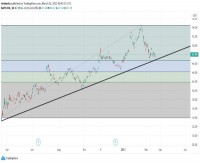
Currently: Cash Looking to: Buy @ $46.67
As of 3/19/21 close: $47.99
LAST WEEK: We suggested buying FXI on a dip to $46.67 with stops on a close below $44.70 and with an upside target of taking profits at $55.
UPDATE: The iShares China ETF (FXI) drifted lower last week and is on the way to a test of initial support at $46.67. If it holds, we should see a rally to $55. If it breaks, we could see a quick dip to $44.50.
Buy dips in FXI to $46.67 with stops on a close below $46 and with an upside target for taking profits at $55. If stopped out, try the longs again at $44.50 with stops below $44.





 RSS
RSS