|
|
From Benedicte Gravrand, Geneva:
A recent report from Morgan Stanley highlights inconsistencies in the theory that India is in a raging bull market.
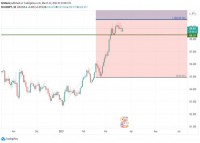
A cumulative rise of around 370% in the BSE Sensex over the past 4 years would lead to the conclusion that India is in a raging bull market. However other indicators show the market’s performance has not been strong over the past year.
Half the performance comes from currency, narrow basket
During this period, the BSE Sensex is up 9% in rupee terms, the MSCI India index up 21% in dollar terms, 11% in rupee terms, which means that to foreign investors, half the performance has come from currency gains. Within the BSE Sensex, five stocks have accounted for 130% of the return, with a 42% weight. Therefore, only this narrow basket of stocks would have been profitable and this is not compatible with a typical bull market.
Market median return -17%
At the same time, 67% of traded stocks have delivered negative returns, with a median negative return of 30%. The market’s median return is -17% since May 2005. Also, the return tails remain too flat for those who are bearish on the market.
Trading volumes
Untypical for a bull market, the number of traded shares has gone down by about 35% from January 2004. However, trading volumes have expanded down the cap curve, recently reaching unhealthy levels.
These indicators sugg...................... To view our full article Click here
|
|





 RSS
RSS