|

Frits Lieuw-Kie-Song Matthias Knab, Opalesque for New Managers: In the first three weeks of March 2026, as the Iran war rattled global markets, investors discovered just how few places there were to hide. Equities fell 8-9%. European Investment Grade credit dropped 2.6%. German Bunds - the traditional safe haven - were down 2.5%. US Treasuries fell 2.5%. Even gold, the ultimate refuge, gave back 15%.
Ironshield Capital's High Yield Alpha Fund UCITS was up approximately 23 basis points over the same period.
This is not an accident. It is the product of a 25-year-old idea, obsessively refined, and executed by one of the most experienced credit teams in London. And it arrives at a moment when the case for this kind of strategy - market-neutral, pure-play credit - has rarely been stronger.
A Credit Boutique, Nothing More, Nothing Less
Ironshield Capital Management LLP was founded in London in 2007 by David Nazar, who spent his career managing proprietary credit portfolios at Deutsche Bank and Bank of America, with earlier stints at Goldman Sachs, Salomon Brothers, and BAML. The firm does one thing: leveraged credit. No macro. No equities. No commodities. No rates positions taken for their own sake.
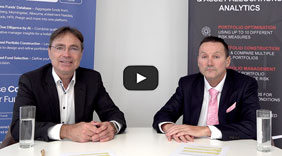
"We are a credit boutique," says Frits Lieuw-Kie-Song, who joined as Portfolio Manager in the summer of 2025. "We do sub-investment grade credit. Nobody at Ironshield focuses on anything else apart from credit, and that is what makes us fairly unique."
Frits brings nearly four decades of experience to that singular focus. He began trading credit in 1987 and has navigated every major market dislocation since - the LTCM crisis, post-9/11, the Global Financial Crisis, and numerous others. Before joining Ironshield, he spent 12 years at Allianz as co-Portfolio Manager across Global High Yield and multi-asset funds, and approximately 15 years running market-neutral credit strategies at various hedge funds.
"Experience dictates outcome," he says simply. "I have traded every crash the market has seen since 1987. I have run a market-neutral strategy similar to this during 2008, where we returned double-digit returns while being market-neutral the entire year."
What "Market-Neutral" Actually Means
The words "market-neutral" have been stretched beyond recognition in the hedge fund industry. Ironshield uses the term precisely - and enforces it with stress tests, not intentions.
"The word market-neutral gets thrown around a lot," Frits acknowledges. "There are hedge funds that are extremely aggressive long-short and change it around all the time, and some that are really hedged as the word says. We are in the second category."
Ironshield's definition is concrete: if equities fall 10% - which typically corresponds to high yield indices falling around 3.5-4% - the fund aims to be flat. That is the design specification. Over a full cycle, the target is 6-7% net per year in euros.
To enforce this, Frits runs stress tests continuously. "We always solve for being flat in that disaster scenario," he explains. "If the stress test shows a loss, I will sell some bonds or buy more put options. We solve for that every time."
The fund's beta to EU high yield since inception is 0.21. Beta to US high yield is 0.13. These are not marketing claims - they are reflected in the fund's behavior during actual dislocations, including the April 2024 stress event and now the Iran war episode of March 2026.
The Equity Put Innovation - A 25-Year-Old Idea
The most distinctive element of Ironshield's hedging approach is something Frits discovered in the year 2000: using out-of-the-money equity index put options to hedge a long high yield credit book.
"High yield is a very good, improved asset class and companies are much better than they were 15 years ago," he explains. "But when you get a crisis, everything goes down. The most effective way to hedge the tail risk is by buying out-of-the-money equity put options on equity indices."
The logic is elegant. High yield credit has equity-like downside in a real crisis - which means equity options, with their convexity, provide cheaper and more powerful protection than credit hedges alone. The portfolio carries three forms of short exposure simultaneously: individual bonds identified as fundamentally mispriced on the short side; protection on high yield indices via CDS; and equity index put spreads for tail risk.
"If nothing happens, my put spreads just expire worthless and I pay some premium every month," Frits explains. "So it is a safe strategy. I know exactly how much I am paying. I can never lose a lot. And in times like this, I make the money and it protects the tail."
On the long side, the fund holds 50-60 individual bonds identified as fundamentally mispriced - with a 5% position limit consistent with UCITS requirements. Modified duration is held to just around 1.2. Long notional typically runs 150-200% of NAV; short notional 100-150% of NAV. The notional net long position understates the portfolio's true hedge because in a crisis, the equity put options perform dramatically better than the raw notional suggests.
The result is a portfolio with extremely robust downside protection, and the upside comes from both credit selection and the convexity of the hedge in periods of stress.
The Numbers: Low Volatility, Real Convexity
Since the fund's August 2022 launch, the Ironshield High Yield Alpha Fund UCITS has returned +13.33% net, with annualised volatility of 1.88% - less than half the volatility of the Bloomberg Pan-European and US High Yield indices. The Sortino ratio since inception stands at 3.73.
Since Frits' appointment in summer 2025, performance has annualised at 6.30% net in euros, in line with the strategy's target range, with continued low volatility.
Year-to-date through late March 2026, the fund is up approximately 1.30% net in euros - ahead of most competitors - and up roughly 20 basis points during the Iran war period alone.
For context: over the same war period, European investment-grade credit fell 2.3%, German Bunds fell 1.8%, US Treasuries fell 1.5%, high yield indices fell roughly 1.5%, and gold fell 5%. Oil was one of the only assets to rise. Ironshield was positive throughout.
"This is really proof that the downside protection works," Frits says. "Just like it did in 2008. Just like it did in .com. Just like it did in all the other crises."
The 2026 Opportunity: Dispersion at a 13-Year High
Ironshield's strategy performs best when credit dispersion is elevated - when the gap between winning and losing credits widens, creating more opportunities on both sides of the book. By that measure, the current environment may be the most favorable since the fund's launch.
High yield credit dispersion is currently at a 13-year high. The era of "a rising tide lifting all boats" - when central bank accommodation compressed spreads uniformly - is over. Sector-level stress is surfacing in chemicals, autos, and software. AI disruption is reshuffling competitive dynamics at the company level faster than markets can price.
"We do best when dispersion is high," Frits explains. "The market as a whole selling off will give us more opportunities, more staying power. Because we are hedged and the fund is making money, we are not in the same position as people who lose money and may be forced to sell."
The AI angle deserves particular attention. AI-related high yield issuance was effectively zero in 2024 - and is expected to reach $60-80 billion in 2026 alone. This explosive growth of a structurally new segment of the HY market creates precisely the conditions that favor a disciplined fundamental shop: unfamiliar credits, uncertain assumptions, and insufficient analyst coverage. Mispricing on both sides of the book.
Meanwhile, the stress in software credits - which rattled private credit markets earlier this year - created opportunities Frits was positioned to exploit. He had no long exposure to the affected names ("the bonds were not attractively priced, and the warning signs were visible in the listed equity underperformance since November"), and he is short at least one of the sector's issuers. "When things get displaced, when people panic and throw the baby out with the bathwater - that is when you find some really nice gems," he says.
Infrastructure Built for Institutions
The fund is structured as an Irish-domiciled UCITS on the MontLake/Waystone platform, with daily liquidity, no gates, and no lock-ups. Northern Trust serves as administrator and custodian. KPMG is the auditor. The investment manager is FCA-authorised. The structure is designed to scale to EUR 1 billion or beyond.
For allocators who have navigated the illiquidity complications of private credit or faced redemption friction with other hedge fund structures, the institutional simplicity here is notable: daily NAV, transparent reporting, full UCITS compliance.
The Team: Five Specialists, One Focus
Ironshield's investment team averages more than 20 years of experience in credit, with the leadership team averaging over 25 years. Seven nationalities are represented across the business.
David Nazar, Founder and CIO, spent his career managing proprietary credit books at bulge-bracket firms before establishing Ironshield in 2007. His specialism is stressed and distressed European credit.
Frits Lieuw-Kie-Song, Portfolio Manager, brings 30 years of global credit experience spanning Allianz (12 years as PM across Global HY and multi-asset) and approximately 15 years running market-neutral credit strategies at hedge funds.
Sunny Chhabra, Senior Analyst and Partner, has 17 years in stressed and distressed European credit, including 11 years at Nomura.
Ishar Sawhney, Senior Analyst, brings 15 years as a US credit specialist with prior roles at Goldman Sachs, Citadel, and Neuberger Berman, plus CLO experience.
Bledion Sasa, Senior Analyst, has 11 years in stressed and distressed European credit, with prior roles at Taconic Capital Advisors, Barclays, and Jefferies.
The team is notably unified in its focus. There are no generalists, no macro tourists, no equity analysts doubling up in credit. Everyone covers the same asset class, day in and day out. The process has been tested across multiple cycles and different market regimes. What is different today is that the opportunity set is wider, and the need for this kind of approach is clearer than it has been in years.
Why This, Why Now
The case for market-neutral credit has a structural argument and a cyclical one, and at this moment both are unusually strong.
The structural argument: in a world of elevated rates, wider dispersion, and AI-driven disruption at the company level, the premium for genuine credit analysis - the ability to identify which bonds are mispriced on both sides - is higher than at any point in recent memory. Passive credit exposure no longer does the work.
The cyclical argument: geopolitical volatility, the Iran war, the continued repricing of AI's winners and losers, and the maturation of a private credit cycle that is beginning to show stress - all of this creates exactly the dislocated, high-dispersion environment in which a strategy like Ironshield's has historically performed at its best.
"The future looks bright," Frits says, with characteristic understatement. "When things come down a little bit, we are very confident we will find some very cheaply priced stuff. And if the market as a whole gets affected and goes down a lot - we are okay too, because we are hedged."
After nearly four decades of navigating credit through every kind of crisis, that kind of calm is not naivete. It is the confidence of a process that has been tested, repeatedly, and has held.
Join Ironshield live on April 21st
Want to hear more from Frits Lieuw-Kie-Song making the case and further explaining the opportunity set for market-neutral credit? Join the live conversation at the Small Managers - BIG ALPHA Investor Workshop on April 21st (11am ET), for qualified investors only.
Register now: https://www.opalesque.com/webinar/. A replay will be provided.
---
IMPORTANT DISCLAIMER: This article is for informational purposes only and does not constitute investment advice or an offer to sell securities. Past performance does not guarantee future results. Investors should conduct their own due diligence and consult with qualified advisors before making any investment decisions. Hedge fund and alternative fund investments involve significant risk of loss and are suitable only for sophisticated investors who can afford to lose their entire investment.
|





 RSS
RSS