

 RSS
RSS
|
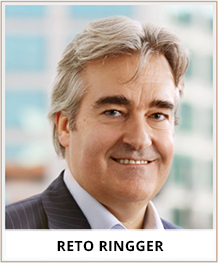
Sustainable investing is moving up the priority ladder in family offices with each generational transition, says Reto Ringger. Ringger is the founder and CEO of Globalance Bank, an owner-run Swiss private bank that advises its clients independently in all matters relating to the long-term investment of their wealth. Opalesque: What is meant by sustainable investing? Reto Ringger: There are many definitions or ways to go about it: it could be negative screening, exclusion of companies, ESG inclusion, positive selection, thematic investing or a highly focused portfolio of companies that are active in better addressing future challenges etc. 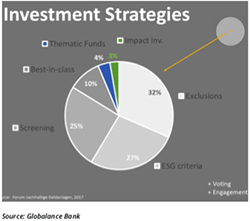
Opalesque: What are your observations with regards to sustainable investing within family offices? Reto Ringger: My understanding of the market within family offices is that it’s more focused on negative selection, exclusion lists and ESG screening. From a governance perspective, it is very interesting: for older generations, sustainable investing it is not on top of their list, but for the next generation, as they grow up with the awareness of environmental challenges and have a much closer relationship with these issues, it is more important and more natural to consider environmental and social criteria investments. They also understand the business rationale behind such criteria. “The next generation will have higher expectations in terms of positive impacts from their investments.” From an investment perspective, we see growing interest; it is however still at an early stage. There is little experience within family offices but also among their wealth managers. Most wealth and investment managers do not have a long experience with sustainable investing and if they do, then it’s mostly negative screening or ESG inclusion. Most of them are at the starting point, without many peers to work with. Family officers are in the process of finding their definition of sustainability investing, their approach, their expectations in terms of returns and risk, but also – and that is trickier – in terms of impact (and how to measure that). Indeed, the next generation will have higher expectations in terms of positive impacts from their investments. Opalesque: Have you seen any correlations between charitable endeavours and foundations and sustainable investing? Reto Ringger: Family offices usually have that split, with a team that takes care of donations and have a specific mission, be it cancer research, the environment or education. Then they have an investment team, who has a very different investment approach, that is not linked to the overall strategy of the foundation. Aligning the investment side with the mission side is still not a common practice. I know only very few foundations that?are able to align their mission with the investment strategy. Opalesque: The 2018 Global Family Office Report found that more than one-third of family offices surveyed by UBS and Campden Wealth are involved in sustainable investing, a rise of 4.2% from 2017. What are your thoughts on that? Reto Ringger: It’s a bold statement, and it does not define what sustainable investing consist of here. If it’s exclusion investing, it does not mean a lot as lots of people practice that already. If they’re talking about really active sustainable investing, that would be different. In our experience, about a quarter to a third of wealthy individuals would like to consider environmental and social aspects of investing. It is known that surveys show different results from what people are actually doing. I was at a pension fund conference a couple of weeks ago where AXA did a survey about interests in such investing; 65 to 70% of pension fund beneficiaries said yes. But in reality, only between 5 and 10% of pension funds are doing that. Opalesque: It is said the rising influence of socially-conscious millennials in wealthy families means impact investing is only set to skyrocket. Do you agree? Reto Ringger: Again, impact investing is a different thing to different people. But I think there is a very b market activity in that area, but there is also a lot of noise, especially from suppliers. In my view, there is a risk of greenwashing because there is actually a b demand, especially from the next generation, so managers need to come up with fast solutions. The team of Globalance has done sustainability investing for the last 20 years and we find it is not easy to come up with a credible portfolio if you want to a sustainable or a positive impact. For example, we measure impact with what we call the footprint. Each of our portfolio has a footprint score and the average portfolio has a score of 63 – whereas the MSCI World Index stands at 43. Our clients want to improve their footprint every year; from a portfolio management perspective, going from, say, 60 to 70 has a large impact on the portfolio management, on the investment selection, on the research process. So it is not easy to execute and meet those expectations. Opalesque: What procedures do they follow when they do impact investing? Reto Ringger: Globalance follows a very structured and comprehensive engagement process to establish a family’s values, ambition and priorities. Family members and family office staff are involved independently and together at various points along the journey. First, families should agree on a certain set of values and impact principles as well as levels?of ambition. This needs to be written down, a “family constitution” so to speak. Second, all existing assets of a family’s wealth are carefully assessed for their current impact-quality to obtain a comprehensive picture. Only then starts the definition of next steps in the form of investment strategies and corrections to the way a family’s wealth is managed. Positive Footprint 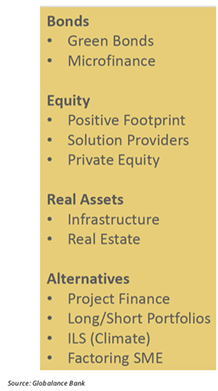
Opalesque: We also hear that family offices with a social impact mission have become magnets for young investment talent. Have you seen this? Reto Ringger: From what I can see, that is generally the case, in and outside of family offices. The mission of employers is important for young people, not only in terms of the product and daily work but also in terms of what is behind the organisation. We have a challenge ahead. The October IPCC special report on the impacts of global warming from the UN, among other things, alerted us to that. It shows us that asset management, compared to other sectors, is lagging behind. We still have a long way to go, but younger generations will help to push suppliers. | ||||


|
Horizons: Family Office & Investor Magazine
Sustainable investing – Still a long way to go but younger generations will help to push suppliers |
|