

 RSS
RSS
|
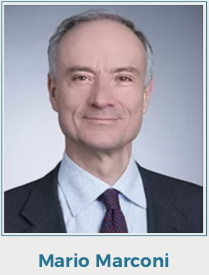
For more than 25 years, Mario Marconi held senior executive positions at UBS in services such as wealth planning, global philanthropy and UHNW families and family offices advisory. Last year, Marconi and his partner Martin Emodi, himself a UBS alumni with deep experience in Africa, founded Africa Wealth Partners in Zurich, to serve as advisors to HNW families in Africa and as intermediaries for business partners and investors. It has, so far, been a unique endeavour in many ways. Western investors (still) don’t know Africa Opalesque: Mario, how did Africa Wealth Partners get started? Mario Marconi: Martin Emodi and I created Africa Wealth Partners in early 2018. Martin used to run the Africa business at UBS. I have a corporate finance and family office background, along with banking experience from UBS. With our combined experience and network, we are in the position to act as the “family doctor”. The focus is to serve as a multi-family office for African entrepreneurs and assist them across a spectrum of needs on the private side or on the business side. Our clients are typically entrepreneurs who have built or are in the process of building businesses, and we help manage the various aspects of their financial and private affairs. We make sure that what they do on the business side is done in the right way. Typically, entrepreneurs focus intensely on their business and tend to overlook the private and family aspects, so we try to help them with that too. We work as trusted advisor, we match strategies, and we help them navigate the various aspects of their activities. We provide Swiss savoir-faire. We also act as intermediaries with other business partners and investors. “Among our biggest challenges, we do not count competitors, because nobody does what we do.” Opalesque: How has your experience been so far? Mario Marconi: It has been a fascinating and a learning journey. Seeing the macro picture underneath, going onsite and meeting with entrepreneurs, making it happen. We do not count competitors, because nobody does what we do. But one of biggest challenges is about clients who often do not understand what we do because what we offer is perceived as intangible. Furthermore, it takes a long time to build trust, as on this continent, the general level of trust is extremely low. There is also a time issue, as the people we talk to are very busy, they’re sitting on amazing opportunities and their time is precious. “In general, western investors don’t know Africa.” Then in the Western world, when we talk about access to capital for these entrepreneurs, the challenge is that in general, western investors don’t know Africa. The lack of knowledge about Africa is too often linked to negative connotations. So to mobilise capital, there is a need for education. We need to explain what the real risks of the continent are, and these risks are different from the general perception. There are some geopolitical risks, but then business risks tend to be similar to businesses risks in other parts of the world. Also, countries within Africa are very dissimilar. We spend a considerable amount of time in Nigeria, and when we talk to investors in Europe about opportunities in Nigeria, the first response from those who don’t know the context is negative because all they know about Nigeria is what they hear on CNN, and CNN is definitely not the best ambassador for Nigeria. In the real world of Nigeria, yes, there are risks, but not the risks you hear on CNN. It is also a land of great people, great entrepreneurs and amazing opportunities. That’s why I say education is needed to change the narrative. Note: This year’s African Economic Outlook from the African Development Bank shows that the continent’s general economic performance continues to improve. GDP reached an estimated 3.5% in 2018, about the same as in 2017 and up from 2.1% in 2016. GDP growth is projected to accelerate to 4% in 2019 and 4.1% in 2020. New research for this Outlook shows that five trade policy actions could bring Africa’s total gains to 4.5% of its GDP, or $134bn a year. According to the IMF, about half of sub-Saharan Africa’s countries— mostly non- resource-intensive countries—are expected to grow at 5% or more, which would see per capita incomes rise faster than the rest of the world on average over the medium term. Opalesque: The European Union is said to be by far the most important trading partner of Africa. Is there a discrepancy between trading partners and investment partners? Mario Marconi: I am not sure that there is. The kind of money which goes to Africa is more from the public sector than from the private sector. Africa trades a lot of commodities, but FDI is still very low – although it is slowly growing. The kind of investors in Africa tend to be government-related organisations like development financing institutions, from the World Bank to the CDC and other similar organisations. Note: Africa escaped the global decline in foreign direct investment (FDI) as flows to the continent rose to US$46bn in 2018, an increase of 11% on the previous year, according to UNCTAD’s World Investment Report 2019. Growing demand for some commodities and a corresponding rise in their prices as well as the growth in non-resource-seeking investment in a few economies underpinned the rise. Opalesque: Is there a bit of overcrowding in terms of foreign investors in infrastructure? Mario Marconi: I don’t think there is, yet. There is still a substantial gap in infrastructure and the need for investments is significant. China is playing a significant role in that space, having taken a very strategic approach to Africa as a source of commodities. Indians have been present in parts of Africa for generations; they are more part of the ecosystem than the Chinese. Opalesque: What kind of businesses do your African clients run? Mario Marconi: We are sector-agnostic. So far, our focus has been on Nigeria, and in that context, the older generation of entrepreneurs tends to be in oil and gas. And the younger generation are in the tech, agriculture and FMCG (fast-moving consumer goods). “The younger generation of entrepreneurs are building very exciting initiatives in tech, mobile payments, agriculture...” Opalesque: You’ve just mentioned an interesting phenomenon taking place in Nigeria. Mario Marconi: Indeed, the privileged elite systematically send their children to study abroad, such as boarding schools in the UK or Switzerland, and then university in the UK or the US. Many of these children, after their study and some work experience, go back to their country to seize the opportunities that Nigeria has to offer, with its population of 180 million and its economic growth. So the younger generation of entrepreneurs, in their 30s and 40s, are building very exciting initiatives in tech, mobile payments, agriculture, etc. These people are much better connected to the rest of the world than the older generation. “The opportunity is that Africa can leap-frog from the old world ... without going through a transition.” Opalesque: You have mentioned a disruptive transformation taking place in the next decades. Mario Marconi: We have already seen some of that disruption in Africa in certain sectors, such as telecom and mobile payments. The opportunity is that Africa can leap-frog from the old world due to the lack of existing infrastructure, without going through a transition. They can go much faster when adopting new technologies and new approaches. We see it various sectors and there are many well-known examples like Mpesa in Kenya, or Paga in Nigeria. “Africa is the ultimate frontier. It is the last one.” Opalesque: You have said “investors can no longer ignore Africa”. What do you mean by that? Mario Marconi: Investors have been ignoring Africa and focusing on Asia in the last 20 years. The Asia wave is not over but it is slowing down. Africa is the ultimate frontier. It is the last one. If you compare Asia and Africa; in Asia, for any sector, you already have an established market base, whereas in Africa, you don’t have that, the games are still open. Very few players have tackled the pan African opportunity yet, which is where the next frontier is. You find large, well-established domestic players in a number of countries but businesses which have tackled the sub Saharan African opportunity are few. Going forward, this will be facilitated by the free trade zone which was signed recently. That’s why the opportunity is in Africa. Investors will have to come to Africa eventually. Note: Last March, 44 countries signed the agreement to create the AfCFTA (African Continental Free Trade Area) in Kigali, Rwanda. Nigeria signed up in July, at the last minute. The free trade zone will comprise 1.2 billion people with a combined gross domestic product of $2.5tn, according to The Africa Report. Opalesque: What about global warming affecting investment opportunities in Africa? Mario Marconi: We don’t see much correlation here. But Africa does not have a great energy infrastructure today, so it is being built according to today’s standards, so with a focus on renewable energy. That is one of the many opportunities in Africa. And investors with renewable energy projects are looking at Africa.
| ||||


|
Horizons: Family Office & Investor Magazine
The Last Frontier: Western investors (still) don’t know Africa |
|