Opalesque Exclusives

Opalesque Exclusive: UCITS III, the European travelling funds - part 1 – Alternative managers show interest as `highest level of regulation` can open wider markets - i.e. pensions

Tuesday, July 22, 2008

Benedicte Gravrand, Opalesque London: Europe’s very own travelling fund structure is explored here. Mr. Aymeric Lechartier, Business Development manager at the consultancy firm Carne, provided Opalesque with expert commentaries.

What is a UCITS III?
UCITS (Undertakings for Collective Investment in Transferable Securities), are investment funds established and authorised in conformity with the requirements of Directive 85/611/EEC.

The two main attributes of UCITS III funds are:

(1) Once a fund is approved as UCITS III by a European regulator (Ireland and Luxembourg being the main domiciles), the fund then obtains a European Union passport which allows the marketer to distribute the fund in various European jurisdictions, after registration. These funds can also be distributed outside the European Union, such as Asia or LatAm – except for the U.S. - depending on each jurisdiction.

“Passporting is a quicker and easier procedure,” said Aymeric Lechartier. “This is why European managers opt for the UCITS III alternative for cross boarder distribution.”

(2) UCITS III funds can invest in a greater variety of financial instruments, thus allowing mutual funds to extend their reach and expand their returns. UCITS III status can be applied to 130/30s funds and some hedge funds too.

“Before UCITS III there were a whole lot of alternative strategies you were not able to conduct in a UCITS,” Mr. Lechartier noted. “Since the use of leverage and derivatives is allowed, alternative managers are more open to the UCITS III structure.”

According to IMA, the Directive has been key to the successful development of the European market for investment funds. Today, UCITS funds manage assets amounting to €6,400 billion / US$10,140bln (i.e. about half of the EU GDP).

UCITS IV: coming up - but not just yet
But there are further developments on the scene: on 16 July 2008, IMA announced it welcomed the E.U.’s proposals for an improved legislative framework for UCITS funds, i.e. UCITS IV ( press release).

So what does the improved framework involve? According to PWC, “some activities, relating to shareholder register and NAV calculation, still had to be performed in the fund’s domicile, so as to allow proper supervision by the regulator…” (Source.) Luxembourg and Ireland’s regulators felt uneasy about supervising funds without any local substance and records.

So a proposed UCITS IV was put forward in February 2008 before the European commission. The EU Commission sent the new proposal to the European parliament last week.

According to EGovMonitor.com (Source), the new proposal will improve the efficiency of the UCITS framework as follows:
- remove administrative barriers to the cross-border distribution of UCITS funds,
- create an EU-framework for mergers and pooling of funds' assets,
- improve investor protection by making sure that retail investors receive clear, easily understandable and relevant information when they envisage to invest in UCITS,
- replace 10 existing directives with a single text.

The entry into force of the measures should come around mid 2011.

Launches this year
In the first quarter of 2008, UCITS funds saw net outflows of €31 billion (US$49bln), according to guardian.co.uk. This year alone, we have seen launches for UCITS III-compliant funds or managed accounts from Conservative Concept (Germany), Cogitam (France), Dalton Strategic Partnership, Pioneer Alternative Investments, GAM, Castlestone Management, GLG Partners, Polar Capital, Lyxor Asset Management, Proxima Alfa Investments (Spain), Crédit Agricole Asset Management, Salus Alpha (Switzerland), RWC Partners (formally MPC Investors), Advent Capital Management… and a restructuring from Informed Portfolio Management (Luxembourg).

“Large alternative managers are the ones that are seriously looking at the UCITS structures and we expect the momentum to pick up speed,” said Mr. Lechartier. “We have been and are doing a number of them for some of the top managers.”

A bit of history
The objective of the original UCITS directive, which was adopted in 1985, was to allow for open-ended funds investing in transferable securities to be subject to the same regulation in every Member State, according to Ernst & Young’s practical guide to UCITS III (here). The realit......................

To view our full article Click here

Banner
Today's ExclusivesMore Exclusives
Previous Opalesque Exclusives                                              Back to previous page
Access Alternative Market Briefing
  • Top Forwarded
  • Top Tracked
  • Top Searched

How BRIC became Brazil:

Opalesque Round Table

Brazil-based hedge fund managers, fund of funds and family office believe the country is now getting ahead of the pack compared to its emerging market peers.

Brazil has enough foreign reserves to pay down all the public foreign debt. This is the first time the country is in such a condition.

In the last crisis in 1998, China was the only country which had sound fundamentals and they could maneuver their monetary policy to keep the country growing, despite the fact that all of the economies in the region were going down by 10% or 15% in GDP. Managers believe that this time Brazil has exactly the same characteristics.

Read more in this brand new Opalesque Brazil Roundtable:

A SQUARE Faculty
Life Settlement Securitisation

Faculty Larry Alan SimonSecuritised life settlement portfolios have in the past produced double-digit returns.

» Read More

ALTERNATIVE
MARKET BRIEFING
The Only Hedge Fund Newswire Read By Elite Managers
AMB Editor

Investors – Opalesque Exclusive: Hedge fund investors with frozen assets feel the sting of industry growing pains, Sandra Manzke finds `tremendous support as people are upset`
» More

A SQUARE Timber Special II

Timberland

" Biological growth, which is the biggest single driver of timberland investment returns, occurs independent of any factor relating to broader financial markets - and that component of the return, investors will earn regardless of entry point."Read More

CBT– WHEAT (December) - Daily graph

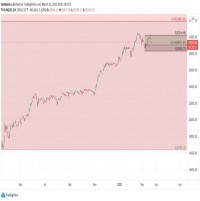
Near Term Trend: Negative Tuesday’s Close: $5.29 3/4 (- 4 cents) UPDATE: Although the global recession continues to take its toll on commodity prices, the near term pattern appears to be forming a support base for the last three weeks. Recent rallies have faded, and unfortunately, the technical indicators (DMI, Slow Stochastic) which were pointing to a buy signal over the weekend, are now neutral. We recommended going long Wheat on Monday’s opening (553.1/4), and placing a stop at $5.06 (close only). As of Tuesday night (EST) we are still long.