|
Editor's Note
|
|
Singapore was rainforest, fringed by mangrove swamps, with about 150 people when the British acquired it as a colony in 1819. It soon thrived as a trading city because it lay sheltered from storms, right at the bottleneck where ships passed from the Pacific to the Indian Ocean.
In 1965, when it became independent, Singapore had almost 2 million people, crowded slums, negligible natural resources, and an economy dependent on shipping. But Singapore’s one-party government used this sense of crisis to build a wealthy, modern city by using strict controls. They lowered the birth rate, moved nine of ten Singaporeans into new high-rise condominiums, and developed new banking and manufacturing business while expanding shipping even more. By 2015, Singapore had about 5.6 million people and a high standard of living. Its GDP per capita is ranked 3rd in the world, only behind Qatar and Luxembourg. Singapore has the world's highest percentage of millionaires, with one out of every six households having at least one million US dollars in disposable wealth. This excludes property, businesses, and luxury goods, which if included would increase the number of millionaires, especially as property in Singapore is among the world's most expensive.
Fund formation and FinTech: Singapore’s next battles
Singapore’s economy is diversified, with financial services, manufacturing, oil-refining as top contributors. For many years, Singapore was, from a cost and regulatory perspective, the perfect Asian hub for fund startups. However today, the traditional Singapore package of First World operating and living environment at 40% of London costs with a chance to keep a much bigger part of the top-line after tax, is not really the case anymore. Today, all the countries – including Singapore – are subject to the same regulatory and economic pressure, which means that cost of doing business increase and regulatory requirements are high.
This leads to a structural change in the industry as smaller players may obviously not find anymore the benefit of using Singapore for the operations. From a strategic perspective it is clear that the bulk of the global growth will continue to happen in this part of this world, whether it’s from China or Southeast Asia, including India. Larger institutional players will definitely continue considering Singapore as the only and best option in South East Asia.
While in the past, Singapore has strategically supported the fund management and private wealth industries, amongst others, it has now also become very visible which battles the country has chosen next. Singapore has become one of the best places to start a FinTech globally because of the regulatory environment, favorable Government policies and the incentives and infrastructure support available here. The MAS has a dedicated FinTech unit which goes out of its way to woo the regional FinTech companies to start up here and to promote Singapore based FinTech firms. For example, during the Formula One race, the regulator arranged for a roundtable of around 25 CEOs of global banks and presented the top FinTech ideas from Singapore. Another battle is Singapore’s new Variable Capital Companies Law which preps the jurisdiction to compete with Luxembourg, Ireland and offshore jurisdictions such as Cayman Islands.
The Opalesque Singapore Roundtable, sponsored by Eurex and SANNE, took place in November 2016 in Singapore with:
- Noor Quek, NQ International
- Valérie Mantot, SANNE
- Gaurav Bansal, Salmon Global Fund
- Mike Coleman, RMCA
- Peter Fricke, Eurex
- Rajesh Sundaresan, Lighthouse Canton
The group also discussed:
- Why Singapore-based hedge funds have recently outperformed their HK-based peers
- What is the difference between financial hubs and wealth centers?
- How are millennials changing how Asia’s family offices are run?
- What opportunities do fund managers see in ASEAN?
- Why the proximity argument of Shanghai and Hong Kong versus China will be waning over time
- Quality of Life: What happened to Singapore’s trump card relative to Hong Kong?
- When it comes to populism, is Asia on a different trajectory than the rest of the world? What will this mean for investment returns?
- An in-depth update on global commodity trading by Mike Coleman: Why buy-and-hold does not work
- Why gold is a monetary asset, and not a commodity
- Why robo-advisory can be even cheaper than ETFs
- Eurex extends trading hours up to 23 hours. Which alternative assets listed on Eurex returns over 50% p.a.?
- Have we reached the high point of globalization and open markets?
- The world from a Silicon Valley perspective
|
Derivatives Forum 25-26 Feb., Congress Center Messe Frankfurt
Derivatives Forum Frankfurt is the leading European event focused on trading and clearing for derivatives across asset classes with more than 1,500 participants joining for two days of insightful content and exceptional networking opportunities.
With thought leadership insights, industry debates, keynote speeches and on-site networking opportunities, the Derivatives Forum Frankfurt becomes your key destination to meet and network with peers and customers with sessions covering:
- Markets & Regulation
- Derivatives & Portfolio Management
- Liquidity & Collateral Management
- Technology & Digital Assets
- Sustainability & Energy
- and more Deep Dive Sessions: Don't miss "Europe's Defense, AI & Quantum Computing - Forces Shaping Markets" panel on Feb. 25th 3:05 pm, moderated by Opalesque's Mathias Knab.
This year you will be able to join either in Frankfurt - and take full advantage of exclusive networking opportunities - or view selected slots on a virtual platform:
Agenda: https://home26.derivativesforum.eurex.com/#E09EE4
Registration: https://redeemvoucher26.derivativesforum.eurex.com/#rsvp redeem voucher Opalesque-DFF for free registration
Hotel options: https://eventinfo26.derivativesforum.eurex.com/#E0422C
|
|
Reuters Events: Investment London June 16, Convene Sancroft
On June 16th, 2026, Reuters Events will host Investment London - a one-day, high-impact gathering of over 300 asset owners, asset managers, and private capital leaders. This is not another finance conference - it's a curated environment for LP-GP matchmaking, strategic learning, and capital deal flow.
- 60% LP Audience: A uniquely controlled room designed around institutional investors to maintain trust, quality and relevance across the entire event - 60% LPs ($5 trillion AUM represented); 25% GPs; 15% Service Providers.
- Curated 1:1 Meetings: Pre-scheduled introductions with the partners that matter to you.
- Reuters-Backed Credibility: Global reach, proprietary insights, and the trust of the Reuters Events network will ensure we deliver a content-led, rather than sales-led, experience.
- Premium, Content-First Experience: Tailored formats to ensure valuable and authentic discussions on private equity, private credit, real assets, infrastructure, AI and fund operations.
- Capital Connector Live: Rapid-fire pitches & feedback: Explore what truly resonates with LPs, helping GPs refine their value proposition and LPs benchmark emerging approaches. With Opalesque's Matthias Knab as part of the judging panel.
With 60% of our audience being LPs, our credibility is our community with C-level executives from USS, NEST, Railpen, Ontario Teachers, and many more attending! More: https://events.reutersevents.com/investment/investment-london
|
|
| AlternativeSoft's Laurent Favre on the Future of Fundraising: AI, Avatars, and a Click to Invest |
“In five years, all will be done with AI.”Raising capital is one of the biggest challenges for hedge fund managers, while discovering and analyzing promising small to mid-sized funds is a time-consuming task for allocators.AlternativeSoft, a platform trusted by 150 institutional clients ...
|
|
|
Interested in featuring your firm here? Contact us
|
|
| Technical Research Briefing |
|
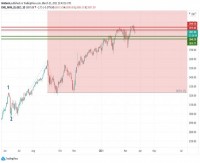
S&P FUTURES (@ES) – Daily
Currently: Long Looking to: Sell @ 4,118.75
As of 3/21/21 @ 7:58pm EST: 3,896
LAST WEEK: We suggested buying dips to 3,875 with stops on a close below 3,840 and with a target for selling longs / getting short at 4,118.75.
UPDATE: S&P futures had a terrible day Thursday and limped into the weekend. Right now, we put possible short-term ceilings at 3,918 or 3,950. If 3,918 holds as short-term resistance, we will look for a dip in the ES futures to 3,818 – 3,820. If 3,950 is tested and holds as resistance instead, we will look for a dip to 3,848 – 3,850 to follow. After this bounce and subsequent dip, we will be buying S&P futures aggressively (unless evidence presents itself that forces us to change our opinion) near one of those support levels.
We would look to buy dips to either 3,849 or 3,818.50 with stops honored on a close below 3,847 and 3,815, respectively. The upside target for either entry will be 4,119. NO SHORTING RIGHT NOW!
|
|
Search through archives of over 436,608 articles.
|
Administrative Options
You are subscribed with the following email:
|
MANAGE YOUR SUBSCRIPTIONS: To UNSUBSCRIBE from this or other Opalesque newsletters, please click on the following link:
unsubscribe
(confirm in pop-window of your browser)
You can also email us back this email with a header "remove".
For any suggestions or support please email
support@opalesque.com.
|
|
|
|
|