|
Editor's Note
|
|
Abenomics has been on now for three years and the Nikkei has roughly doubled, even accounting the 2016 market slump (until mid February 2016.) For the first two years, overseas investors simply didn’t believe in Abenomics. And even if now they may still not believe in Abenomics, but it is getting increasingly hard for them to stay out of the market when so many of their global competitors have made money over the past three years. Japan, purely on a relative basis, was not as bad as other markets in terms of volatility, for example, compared to China in 2015. The interest in Japan, whether it’s still skeptical or enthusiastic, has grown a lot, and we are seeing this too through an increased footfall of global investors coming to Japan as an investment destination.
So, as a policy response, Abenomics has been a resounding success. Try to recall post-GFC Japan before Abenomics. Then, there were real problems with Yen strength, a pro-austerity government and a BOJ that was well behind the curve. Industries were struggling with weak operating environments and faced real liquidity issues after the tsunami. These were acute problems that if not addressed would have resulted in significant negative impacts on the economy.
But the Japanese themselves recognized it was unsustainable and the LDP was voted in a landslide on the Abenomics “three arrows” reflationary platform which addressed these issue simultaneously. The LDP controls both the lower and the upper house, and they have broad approval ratings from the population, specifically because of Abenomics. And, most importantly, everyone is now on the same page, as there is no credible alternative to Abenomics. The regulators are on the same page, the bureaucrats are on the same page, politicians are on the same page, and the voters are on the same page. There are very few developed countries where such a broad policy mandate exists. This strength is not widely recognized.
The biggest activist in Japan right now is the government
It’s the Japanese government that wants to see corporates now generate higher earnings and all the economic benefits that accrue though higher taxes revenues and wages. The new Corporate Code and Stewardship Code forces management and shareholders talk to each other as to how they can raise returns. Another smart move was the introduction of the JPX 400, an index designed to include only Japan’s most profitable, shareholder-friendly companies. Now, rather than just having foreign share holders on the other side of the table berating management for the low returns, the situation is that institutional domestic investors are obliged to actually sit across the table from corporates and engage. The pressure to reform is coming from all sides, and this will start to address the major issue that global investors have with Japanese firms: low returns on capital. The gap between the Japanese corporate return on equity versus the rest of the world is already narrowing, and this is clearly a long term opportunity.
It is worth highlighting that equity investors own a “share” of corporate profitability, not a slice of GDP. Here the news is undeniably positive. The fact is that not only are corporate profits in Japan at record highs, so too are profit margins. Cash levels at corporates are also record highs, so too are net assets. Growth in earnings is likely to remain solid as corporates focus on core strength and a clear shift away from stakeholder capitalism to shareholder returns.
From Gaijin to local: The transformation of Japanese hedge funds
Japanese hedge funds have undisputedly benefited from Abenomics. But even before Abenomics, since 2008, Japanese hedge fund managers (as measured by the Eurekahedge Index) have been doing well with only one minor down year: 2015: +6.56; 2014: +5.73; 2013: +27.87; 2012: +5.77, 2011: -1.04; 2010: +8.10; 2009: +6.43.
Over the last ten years, there has been a fundamental change in the way Japanese hedge funds are managed. If you go back 10, 12 years ago, most of the large Japan-focused hedge funds were run by foreigners or “gaijin”, as foreigners are called here. When Japan went out of favor and pan-Asia (particularly China) became popular, those Japan funds closed down or they may have turned into Asian focused funds. What has happened over the last four or five years is that Japanese managers are now running Japanese hedge funds. And very often, they are poor communicators in English, which creates a bias in Western minds because many people assume that someone can't be very smart if they can't speak English, which is definitely not the case. If, for example, that manager has always worked for pure Japanese institutions, there was never the need to learn English.
The Opalesque 2016 Japan Roundtable was sponsored by Harney Westwood & Riegels and took place end of 2015 in Tokyo with:
- Kenichi Onuki, General Manager, Products Development Department, Amundi Japan
- Kenya Yonezawa, CFA, Senior Investment Manager, Sompo Japan Nipponkoa Asset Management
- Leon Rapp, Portfolio Manager, Rogers Investment Advisors
- Matthew Roberts, Partner, Harney Westwood & Riegels
- Rory Kennedy, COO, Rogers Investment Advisors
The group also discussed:
- How to best market a fund in Japan given that it’s not a “fly-in, fly-out place” (page 15)
- How do Japanese pension funds and other institutional investors view the opportunities that alternative investments provide? (page 15) What is the targeted return of a typical Japanese corporate pension fund? (pages 8, 21)
- Why Japanese hedge funds, even the smaller ones, can offer attractive niche strategies to a global allocator (page 14)
- Why the Japan Post IPO, the largest in the world in 2015, was a game changer in Japan (pages 18-20)
- Which is the fund jurisdiction of choice of Japanese fund managers? (page 16)
- Not much left: A hedge fund manager’s take on the “Three Ds”: Japan’s Debt, Deflation, and Demographics (pages 17, 18)
- What will be the trigger for Japanese retail investors to get out of bank deposits into more investments? (pages 20, 21)
- Discipline & capacity limits: Why most Western institutions will miss the opportunity to invest with Japan hedge funds (page 12)
- How do global investors address the fact that they have under invested in Japan focused talent for almost a decade? (page 10)
- Why Japanese activist managers have been the biggest beneficiary of inflows (pages 13, 20)
|
15. FERI Hedge Funds Day Bad Homburg Sept. 17
Since 1987, FERI has been synonymous with independent investment expertise and is now one of the leading multi-asset specialists in the German-speaking world. We combine our outstanding expertise in traditional and alternative investments with experience, innovation, and sustainability. More than 280 employees at eight locations in four countries work every day to safeguard and sustainably grow our clients' assets.
Experience a day (on site or join online) in the world of hedge funds! In addition to interesting insights into the strategies of international hedge fund managers, you can look forward to an exciting panel discussion on the topic "Long/Short Equities - Hedge Funds Made in Germany."
More information, registration: events@feri.de
|
|
Legends4Legends Conference — Amsterdam, Oct. 1
Join Theta Capital for the 10th edition of Legends4Legends on October 1 in Amsterdam - an exclusive gathering of around 350 institutional investors, family offices and UHNWIs exploring the institutional adoption of blockchain and digital assets.
This year's theme:
"From Speculation to Institutional Adoption: How Blockchain is Rewiring the Global Financial System"
The conference focuses on where traditional finance and crypto are converging, the major real-world use cases emerging today, and how increasingly important infrastructure for the AI economy is being built on-chain.
Legends4Legends is deliberately different from typical industry conferences: no retail, no sales pitches and no noise. Every attendee, including Theta's own team, is asked to leave the pitch at home, creating an environment where managers and allocators can speak candidly.
The speaker lineup includes:
- Mark Cutis - Managing Director, Office of CEO, Abu Dhabi Investment Council
- Joe Marenda - Head of Hedge Fund Research & Digital Assets, Cambridge Associates
- Chris Perkins - Head of Crypto, Franklin Templeton
- Patrick J. Witt - Executive Director, President's Council of Advisors for Digital Assets at the White House
- Robert Leshner - Founder, Compound & Superstate; GP, Robot Ventures
- Haseeb Qureshi - GP, Dragonfly
- Tarun Chitra - Founder, Gauntlet; GP, Robot Ventures
- Matt Walsh - GP, Castle Island Ventures
- David Pakman - GP, CoinFund
- Min Teo - GP, Ethereal
- Lasse Clausen - GP, 1kx
- Scott Lawin - President, Pantera Capital
- Tyler Spalding - Co-founder, Flexa; Founder, Anvil Protocol
A limited number of invitations are available through Opalesque, particularly for institutional allocators who are curious about blockchain and digital assets but haven't yet found a credible way into the space.
If you are interested in attending, or know an institutional allocator who would benefit from joining, please register here:
https://luma.com/legends4legends?coupon=OP-26
Attendance is limited to 350 allocators and all registrations are subject to approval by Theta Capital.
As always, Legends4Legends supports Alternatives4Children, with every seat filled contributing directly to children's education.
|
|
Family Office Forum ZURICH Nov. 10-11, Dolder Grand
Join Opalesque founder Matthias Knab at the 13th Prestel & Partner Family Office Forum in Zurich along with 100+ Family Offices!
This is YOUR opportunity to:
- Meet private investor peers in person
- Be part of a trusted community in a "safe place"
- Share experiences and views
- Access information across Family Governance & Investment best practice topics.
Investors attend for free, if you are interested in joining, let me know (email knab@opalesque.com and I'll make an introduction to the organizers.
I can also facilitate discounted tickets for investment managers / service providers given my 10+ year relationship with the organizers, please reach out as well.
See here for agenda and more information: https://prestelandpartner.com/familyofficeforumzurich.html
|
|
| AlternativeSoft's Laurent Favre on the Future of Fundraising: AI, Avatars, and a Click to Invest |

“In five years, all will be done with AI.”Raising capital is one of the biggest challenges for hedge fund managers, while discovering and analyzing promising small to mid-sized funds is a time-consuming task for allocators.AlternativeSoft, a platform trusted by 150 institutional clients ...
|

|
|
Interested in featuring your firm here? Contact us
|
|
| Technical Research Briefing |
|
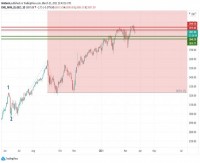
S&P FUTURES (@ES) – Daily
Currently: Long Looking to: Sell @ 4,118.75
As of 3/21/21 @ 7:58pm EST: 3,896
LAST WEEK: We suggested buying dips to 3,875 with stops on a close below 3,840 and with a target for selling longs / getting short at 4,118.75.
UPDATE: S&P futures had a terrible day Thursday and limped into the weekend. Right now, we put possible short-term ceilings at 3,918 or 3,950. If 3,918 holds as short-term resistance, we will look for a dip in the ES futures to 3,818 – 3,820. If 3,950 is tested and holds as resistance instead, we will look for a dip to 3,848 – 3,850 to follow. After this bounce and subsequent dip, we will be buying S&P futures aggressively (unless evidence presents itself that forces us to change our opinion) near one of those support levels.
We would look to buy dips to either 3,849 or 3,818.50 with stops honored on a close below 3,847 and 3,815, respectively. The upside target for either entry will be 4,119. NO SHORTING RIGHT NOW!
|
|
Search through archives of over 436,608 articles.
|
Administrative Options
You are subscribed with the following email:
|
MANAGE YOUR SUBSCRIPTIONS: To UNSUBSCRIBE from this or other Opalesque newsletters, please click on the following link:
unsubscribe
(confirm in pop-window of your browser)
You can also email us back this email with a header "remove".
For any suggestions or support please email
support@opalesque.com.
|
|
|
|
|